

As the dry season begins, provinces in the Mekong Delta, including Vinh Long, are experiencing unseasonal rains. According to the National Center for Meteorological and Hydrological Forecasting, the La Nina phenomenon may persist for the first few months of 2025, before transitioning to a neutral state. This means that the Southern region may continue to experience unseasonal rains during the dry season months.
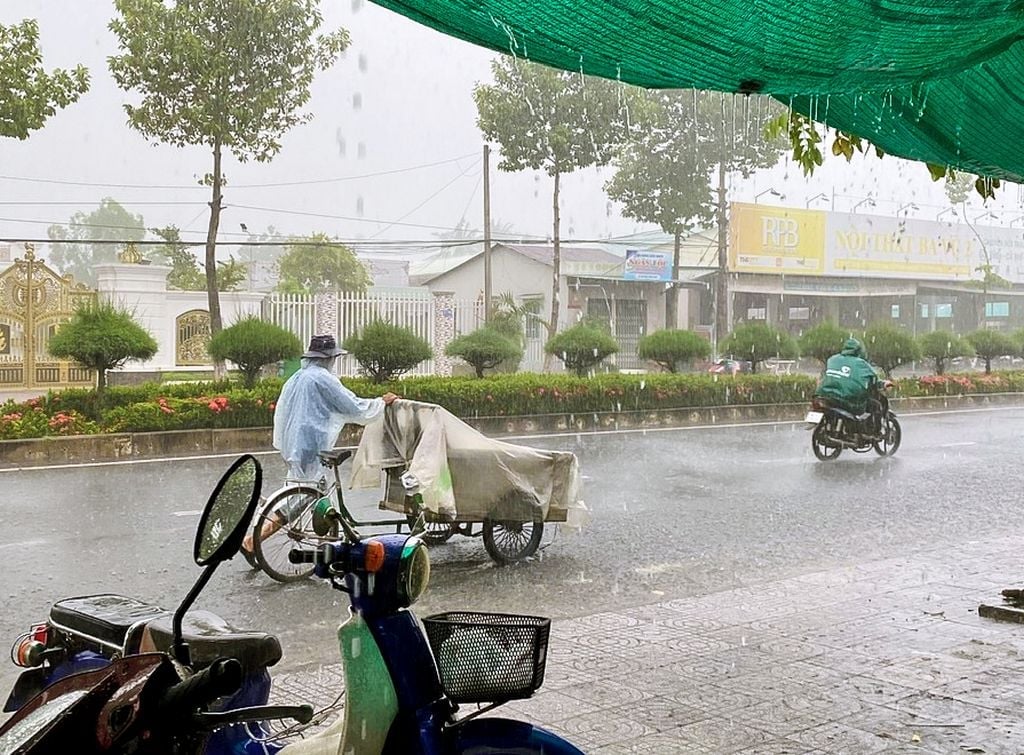 |
| Vinh Long experienced several periods of unseasonal rain in early 2025. |
On the afternoon of February 12th, motorcyclists traveling on National Highway 53 (the section in Long Ho district) were unexpectedly caught in a heavy downpour. The rain lasted for about 30 minutes, which was quite surprising, as in previous years, during the full moon of the first lunar month, it was rare to encounter rain on the road. Therefore, many people carelessly left their raincoats at home and had to quickly find shelter along the road to wait for the rain to stop before continuing their journey.
In the following days, specifically on February 15th and 19th, the Vinh Long province and some other provinces in the Mekong Delta also experienced showers, with some areas experiencing quite heavy rain accompanied by strong winds. In the early morning of February 21st, Vinh Long City also experienced rain, causing puddles to form on some streets.
"January feels like July with its monsoon rains," many locals have said about the weather in recent days, witnessing numerous periods of heavy rain accompanied by thunderstorms, sunny days followed by afternoon showers or moderate to heavy rain in the evening, and very few sunny, clear days like those usually seen after Tet in previous years.
MTM (Microbiosis) is causing concern among vegetable growers, fruit tree farmers, and fish farmers about its negative impact on production. Fruit trees such as mangoes, durians, oranges, tangerines, and pomelos, which are currently flowering, will experience massive flower drop, reducing fruit yield. Meanwhile, farmers are worried about their winter-spring rice crop, which is currently being harvested, potentially causing lodging and affecting yield and quality.
Prolonged MTM (Mid-Typical Occurrence) increases soil moisture, making it easier for pests and diseases such as stem borers, leaf miners, and mealybugs to develop. The agricultural sector also advises farmers to adapt promptly to minimize damage. Updating weather forecasts and applying advanced farming techniques will help farmers reduce risks caused by unusual weather.
The appearance of heavy rainfall during the dry season at the beginning of 2025 is considered a rare phenomenon in recent years. The cause has been identified as the formation of a low-pressure trough with its axis passing through the southern Central Highlands and southeastern Vietnam, connected to a tropical depression in the middle of the East Sea, creating favorable conditions for heavy rainfall. Southeasterly winds at lower altitudes carry moisture from the sea inland, combined with other meteorological factors, leading to these heavy rainfall events. The La Nina phenomenon also contributes to increasing the frequency and intensity of heavy rainfall in Southern Vietnam.
According to the National Center for Hydro-Meteorological Forecasting, the La Nina phenomenon is occurring, with sea surface temperatures in the central equatorial Pacific Ocean approximately 0.7°C lower than the multi-year average. This leads to stronger trade winds and increased convection in the western Pacific, causing more rainfall in Southeast Asia, including Southern Vietnam. Therefore, in the early months of 2025, Southern Vietnam may experience localized tropical cyclones during the dry season.
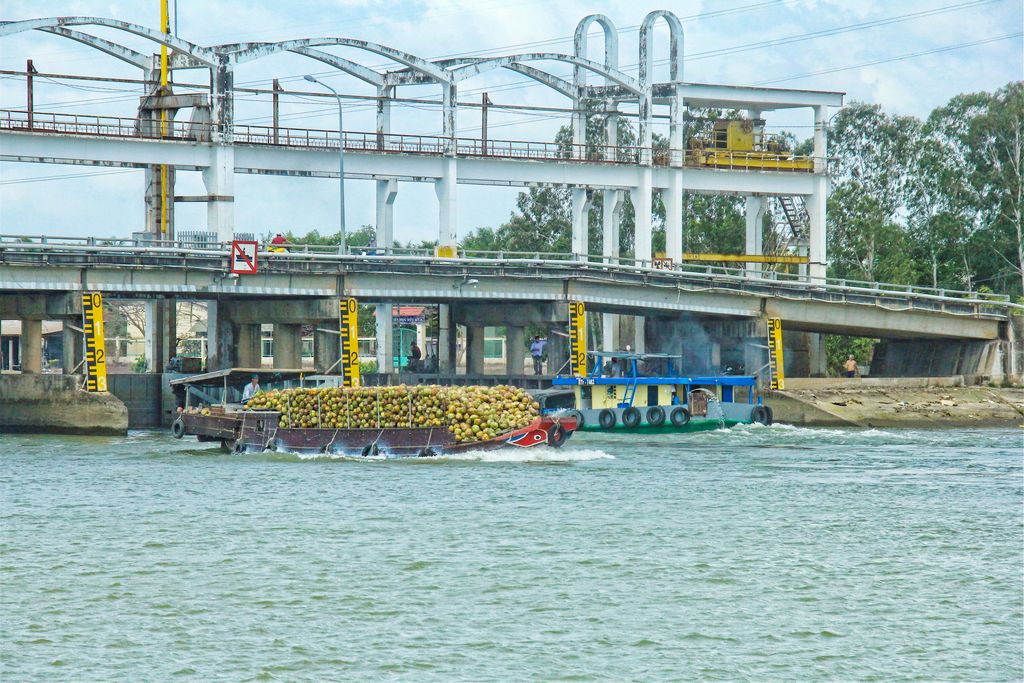 |
| Local authorities should take advantage of low tides to store freshwater for agricultural and domestic use. |
According to the Southern Vietnam Regional Meteorological and Hydrological Station, rainfall exceeding 100mm is a rare phenomenon, unprecedented in Ho Chi Minh City and Southern Vietnam in the past 20 years. The main cause is the influence of a low-pressure trough connected to a tropical depression in the South China Sea, creating air disturbances that cause heavy rain.
Meteorological and hydrological experts also believe that the MTM phenomenon in early 2025 in Southern Vietnam is one of the clear signs of climate change, warning of many important issues related to extreme weather, ecosystems, and human life. This is because MTM is a manifestation of the disruption of previously established climate patterns. Previously, Southern Vietnam had a distinct rainy season from May to November, but now rain can appear unexpectedly during the dry season (December to April).
Unusual weather patterns indicate that the climate system is becoming more unpredictable, complicating weather forecasting and disaster prevention efforts.
| Salinity intrusion is concentrated from February to April. According to the National Center for Hydro-Meteorological Forecasting, saltwater intrusion in the Mekong Delta during the 2024-2025 dry season will be higher than the multi-year average, but not as severe as the 2015-2016 and 2019-2020 dry seasons. The intrusion will be concentrated from February to April. According to the National Center for Hydro-Meteorological Forecasting's forecast for the Southern region on February 20th, the trend of saltwater intrusion from February 21st to 28th is to continue decreasing during the first 2-3 days of the week, then increase again towards the end of the week. The highest salinity levels at the stations will be approximately the same as or lower than the highest salinity levels in February 2024. High levels of saltwater intrusion in the Mekong Delta estuaries are likely to be concentrated in February and March. The depth of the 4‰ salinity boundary at the main river mouths is as follows: Cua Tieu and Cua Dai rivers: 35-42km; Ham Luong river: 40-50km; Co Chien river: 35-42km; Hau river: 35-42km; Cai Lon river: 30-37km. Local authorities should take advantage of low tides to store freshwater for agriculture and daily life. The situation of saltwater intrusion in the Mekong Delta depends on water resources from the upper Mekong River, tidal surges, and is expected to fluctuate in the future. |
Text and photos: LY AN
Source: https://baovinhlong.vn/tin-moi/202502/mua-trai-mua-giua-thang-gieng-6eb09c3/
![[Photo] Prime Minister Pham Minh Chinh receives the Director of RMIT University Melbourne (Australia)](https://vphoto.vietnam.vn/thumb/1200x675/vietnam/resource/IMAGE/2026/04/02/1775142120087_thiet-ke-chua-co-ten-2026-04-02t214220784-png.webp)










































































Comment (0)