

SGGP
The Party Central Committee Secretariat recently issued Directive No. 25-CT/TW on October 25, 2023, on continuing to consolidate, improve, and enhance the quality of grassroots healthcare in the new situation. In an interview with a reporter from the Saigon Giai Phong newspaper, Associate Professor Dr. Tang Chi Thuong, Director of the Ho Chi Minh City Department of Health, emphasized that Ho Chi Minh City has been allocating significant resources to consolidating and improving the grassroots healthcare system. This is a key objective of the city's health sector to better care for the health of its citizens.
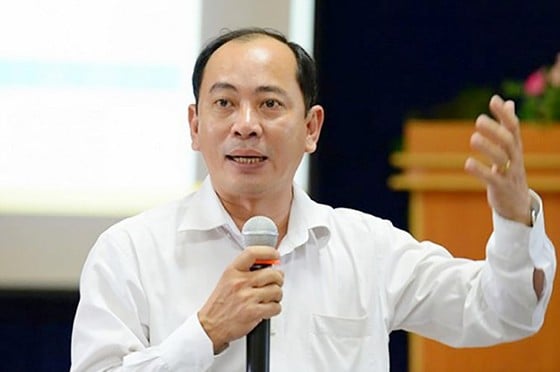 |
Dr. Tang Chi Thuong, Director of the Ho Chi Minh City Department of Health |
It hasn't attracted many doctors yet.
REPORTER : Sir, how has the Ho Chi Minh City health sector implemented measures to improve the capacity of grassroots healthcare in recent times?
Associate Professor Dr. Tang Chi Thuong : The Ho Chi Minh City health sector has received close cooperation from the leaders of the People's Committees of districts and Thu Duc City to simultaneously implement solutions to help effectively promote policies to supplement human resources for health stations. City general hospitals, health centers, and health stations have coordinated smoothly under the guidance and supervision of the Department of Health, successfully implementing the clinical practice program at general hospitals in conjunction with health stations.
Since the implementation of Resolution 01/2022/NQ-HĐND of the Ho Chi Minh City People's Council on specific policies to strengthen and improve the capacity of commune, ward, and town health stations in the new phase, the number of personnel attracted and reinforced for health stations by the end of August 2023 was 1,123 people, with a total expenditure from April 2022 to August 2023 of nearly 66.5 billion VND.
In addition, the city's health sector continues to prioritize non-recurring budget allocations for the renovation and upgrading of infrastructure at eligible health stations to facilitate the transition to family medicine practices. City hospitals continue to support doctors at these health stations through remote connection and consultation activities.
A recent monitoring visit by the Standing Committee of the Ho Chi Minh City People's Council revealed that many medical centers and health stations have not yet attracted enough doctors. What is your assessment of this situation?
The current reality is that the income of doctors and medical staff at the grassroots level is still low, unable to compete with private units and even public hospitals, making it difficult to attract older workers with medical expertise.
Furthermore, not all newly graduated doctors wanted to participate in the pilot practical training program at general hospitals affiliated with health centers. The first cohort had 295 doctors participating, but 25 doctors withdrew for various reasons. In October 2022, the Department of Health continued to collaborate with Pham Ngoc Thach University of Medicine and Ho Chi Minh City University of Medicine and Pharmacy to exchange information and introduce newly graduated doctors from 2022 to register for the practical training program. However, the participation rate among graduating doctors remained low (132 doctors out of 1,200 graduating doctors). In addition, the primary healthcare system, especially health centers and health centers, has not yet attracted doctors to choose to work there after completing the practical training program.
In the "Job Fair" organized by the Department of Health for doctors who completed their practical training at hospitals affiliated with health centers, only 21 out of 207 doctors chose to work at district health centers in Thu Duc City (accounting for 10%). The reasons include inadequate facilities and medical equipment at the grassroots level, and unclear policies and opportunities for career advancement within this sector. A new, more suitable model is needed.
So, in your opinion, what kind of human resources are suitable for primary healthcare, especially for health stations in wards, communes, and towns?
In Ho Chi Minh City, nearly two years of piloting a program that combines hospital-based practice with practice at health centers has shown that doctors have gained practical experience in initial medical examination and treatment at these centers. Accessing a completely different working environment from the hospital environment has helped them better understand and empathize with the needs of the people, leading to a deeper, more comprehensive understanding and, most importantly, more experience in caring for and managing non-communicable diseases in the community.
In countries with well-developed primary healthcare systems, the answer is clear: general practitioners are the primary workforce responsible for providing primary healthcare. Many countries, such as the UK, Australia, Canada, and others, train general practitioners immediately after graduation from medical school programs, with training typically lasting 12 months.
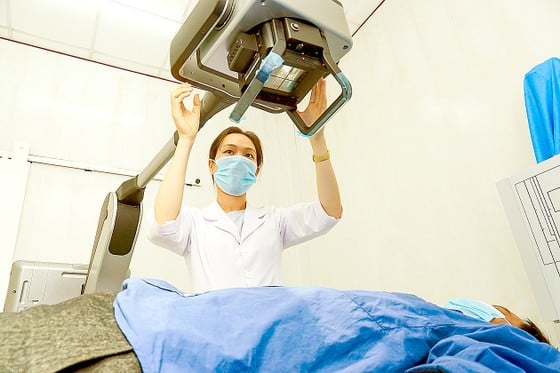 |
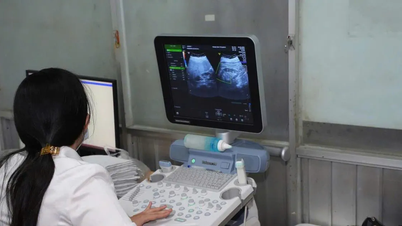
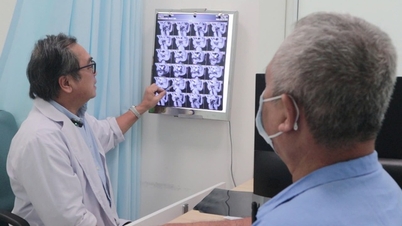
Dr. Hoang Thi Phuong operates an X-ray machine integrated with artificial intelligence at the Thạnh An Island Commune Health Station, Can Gio District, Ho Chi Minh City. |
Is a "general practitioner" the same as a "family doctor"?
General practitioners and family doctors are two different terms, but they share many similarities. Both are general practitioners specializing in primary healthcare and can diagnose and treat common illnesses, prescribe medications, and refer patients to specialists when necessary. Both can work in clinics, hospitals, or community healthcare facilities.
The difference is that the training time for general practitioners is usually 6 years (4 years of general medical studies and 2 years of internship), while family doctors are typically trained for 8 years (4 years of general medical studies, 3 years of residency, and 1 year of internship).
Besides continuing to supplement and refine policies to ensure that primary healthcare plays a leading role in disease prevention, diagnosis, treatment, and public health care, in accordance with Directive No. 25-CT/TW dated October 25, 2023, of the Party Central Committee on continuing to consolidate, improve, and enhance the quality of primary healthcare in the new situation, we hope that the Ministry of Health will consider and soon issue guidelines on initial medical examination and treatment practices at hospitals, linked to primary healthcare practices, for newly graduated doctors to obtain general practice certificates, equivalent to family doctors in other countries. This new regulation will create new vitality and supplement the quality human resources for primary healthcare.
Source


![[Image] National Assembly discusses the implementation of the socio-economic development plan.](https://vphoto.vietnam.vn/thumb/1200x675/vietnam/resource/IMAGE/2026/04/20/1776696707422_ndo_br_img-20260420-185419-jpg.webp)

![[Photo] General Secretary and President To Lam meets with National Assembly delegates from ethnic minorities.](https://vphoto.vietnam.vn/thumb/1200x675/vietnam/resource/IMAGE/2026/04/20/1776696701056_a1-bnd-8331-3342-jpg.webp)







































































Comment (0)