

Reducing energy costs will play a key role in Germany's economic recovery after three years of soaring electricity and natural gas prices.
Germany's new government will face a daunting task of pulling Europe's largest economy out of two consecutive years of recession.
Reducing energy costs will play a key role in Germany's economic recovery after three years of soaring and volatile electricity and natural gas prices since the 2022 global energy crisis.
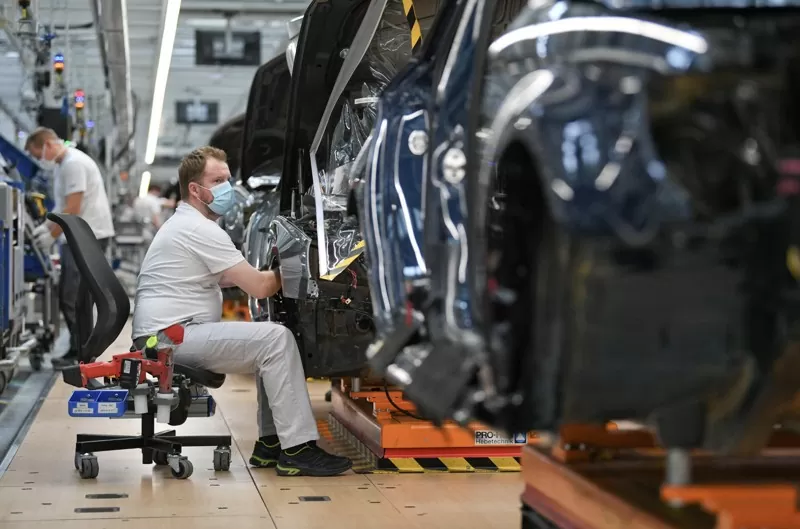 |
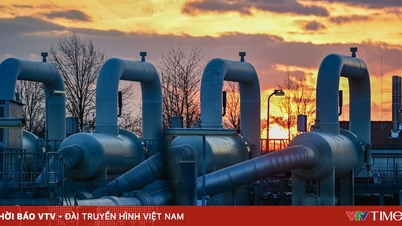
| High energy costs have affected many key German industries, including automotive manufacturing, steelmaking, and chemicals. (Illustrative image) |
High energy costs are affecting many industries.
Domestic electricity prices have been highly volatile in recent months due to low wind speeds. Germany experienced four months of weaker-than-normal winds, reducing wind power output, driving up prices, and increasing the country's reliance on fossil fuels. The price increase this year is attributed to higher natural gas prices in Europe amid a cold winter, low wind power output, and a faster rate of gas consumption than storage replenishment.
Over the past few years, high energy costs have impacted many key German industries, including automotive manufacturing, steelmaking, and chemicals. Germany's once-celebrated industries are losing competitiveness due to shrinking profit margins, leading to temporary or permanent factory closures. Even German car manufacturers have proposed job cuts within Germany, something they would have considered just a few years ago.
Germans went to the polls in a snap election on February 23rd as Europe's largest economy recorded its second consecutive year of recession.
Germany's gross domestic product (GDP) is projected to decline by 0.2% in 2024 compared to the previous year, marking the second consecutive year of contraction.
Ruth Brand, President of the German Federal Statistical Office, stated: "Cyclel and structural pressures have hampered the growth of the German economy in 2024."
“These factors include increased competition for German exports in key markets, high energy costs, persistently high interest rates, and an uncertain economic outlook. Against this backdrop, the German economy is expected to contract again in 2024,” Brand added.
Pressure on the new government
In the February 23rd election, German voters empowered the conservative Christian Democratic Union (CDU) party to begin negotiations to form a new government. Friedrich Merz, the CDU leader, is highly likely to become Germany's Chancellor .
In addition to navigating an increasingly complex geopolitical landscape, Germany's new government will have to confront the most pressing domestic issues: restoring the economy and industry, as well as reducing energy bills for businesses and households.
Businesses are urging the new government to act quickly and decisively to reduce energy costs and ensure energy security, helping Germany regain its competitiveness.
Markus Krebber, CEO of the German electricity group RWE, said: “The crucial first step now is to quickly translate the election results into a strong, capable government that is ready for reform.”
Ensuring a stable energy supply at competitive prices is a prerequisite for Germany to revive its economy and strengthen its industry, Krebber emphasized in a LinkedIn post following the election.
Christian Bruch, CEO of Siemens Energy, called for energy policy measures, including support for industrial growth, bidding for at least 12 gigawatts (GW) of new gas-fired power plants to support the phase-out of coal, expansion of wind power and the grid, and a strategic policy to ensure the supply of raw materials.
"In the current extremely difficult global and economic situation, Germany needs a stable government as soon as possible," commented Hildegard Müller, President of the German Automotive Industry Association (VDA), on the election results.
"Businesses in general, and especially small and medium-sized enterprises – the pillars of prosperity – cannot continue to bear the burden of high energy prices and current taxes and fees," Ms. Müller emphasized.
"A commitment to small and medium-sized enterprises must be accompanied by concrete measures that promise to provide support in the short, medium, and long term," she said.
Key German industries and power producers hope the new government will take strong and decisive measures to address the industrial downturn, including energy policy reforms.
| Over the past few years, high energy costs have impacted many key German industries, including automotive manufacturing, steelmaking, and chemicals. Germany's once-celebrated industries are gradually losing competitiveness due to shrinking profit margins, leading to the temporary or permanent closure of many factories. |
Source: https://congthuong.vn/gia-nang-luong-tang-cao-nen-cong-nghiep-duc-gap-kho-376376.html
![[Photo] The General Secretary, President and his wife meet with Vietnamese-Chinese friendship leaders.](https://vphoto.vietnam.vn/thumb/1200x675/vietnam/resource/IMAGE/2026/04/15/1776264829725_vna-potal-tong-bi-thu-chu-tich-nuoc-to-lam-gap-mat-nhan-sy-huu-nghi-viet-nam-trung-quoc-8703641-3130-jpg.webp)

![[Photo] National Assembly Chairman Tran Thanh Man attends the opening session of IPU-152](https://vphoto.vietnam.vn/thumb/1200x675/vietnam/resource/IMAGE/2026/04/16/1776277863731_ctqh5-jpg.webp)
![[Photo] My Son at night: A thousand-year-old heritage site amidst the Milky Way](https://vphoto.vietnam.vn/thumb/1200x675/vietnam/resource/IMAGE/2026/04/15/1776261039184_ndo_br_chon6-jpg.webp)

![[Photo] Mrs. Ngo Phuong Ly meets and exchanges views with Mrs. Peng Li Yuan](https://vphoto.vietnam.vn/thumb/1200x675/vietnam/resource/IMAGE/2026/04/16/1776277858080_phu-nhan-1-jpg.webp)







































































Comment (0)