In recent years, the use of unregistered, counterfeit, or homemade alcohol that has not undergone safety inspections has become a serious concern.
In recent years, the use of unregistered, counterfeit, or homemade alcohol that has not undergone safety inspections has become a serious concern.
The consequences of consuming this type of alcohol not only affect individual health but also cause serious repercussions for society.
Increased risk of alcohol poisoning at the end of the year.
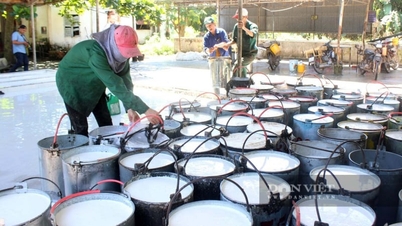
Authorities in Hanoi recently inspected a restaurant in Chuong My district and discovered over 500 liters of homemade, unlabeled colored liquor. The owner stated that the liquor was purchased from local people who brewed and infused it themselves. Although aware of the potential penalties for selling liquor of unknown origin, the owner continued the business for profit.
The problem of counterfeit and smuggled alcohol remains a persistent issue, and numerous tragic incidents have occurred involving victims who consumed these types of alcohol.
The Poison Control Center of Bach Mai Hospital has received hundreds of cases of alcohol poisoning, with dozens of deaths. The majority of these cases were due to the abuse of homemade or homemade alcoholic beverages of unknown origin.
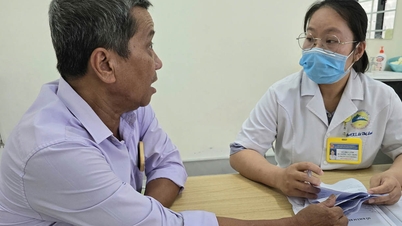
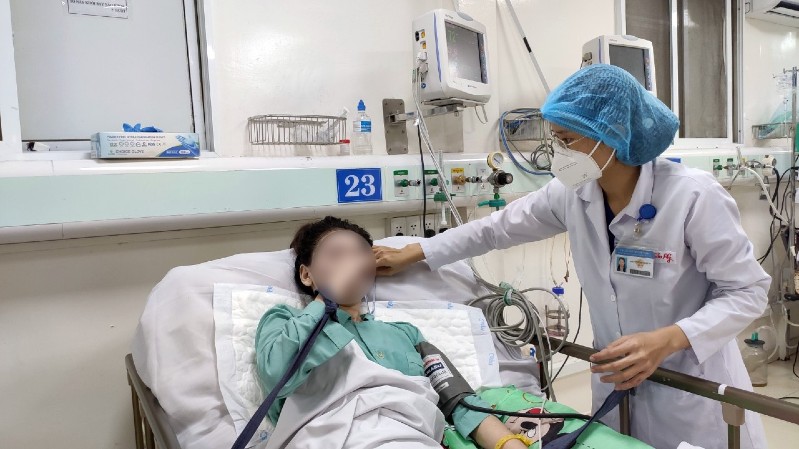
For example, this patient was admitted in a coma, requiring mechanical ventilation, and suffering from severe metabolic disorders. Blood methanol levels reached 25 mg/dL.
Warning about the risk of food poisoning during the year-end period, Dr. Nguyen Trung Nguyen, Director of the Poison Control Center (Bach Mai Hospital), reported that the center has recently been frequently receiving patients suffering from food poisoning due to drinking unlabeled, unbranded, and unregulated alcoholic beverages of unknown origin and composition. These types of alcohol are often adulterated with industrial alcohol by producers to maximize profits.
 |
| In recent years, the use of unregistered, counterfeit, or homemade alcohol that has not undergone safety inspections has become a serious concern. |
According to the Director of the Poison Control Center, the ethanol component in alcohol directly causes hypoglycemia. Low blood sugar levels can cause widespread damage to both sides of the brain.
If this condition is not treated promptly, brain damage will spread further, causing seizures, lethargy, coma, and even death. In particular, thin, emaciated individuals and young people (under 30 years old) are more susceptible to alcohol-induced hypoglycemia.
It is known that recently, the Poison Control Center has detected many antiseptic alcohol products with very high methanol concentrations, ranging from 70-90%. Many individuals have purchased this alcohol and mixed it into alcoholic beverages for sale.
According to doctors at the Neurosurgery Department of Bach Mai Hospital, in addition to the risks of alcohol containing industrial alcohol, excessive alcohol consumption also causes serious harm.
Numerous studies indicate that excessive alcohol consumption causes brain atrophy and neurodegeneration. The volume of white matter in the thalamus and gray matter in the cerebellum is significantly reduced in people who abuse alcohol.
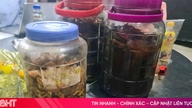

Experts warn that alcohol of unknown origin often contains toxic ingredients such as methanol – an industrial alcohol that is extremely dangerous to humans.
When ingested, methanol can cause symptoms such as headaches, dizziness, and vomiting, and in severe cases, it can lead to blindness or even death.
Furthermore, homemade, uncertified alcohol also risks contamination with other toxins such as acetaldehyde, furfural, and chemicals produced during the fermentation process. These substances can cause serious damage to the liver, kidneys, and central nervous system, making users more susceptible to chronic diseases.
According to the Food Safety Department ( Ministry of Health ), the causes of alcohol poisoning are alcohol abuse, drinking alcohol in excess of the body's tolerance, consuming alcohol that does not meet food safety standards such as drinking alcohol mixed with industrial alcohol like methanol or ethylene glycol; or drinking alcohol infused with herbs (such as leaves, roots, and seeds) or animal products...
Strictly control the circulation of alcohol of unknown origin in the market.
To ensure consumer health and curb the use of homemade alcoholic beverages of unknown origin, the Hanoi Department of Health leadership stated that from now until the end of the year, the district will strengthen inspections and controls on the production, sale, and circulation of these products within the district.
Through this, violations can be detected early and traced thoroughly; violations will be resolutely dealt with, especially acts of counterfeiting, imitation, and using prohibited ingredients in alcohol production and business establishments, and violations will be publicly disclosed in accordance with the law.
At the same time, strengthen communication; request that units and people not use alcoholic beverages that do not have tax stamps or whose origin does not meet regulations.
In addition, Hanoi continues to disseminate information and raise awareness through various media channels about the harmful effects of alcohol; the responsibility for ensuring food safety in the production and sale of alcohol; and strictly prohibits the production of alcohol using banned ingredients, the sale of alcohol of unknown origin, and alcohol that does not meet safety standards.
In addition, the Hanoi Department of Health, in coordination with the Hanoi Department of Industry and Trade, is continuing to investigate and prevent the use and circulation of the aforementioned alcoholic products in the area.
In addition, the health sector, in coordination with the industry and trade sector and local authorities, will strengthen inspection, examination, and supervision of food safety at alcohol production and business establishments, focusing on small-scale alcohol production and business establishments, especially artisanal alcohol distilleries;
Promptly prevent the circulation of unsafe, adulterated, or unlabeled alcoholic beverages of unknown origin that pose a risk to consumer health.
At the same time, it is necessary to strengthen information, communication, and guidance to raise public awareness and responsibility for ensuring food safety in the production and sale of alcoholic beverages, to avoid alcohol abuse, and to ensure safety when choosing and consuming alcohol.
People should absolutely not use strange animals or plants of unknown species or origin to make alcoholic beverages, and should not drink alcoholic beverages of unknown origin or without labels sold haphazardly on the market.
Identifying and distinguishing between ethanol (regular alcohol) and methanol is very difficult. Methanol is very similar to regular ethanol, and is even sweeter and easier to drink.



Initially, patients experience symptoms similar to drunkenness, leading to confusion. However, about 1-2 days after ingestion, patients will exhibit blurred vision, lethargy, rapid and deep breathing similar to metabolic acidosis (due to excessive formic acid converted from methanol), seizures, and coma. By the time they reach the hospital, most of these cases have already suffered brain damage, blindness, and hypotension, and are in critical condition.
Regarding the consequences of alcohol abuse, Ms. Le Thi Phuong Thao, M.Sc., from the Substance Addiction Treatment Department, Institute of Mental Health (Bach Mai Hospital), advises people not to drink alcohol more than 5 days a week. For men, it is recommended not to drink more than 1-1.5 cans of beer per day; no more than 2 glasses of wine per day, or 2 glasses of spirits (40% alcohol) per day.
According to Dr. Nguyen Trung Nguyen, people should choose products with clear origins, registered by companies, and guaranteed from production to distribution. Purchases should have product codes, invoices, and traceability of the manufacturer and distributor.
During the year-end season, limit alcohol consumption to the lowest possible level per serving, drink slowly, combine it with food, and alternate with water.
In particular, according to experts, family members need to carefully monitor those who are intoxicated. If the person is still conscious, they should be given foods and drinks containing sugar and starch such as rice, corn, potatoes, cassava, milk, sugary fruit juice, broth, or thin porridge... to provide energy, otherwise hypoglycemia may occur. At the same time, the family needs to pay attention to any severe symptoms in their loved one so that they can be taken to the emergency room promptly.
For example, if someone ingests methanol, they will experience headaches, drowsiness, loss of consciousness, vision loss, and coma. These symptoms usually don't occur immediately during the drinking session; most patients become critical after one day. Without timely hospitalization and treatment, the risk of death is very high, and those who survive may face neurological and visual sequelae.
There are severe cases where, even if the patient is saved, treatment is very difficult. In addition to mechanical ventilation, patients require continuous hemodialysis along with solutions to remove toxins, and the treatment costs can amount to hundreds of millions of VND.
Source: https://baodautu.vn/ngan-chan-ngo-doc-ruou-dip-cuoi-nam-d229658.html

![[Photo] National Assembly Chairman Tran Thanh Man attends the Conference to announce the Master Plan for Hanoi Capital City with a 100-year vision.](https://vphoto.vietnam.vn/thumb/1200x675/vietnam/resource/IMAGE/2026/06/29/1782709639728_ndo_br_1-jpg.webp)
![[Image] A look back at the capital's preparations for the century-long master plan.](https://vphoto.vietnam.vn/thumb/1200x675/vietnam/resource/IMAGE/2026/06/29/1782750453122_quy-hoach-100-nam-minh-duy-1-2118-jpg.webp)
![[Photo] General Secretary and President To Lam works with the Party Committee of the Government on the work of preventing and combating storms, floods, extreme natural disasters and climate change.](https://vphoto.vietnam.vn/thumb/1200x675/vietnam/resource/IMAGE/2026/06/29/1782729441945_a1-bnd-0385-9454-jpg.webp)