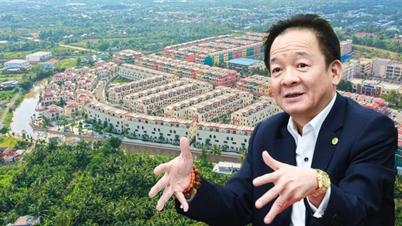
Many banks are stepping up the sale of real estate – from land plots and townhouses to apartment projects – amid a rapid increase in bad debts in recent times.
The Vietnam Agricultural and Rural Development Bank (Agribank) Ho Chi Minh City Branch has just announced an auction for the debt of Ha Long Aquatic Products Co., Ltd. at the bank, with a book value of over 31.3 billion VND, in order to settle and recover the debt. The collateral for the debt is the right to use a 256 m2 plot of land in Binh Thanh District, Ho Chi Minh City, and the townhouse attached to the land.
Auctioning off houses, land, and apartments.
The aforementioned debt was auctioned off in its current state (including collateral, legal status, and potential risks...) with a starting price of just over 19.5 billion VND.
Other branches of Agribank , such as the Saigon Central, Nha Be, South Saigon, and East Ho Chi Minh City branches, are also simultaneously advertising the sale of loans secured by real estate, including vacant land, land for perennial crops, townhouses, and residential land in rural areas.
For Vietnam International Bank (VIB ), the number of real estate assets currently for sale alone exceeds 800, including residential land, townhouses, apartments, and plots of land across the country. Many plots are priced from several billion to tens of billions of VND. A typical example is a 536 m2 plot of land in Ward 8, Go Vap District, Ho Chi Minh City, which the bank is offering for sale with a starting price of nearly 60 billion VND.
Sacombank (Saigon Thuong Tin Commercial Joint Stock Bank) is also selling a number of properties in Can Tho, Long An, Hau Giang, Kien Giang, and Ho Chi Minh City at prices ranging from a few billion to tens of billions of VND to recover debts, totaling 67 properties. Many of these properties are located on busy urban streets with dense populations. For example, Sacombank is selling a property in Ninh Kieu District, Can Tho City, with an area of over 1,158 m2, starting at 114.1 billion VND.
A number of other banks, such as PVcomBank, KienlongBank, Vietcombank, BIDV, VietinBank, etc., have also continuously announced the liquidation of collateral assets, specifically real estate, to process and recover loan debts. The banks are intensifying their asset foreclosure activities due to the recovery of the real estate market in some segments, and also to control the non-performing loan ratio.
According to Dr. Huynh Phuoc Nghia from the University of Economics Ho Chi Minh City (UEH), banks have been aggressively selling off collateral assets for about a year now, not just recently. Although the real estate market hasn't recovered strongly, depending on the nature of the property – townhouses, land plots, apartments – and its location, investors in each corresponding segment are still participating.
"The current challenge is whether the market can absorb the volume of houses and apartments being liquidated. If banks want to quickly liquidate and recover debts by selling collateral assets at low prices, borrowers who cannot repay their debts and have to foreclose on the collateral assets will suffer losses," analyzed Dr. Huynh Phuoc Nghia.
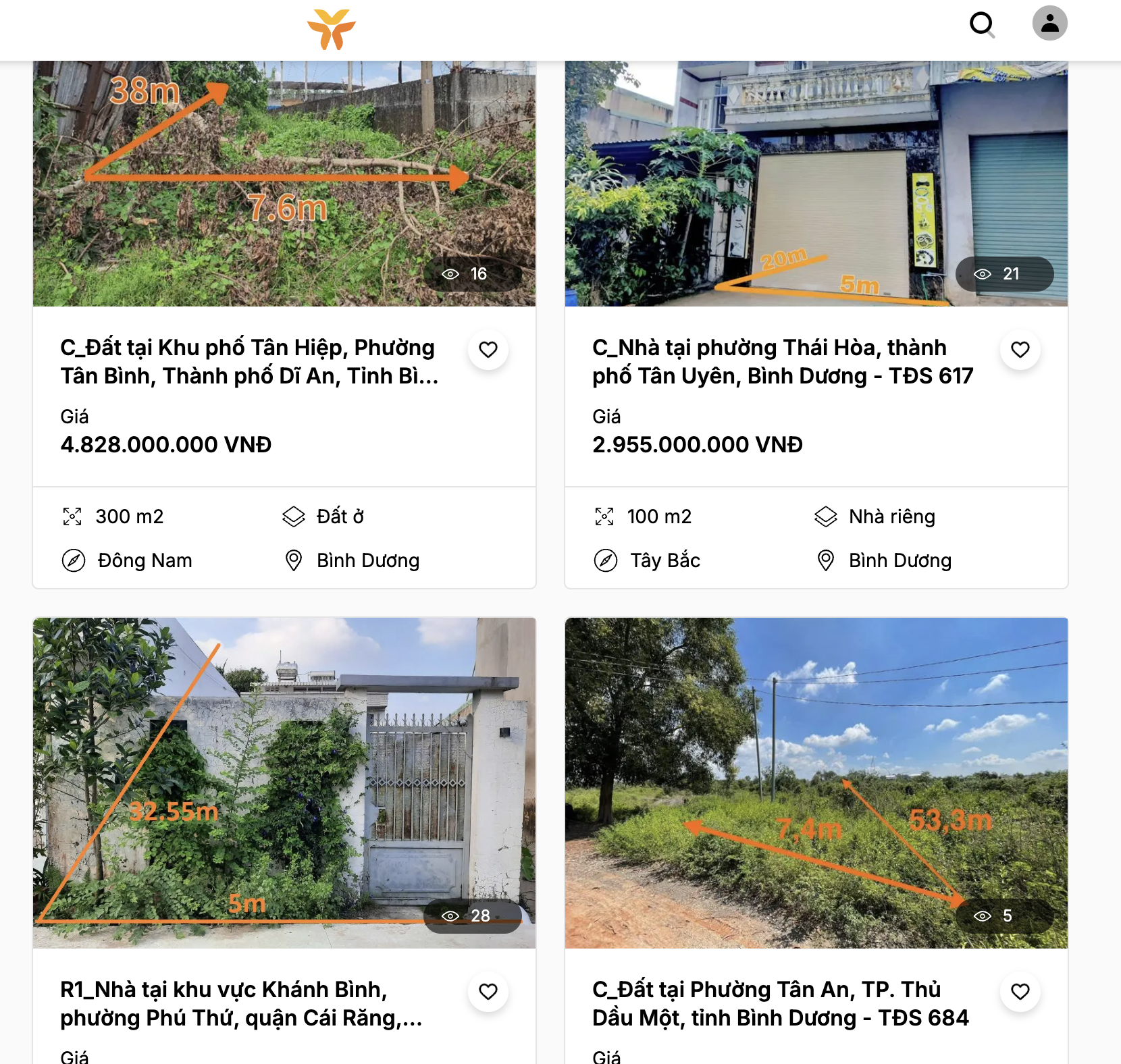
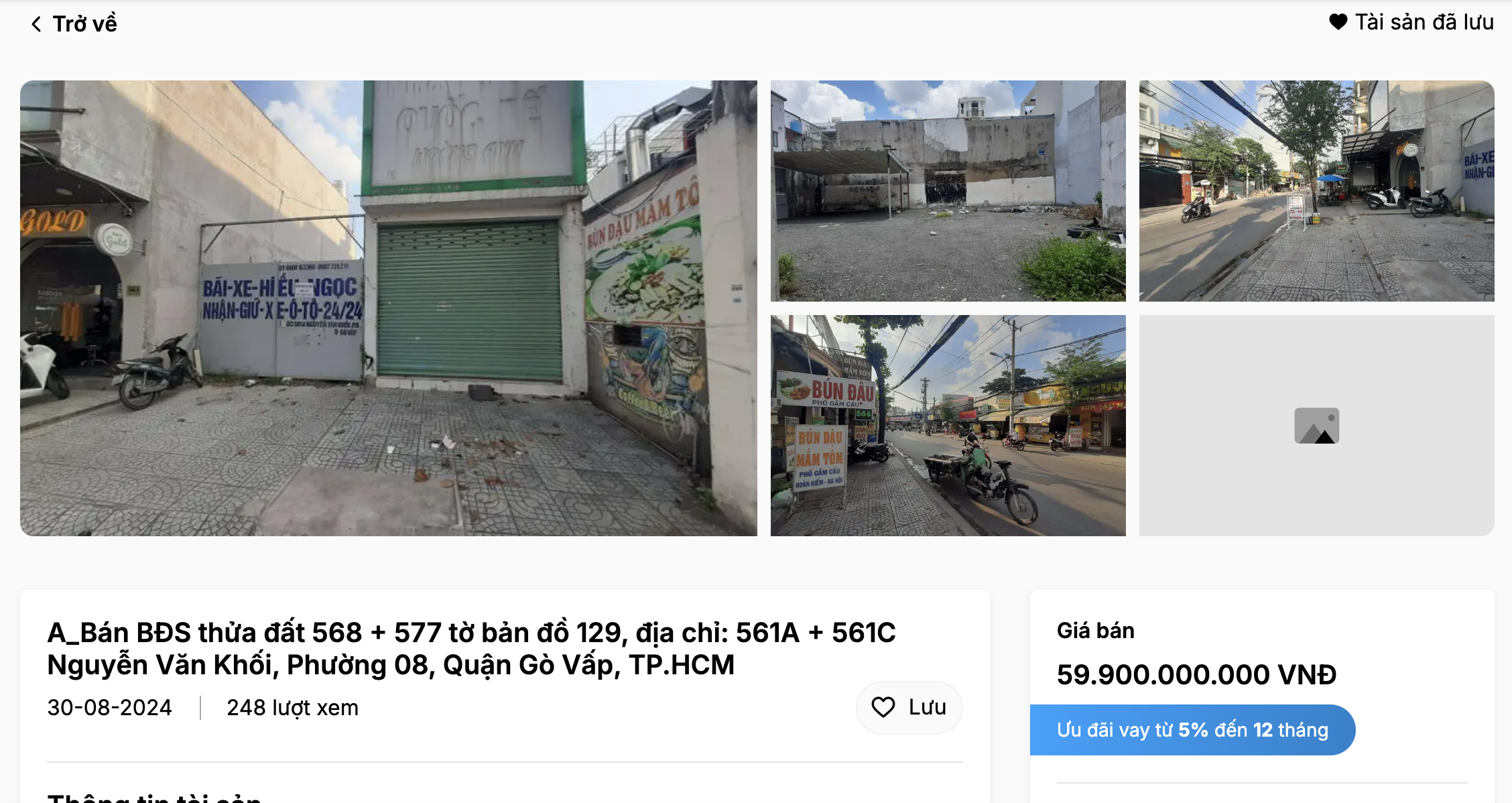



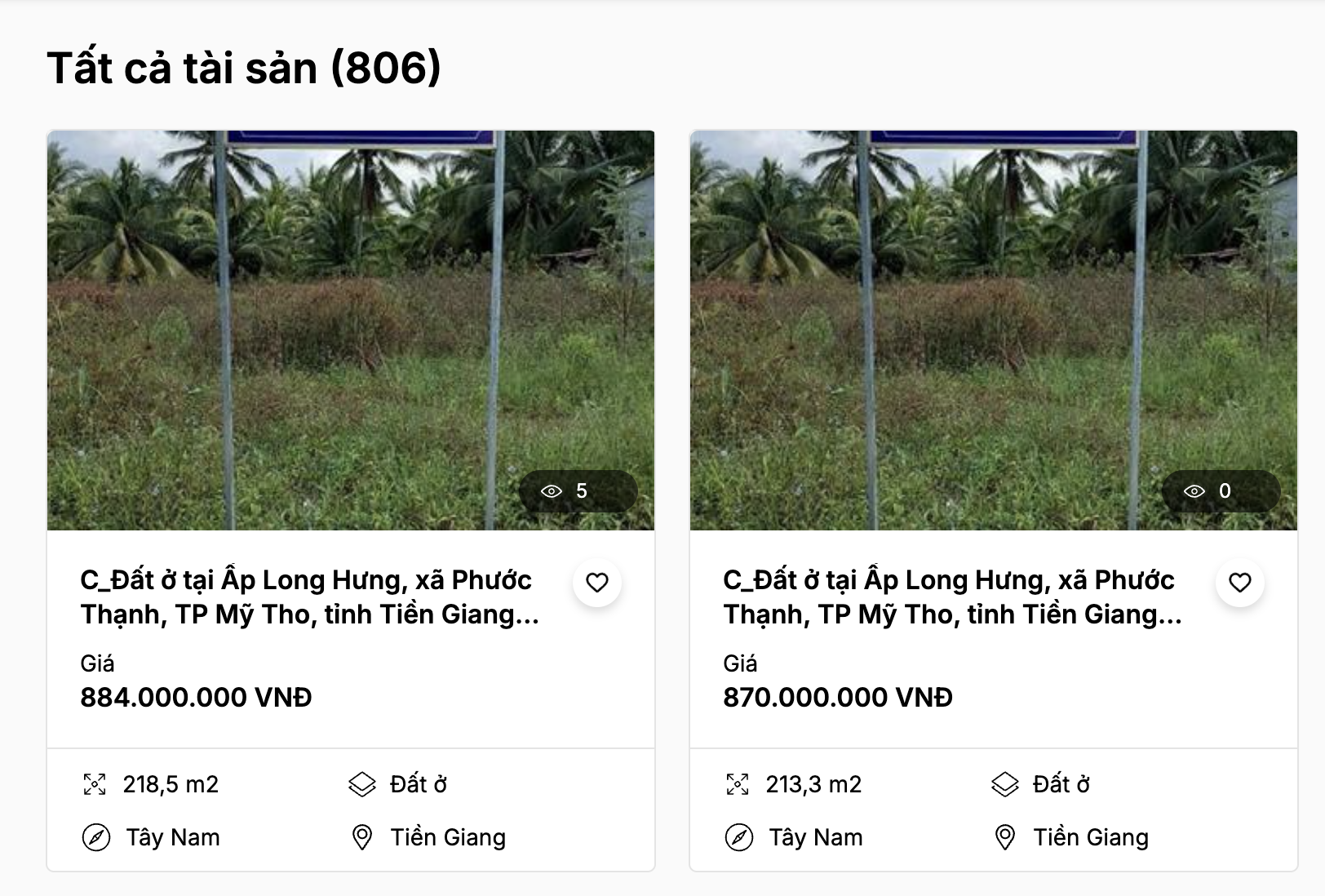
Many commercial banks are simultaneously offering to sell off bad debts and collateral assets at the end of the year.
Non-performing loans are increasing rapidly.
Updated reports on the banking sector from several securities companies recently published show an increase in bad debts as the asset quality of the banking system has significantly weakened since the real estate and corporate bond crises of 2022-2023.
According to Mr. Cao Viet Hung, Director of Financial Sector Analysis at ACBS Securities Company, the non-performing loan (NPL) ratio of listed banks has remained high for four consecutive quarters and increased by 4 percentage points in Q3/2024, including restructured loans under Circular 02/2023/TT-NHNN. Banks specializing in lending to individuals and small and medium-sized enterprises (SMEs) have higher NPL ratios and higher ratios of loans in category 2 compared to those specializing in lending to large enterprises. Notably, the NPL risk buffer is no longer substantial and is only at a level equivalent to the pre-COVID-19 period.
Data released by the State Bank of Vietnam at the National Assembly session in November 2024 also showed that non-performing loans (NPLs) are trending upwards. According to State Bank Governor Nguyen Thi Hong, as of the end of September 2024, the on-balance sheet NPL ratio was 4.55%, nearly the same as at the end of 2023 and an increase compared to 2022.
"This is a reality due to the impact of the COVID-19 pandemic, which has severely affected all aspects of social life. Businesses and individuals are facing difficulties, reduced income leading to even greater challenges in debt repayment," explained the Governor of the State Bank of Vietnam.
Mr. Cao Viet Hung believes that although the non-performing loan ratio has increased for two consecutive quarters, there are some signs that it has peaked and may improve in 2025. Many banks have proactively made full provisions for restructured loans according to Circular 02. For restructured loans affected by Typhoon No. 3, banks are allowed to extend the provisioning schedule with a minimum level according to the roadmap in the coming period.
According to analysts at SSI Securities Company (SSI Research), in the first three quarters of 2024, banks processed 73,300 billion VND of bad debt, including: VPBank with 19,400 billion VND, VietinBank with 17,400 billion VND, BIDV with over 15,900 billion VND, and MBB with 7,100 billion VND - accounting for 0.84% of total outstanding customer loans. This is the highest level ever recorded.
"Despite proactive efforts, the non-performing loan (NPL) ratio remains high, fluctuating around 2% in Q3 2024, mainly in sectors such as construction materials, construction companies, real estate (developers and home loan lenders), trade, and manufacturing. The ability to repay debt remains weak, affecting the banks' debt recovery efforts. However, banks will accelerate the resolution of NPLs in Q4 2024, helping to reduce the NPL ratio to 1.9% by the end of the year," commented an expert from SSI Research.
Mr. Dao Hong Duong, Director of Industry and Stock Analysis at VPBankS Securities Company, noted that the rate of bad debt formation is decreasing, as evidenced by the increase in non-performing loans (NPLs) in categories 2 and 4.
Non-performing loans (NPLs) in category 2 decreased for the second consecutive quarter, indicating a slowdown in the formation of bad debts. Total NPLs across the industry remained flat at 2.2%. The NPL coverage ratio (approximately 80%) showed signs of bottoming out but has decreased significantly since the end of 2022.



Consider extending Circular 02.
Governor Nguyen Thi Hong stated that to control bad debts, the State Bank of Vietnam has required credit institutions to carefully assess the borrower's ability to repay loans, ensuring that new bad debts are controlled.
For existing non-performing loans, proactive measures are needed to address them through urging customers to repay debts, collecting debts, and selling off assets. The State Bank of Vietnam is also creating a legal framework for debt trading companies to participate in handling non-performing loans.
One of the solutions that the banking sector is applying to control bad debts is to extend Circular 02 for about 6 months (until the end of 2024), restructure the repayment period and maintain the same debt classification to support customers facing difficulties.
Dr. Huynh Phuoc Nghia believes that the Government and the State Bank are prioritizing support for businesses and promoting credit growth to boost economic growth. With this goal in mind, consideration could be given to extending Circular 02 on debt restructuring.
Because if this circular expires on December 31, 2024, banks will have to make full provisions and "accurately calculate" all restructured debts, increasing the risk of bad debts.
Source: https://nld.com.vn/ngan-hang-o-at-rao-ban-no-196241226211625999.htm