|
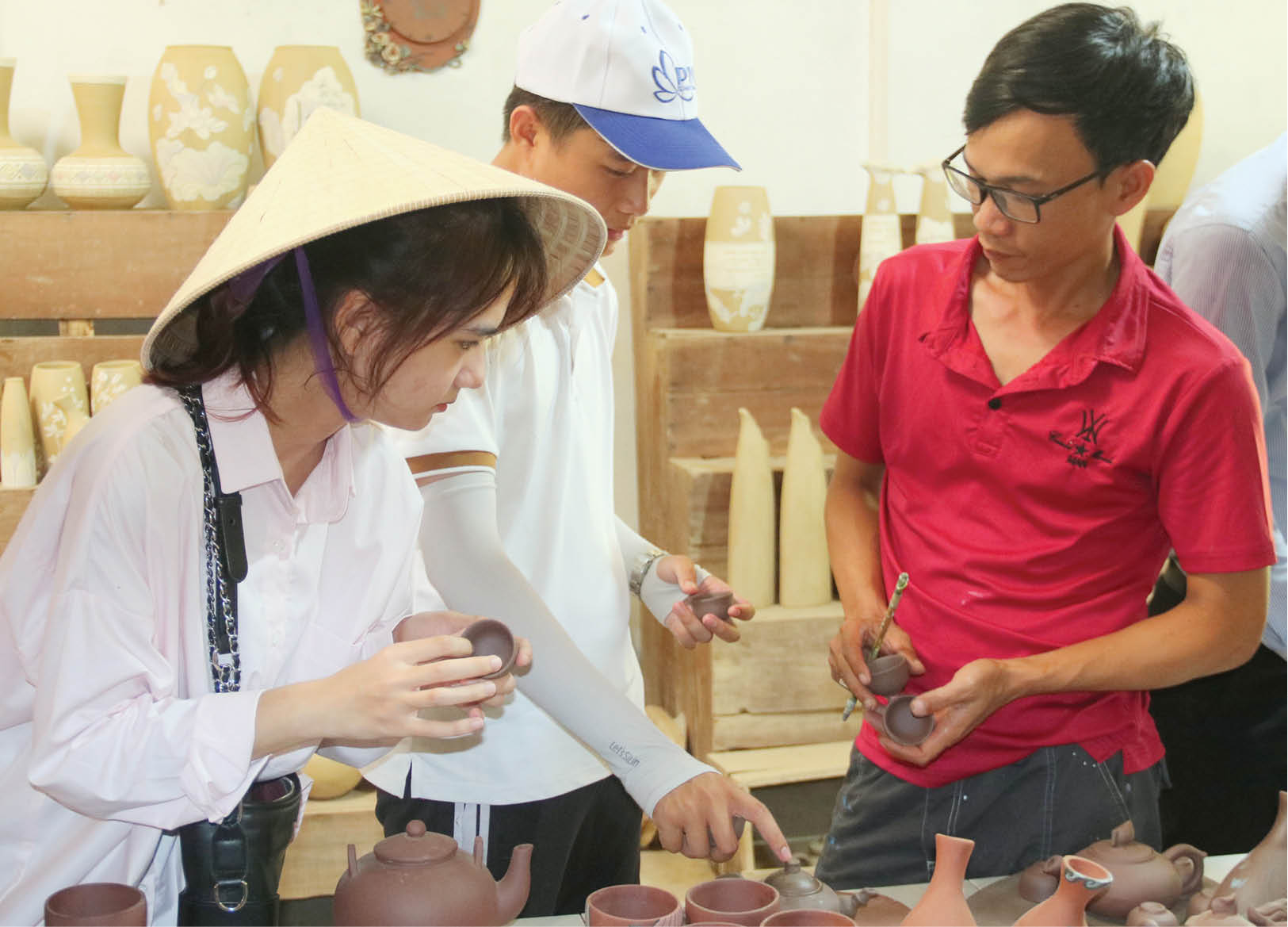
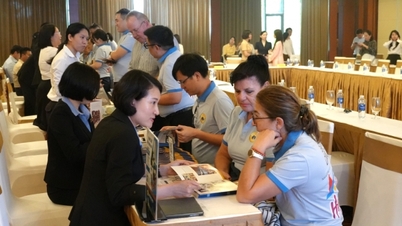
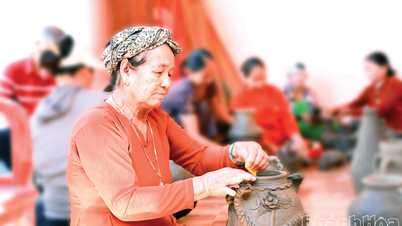
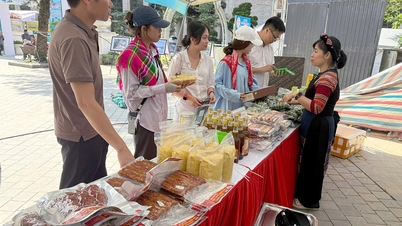
Introducing Phuoc Tich pottery to guests. |
"Retaining" tourists
Passing by the corner of Truong Tien Bridge (north of the Perfume River), many people still often encounter the image of Mrs. Huong - a woman considered the "keeper of childhood memories" of Hue - with her folk toys such as the "lung tung" drum and the "ve ve" toy. Many people don't know her, just passing by without stopping.
One day, a travel company invited her to participate as a guide in a workshop. Both the young tourists and their parents were enthusiastic. In particular, a Japanese tourist, after being introduced to her traditional toy-making craft, was extremely impressed. Before leaving Hue, he even promised the guide that he would return to continue the experience and learn the craft. Ms. Duong Thi Cong Ly, Director of the Hue branch of Vietnam Tourism Corporation - Hanoi, shared: "It is thanks to these interesting stories that tourists truly appreciate and love the destination and its tourism products."
That story also raises an issue for the tourism industry: Every destination, every product needs to be told through more emotionally rich stories to "retain" tourists.
From a Hanoi tourism perspective, the capital's tourism industry has just launched a tourist train called "5 Gates of the Citadel." This is not only a product that sparks curiosity and offers a unique experience, but also impresses with its skillful integration of the capital's culture, memories, and cultural identity into public infrastructure. Every detail on the train is imbued with cultural spirit, rather than focusing solely on technical convenience. The train's name is derived from the five gates of the ancient Thang Long citadel: Quan Chuong Gate, Cau Den Gate, Dong Mac Gate, Cau Giay Gate, and Cho Dua Gate. This innovative storytelling approach, transforming transportation infrastructure into a cultural communication medium, instills pride in the local population and excitement in tourists eager to explore .
In Hue, many tourists still express regret that the way tourism is conducted at some destinations hasn't truly left a lasting impression. Many tour programs only offer a superficial experience, leaving visitors feeling that the value isn't commensurate with the money spent. Some argue that entrance fees to some attractions are too high, as the experience is limited to simply viewing the scenery without hearing the stories associated with the heritage, failing to fully appreciate its value. They leave with only a few photos, but lacking lasting memories.
A few months ago, while visiting an incense-making workshop in the Thuy Bieu tourist area, I witnessed tourists sharing that they simply wanted to experience making incense by hand and learn about the traditional craft, rather than having it made by machine. When their wishes were granted, and they heard more stories about the incense-making process, they were very satisfied and delighted.
Create compelling stories.
Today, many tourists are no longer interested in isolated tours that lack depth and emotional connection. They need spiritual guidance, a compelling story, or a memorable experience. This requires destinations, especially community-based tourism, to shift their mindset from "what to offer" to "how to tell the story" in order to connect with tourists' emotions.
According to Duong Thi Cong Ly, Director of the Hue Branch of Vietnam Tourism Joint Stock Company - Hanoi, building a story for a tourism product is not about fabrication, but about basing it on local culture and life, exploiting unique aspects of history and tradition to explain the product's creation. From there, the product and destination become more attractive.
For example, when developing a Hue Tet experience product, telling stories about "three generations living together," "four generations living together," or customs such as visiting temples, sweeping graves, and giving lucky money at the beginning of the year... will help tourists understand the meaning of the Lunar New Year more deeply, making the experience even more memorable.
Ms. Ho My Lien Hanh, a freelance tour guide in Hue, shared: "Tourists are often very excited to hear stories about life in the places they visit, which helps them better understand the rhythm of life in the region. However, in some places, the organization and presentation are not engaging enough, causing them to easily lose interest."
According to the tour guide's experience, tourists particularly enjoy hearing everyday stories; the more authentic, the more memorable. Therefore, tourist destinations, guides, and narrators need to collect and recount stories that are relatable and closely related to daily life and the destination, in order to evoke emotions in visitors.
According to a representative from the Department of Tourism, along with innovation in product development and improvement, the local tourism industry also focuses on enhancing professionalism in tourism practices. The Department of Tourism and the Tourism Association regularly organize training courses for tourism staff, including tour guides at tourist attractions, to equip them with better service skills and to spread cultural values to visitors.
Text and photos: HUU PHUC
Source: https://huengaynay.vn/du-lich/nghe-san-pham-du-lich-ke-chuyen-157533.html







































































Comment (0)