

Where will low-income workers live when boarding houses and mini-apartments are banned?
In less than a year, two devastating fires, resulting in serious losses of both lives and property, occurred in Hanoi .
Specifically, in September 2023, a fire in a mini-apartment building on Khuong Ha Street, Thanh Xuan District, killed 56 people and injured dozens more. This is considered the most horrific fire to ever occur in Hanoi.
Most recently, in the early morning of May 24, 2024, a house fire on Trung Kinh Street (Trung Hoa Ward, Cau Giay District, Hanoi) resulted in 14 deaths.
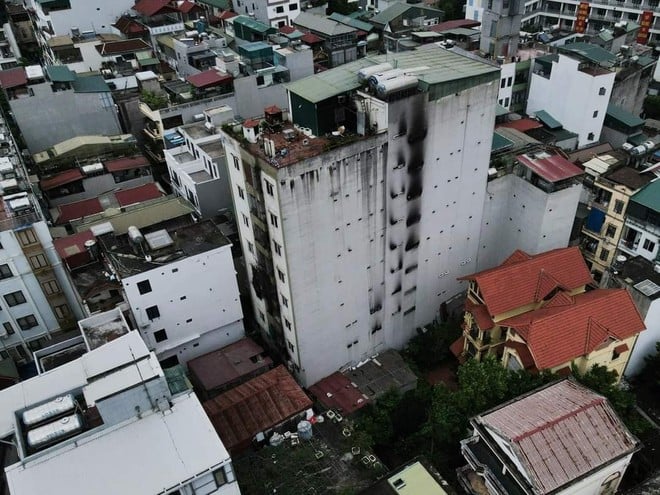
The fire at the mini-apartment building on Khuong Ha Street, Thanh Xuan District, resulted in 56 deaths. (Photo: ST)
The fires in Khuong Ha and Trung Kinh are just two of thousands of fires and explosions that occur every year. However, these two fires caused a huge number of casualties, shocked public opinion, and left many people traumatized.
Both fires share a commonality: they occurred in commercial residential buildings with a high density of people living in cramped spaces, coupled with inadequate fire safety measures. Furthermore, the buildings were located in narrow alleys, making fire prevention and firefighting extremely difficult, leading to very serious consequences.
Following the two tragic incidents mentioned above, some argue that housing models that do not meet fire safety standards should be "banned."
Responding to the press yesterday (May 24th), immediately after the house fire in Trung Kinh, a National Assembly representative stated: “The regulations stipulate that houses combined with production and business activities must have fire prevention and control plans. This regulation should be added. If a house combines production and business activities with rental rooms, I believe we should prohibit that. We cannot create such high risks.”
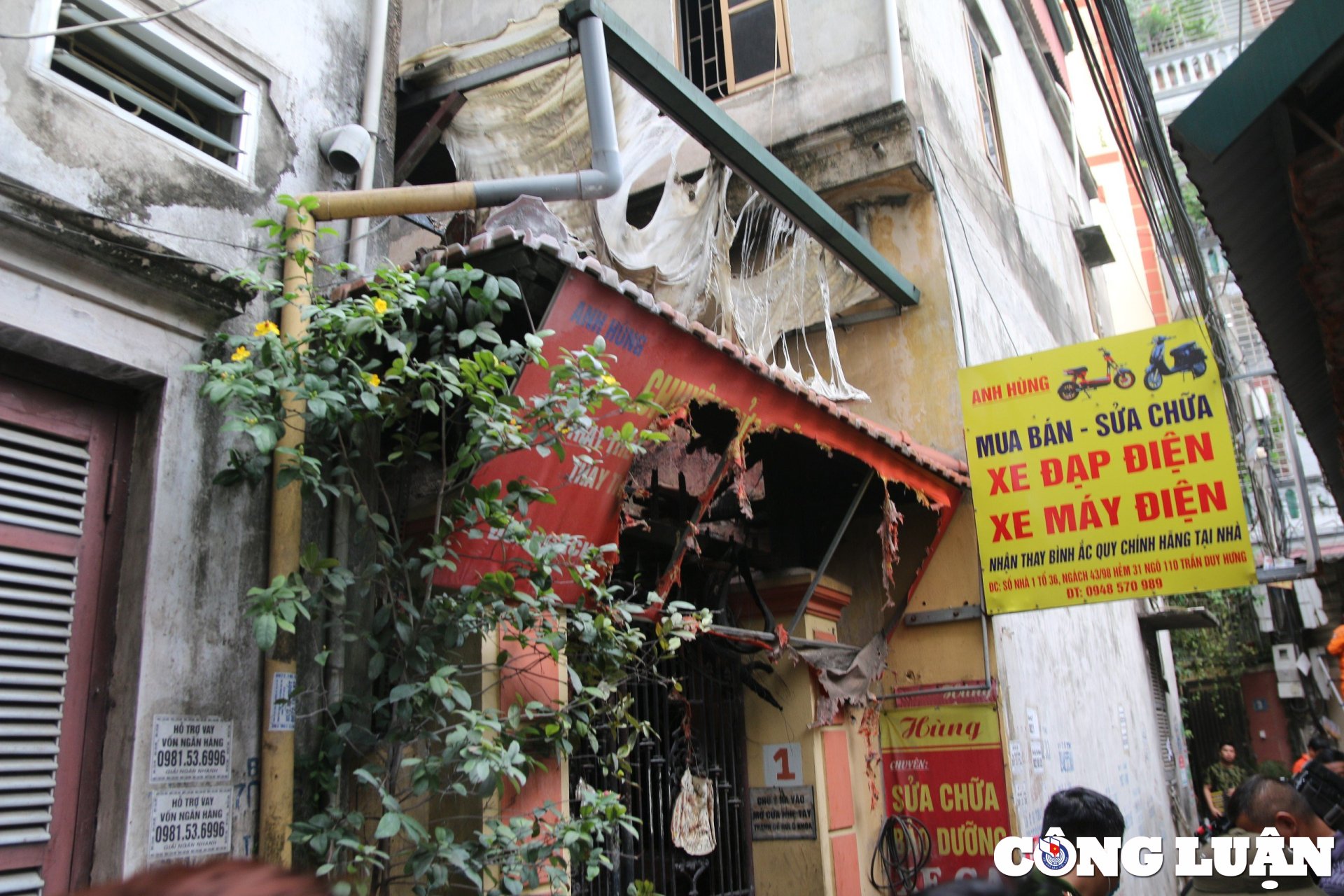
A house fire on Trung Kinh Street, Trung Hoa Ward, Cau Giay District, Hanoi, resulted in 14 deaths. (Photo: QH)
This person also argued that the law should prohibit business operations in areas with a large number of people (e.g., 10 or more) or in cases where fire safety and fire extinguishing systems are not adequate.
Previously, immediately after the fire in Khuong Ha, Thanh Xuan, some opinions were voiced suggesting a "ban" on mini-apartment projects.
If Vietnam were to actually ban these types of housing, where would people live, especially low-income workers?
In reality, housing prices in major cities like Hanoi and Ho Chi Minh City are very high and steadily increasing every month and every quarter.
According to Savills Vietnam, primary market apartment prices in Hanoi have increased for 19 consecutive quarters. Currently, the average primary market price for apartments is recorded at VND 59 million/m2.
Apartment prices are already high, but land prices are even higher. Even land prices in alleyways are not cheap. According to a report by One Housing, land prices in alleyways reached a record high of 170 million VND/m2 in the city center and around 100 million VND/m2 in the suburbs.
For street-front houses in Hanoi, prices range from 400 million VND to over a billion VND per square meter, and in the central area, prices can even reach 1.2 - 1.3 billion VND/m2. With such exorbitant prices, people can only afford to buy a street-front house in their "dreams".
Meanwhile, according to the 2022 survey on living standards, the average per capita income nationwide in 2022 reached approximately 4.6 million VND/month. For people working in Hanoi, the average income in 2022 was 6.4 million VND/month; while in Ho Chi Minh City it was 6.3 million VND/month.
Thus, Hanoi residents have to work hard for decades, even centuries, to be able to buy a house in the capital. Therefore, despite knowing the dangers lurking, rental housing and mini-apartments are the only options for people who do not yet own a permanent home.
Social housing, social housing for rent: Many promises, but very few delivered.
It must be acknowledged that banning all types of lodging is very difficult, even impossible. However, it is possible to mitigate risks. Social housing, or social housing for rent, is a solution.
In recent years, the Government and central agencies have intensified policies and introduced housing programs to encourage the development of social housing.
Following the Prime Minister's directive, localities are also stepping up the development of social housing projects and social housing for rent, and Hanoi is no exception.
At the conference to implement the project to build at least 1 million social housing units for low-income earners and industrial zone workers in the period 2021-2030, held at the end of February 2024, the leaders of the Hanoi People's Committee stated: According to the Strategy and program for housing development until 2030, Hanoi has determined that by 2025, it must complete 1.25 million square meters of social housing floor space; and by 2030, it will need approximately 2.5 million square meters of social housing floor space.
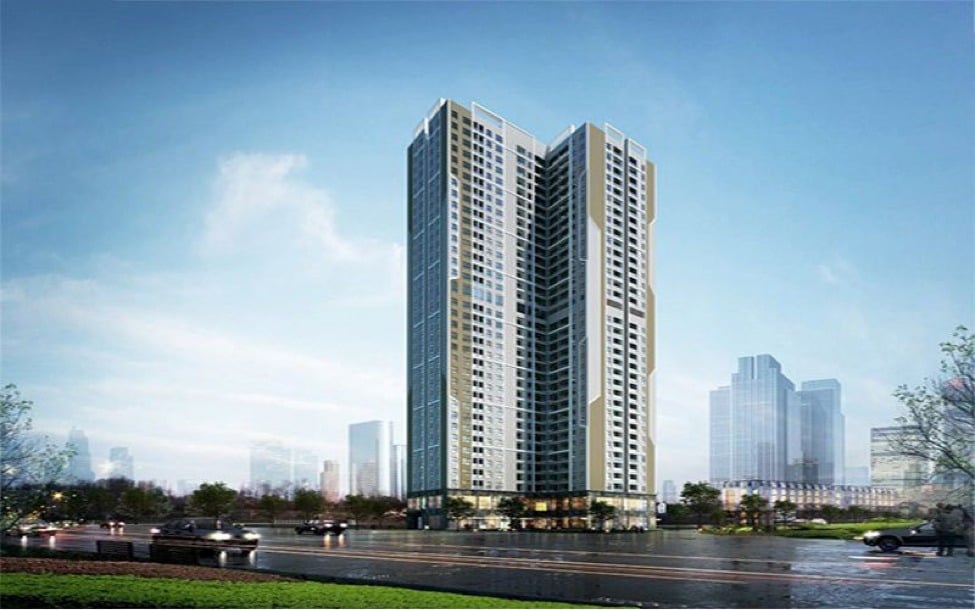
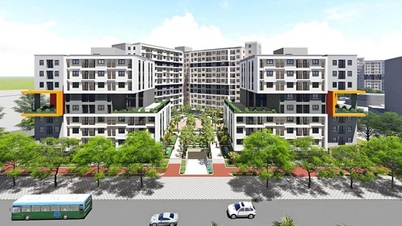
Hanoi is facing a shortage of social housing and social housing for rent. (Photo: ST)
Hanoi has proactively allocated land for the development of social housing, with a total area of approximately 400 hectares.
"As of 2023, Hanoi has allocated five concentrated social housing areas. By 2025, Hanoi will complete more than 18,000 apartments, fulfilling the requirements of the Project," a representative of the Hanoi People's Committee revealed.
However, observations show that social housing projects are experiencing delays in commencement due to various reasons. To date, Hanoi has six social housing projects that are behind schedule. Some projects were expected to hand over houses in 2020, but after four years, they remain empty plots of land.
In an event held in February 2024, Mr. Nguyen Van Sinh, Deputy Minister of Construction, "named and shamed" several key localities that, despite having a huge demand for social housing, have limited investment. Typical examples include Hanoi (3 projects - 1,700 units, meeting 9% of the demand), Ho Chi Minh City (7 projects - 4,996 units, meeting 19% of the demand), Da Nang (5 projects - 2,750 units, meeting 43% of the demand)...
Some localities haven't even had a single project started in the period from 2021 to the present, such as: Ha Giang, Cao Bang, Vinh Phuc, Ninh Binh, Nam Dinh, Quang Ngai, Quang Binh, Long An, Vinh Long, Soc Trang...
The Deputy Minister of Construction also pointed out that in some localities, many projects have received investment approval in the past period, but local authorities have not paid attention to or facilitated the selection of investors for project implementation.
Some social housing projects have commenced but have not yet been implemented by businesses or are progressing behind schedule. Some projects have met the criteria for preferential loans, but have not yet been reviewed by the provincial People's Committee to be included in the list of projects eligible for preferential loans.
According to Mr. Nguyen Van Dinh, Vice Chairman of the Vietnam Real Estate Association, many businesses have grasped the market demand for social housing, but encounter numerous obstacles when they begin implementation.
“The obstacles range from planning and land allocation to implementation procedures, investor processes, and even issues with sales and target selection. Conditions are problematic, while profit margins are constrained, and selling prices are fixed. This leads them to reconsider and find the projects unattractive, explaining why there aren't many social housing projects and why businesses can't absorb government support,” Mr. Dinh said.
While boarding houses and apartments lack safety, there is a serious shortage of social housing that meets fire safety standards. Therefore, where will people, especially low-income workers, live to ensure their safety? This remains a difficult problem without a solution.
Source: https://www.congluan.vn/cam-nha-tro-cam-chung-cu-mini-nguoi-lao-dong-thu-nhap-thap-o-dau-post296828.html
![[Photo] National Assembly Chairman Tran Thanh Man working with the Standing Committee of the Law and Justice Committee](https://vphoto.vietnam.vn/thumb/1200x675/vietnam/resource/IMAGE/2026/05/21/1779378929214_ndo_br_1-4610-jpg.webp)



![[Photo] General Secretary and President To Lam presides over a working session with the Central Policy and Strategy Committee on the development of the materials industry.](https://vphoto.vietnam.vn/thumb/1200x675/vietnam/resource/IMAGE/2026/05/21/1779359935432_a3-bnd-3129-1412-jpg.webp)


















































































Comment (0)