 |
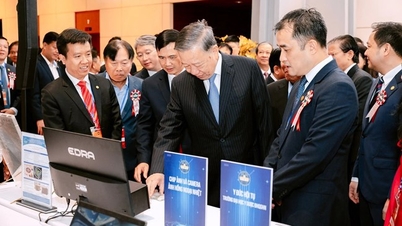
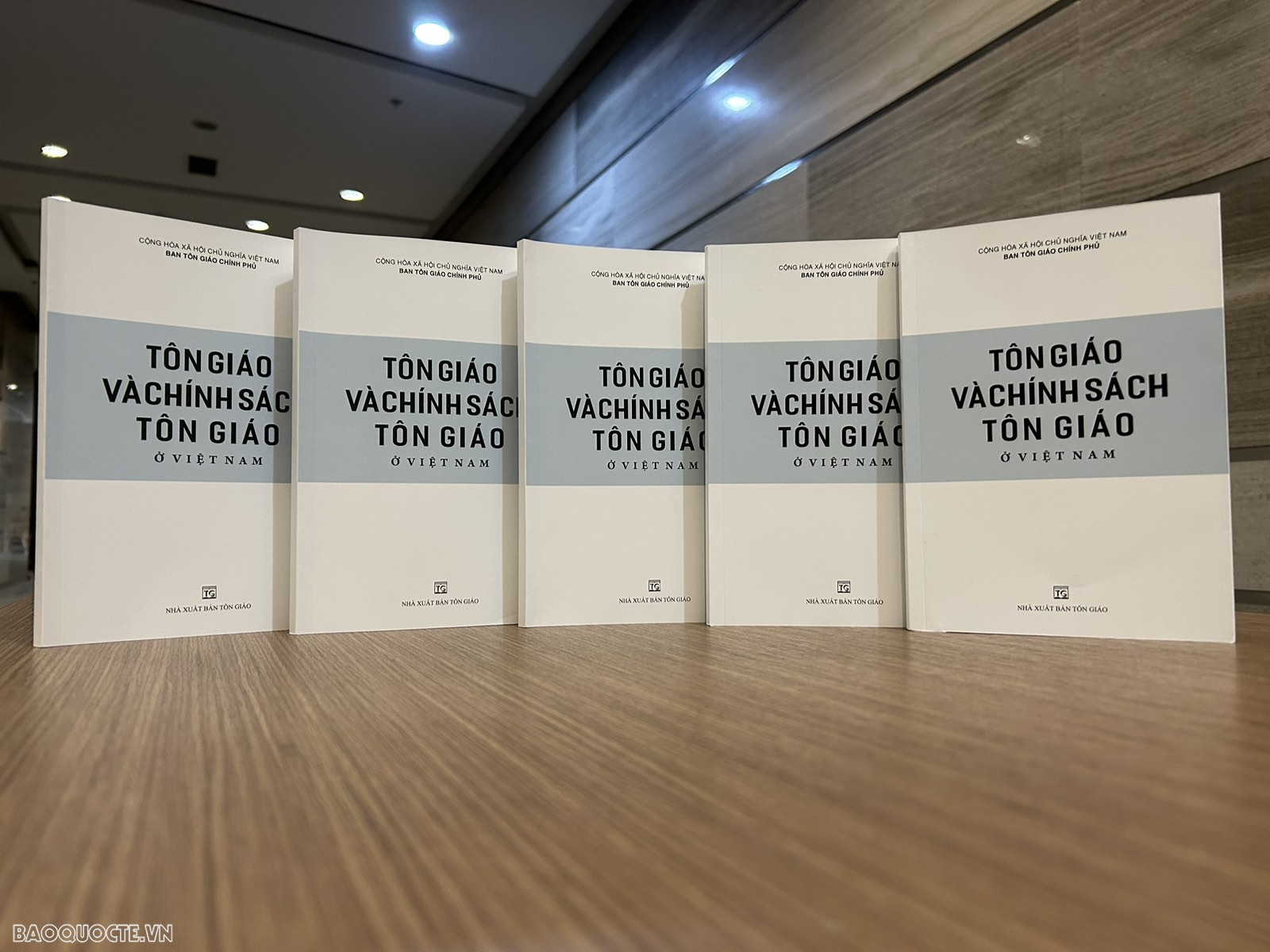
| The Ministry of Information and Communications and the Government's Religious Affairs Committee have launched the White Paper "Religion and Religious Policy in Vietnam" to help readers both domestically and internationally understand religious policy and religious life in our country more clearly and comprehensively. (Photo: Vinh Ha) |
Building on commonalities and working towards the shared goals of national renewal and international integration, it is essential to mobilize the potential strength of people of all religions, strengthen national unity, and work together with people of all religions to be vigilant and fight against forces that exploit religion to sow disunity among the nation and religions.
完善 laws to guarantee freedom of belief and religion
To leverage these "commonal similarities," the entire political system at all levels must dialectically combine the common interests of national development with the specific interests of religious followers in both material and spiritual aspects of life, including their religious and spiritual needs.
This is the driving force behind the patriotic emulation movement among people of all religions, aiming to fulfill the tasks of socio -economic development, ensuring security and national defense in accordance with the principles and guidelines of religious practice that are closely linked to the nation and comply with the law. Vietnam is a multi-religious, multi-ethnic country with many types of beliefs and religions, and intertwined religious and ethnic elements.
Throughout the history of the national revolution, the democratic unification of the country, and the building of socialism, religious leaders and followers have made significant contributions in mobilizing their followers to actively participate in the struggle for national independence, freedom for the people, and happiness for all compatriots nationwide.
Ensuring the freedom of belief and religion for all strata of the people, implementing the policy of national unity under the leadership of the Party, the management of the State, and the gathering and solidarity of the Fatherland Front and mass organizations, numerous directives and resolutions on religious affairs, most notably the Law on Belief and Religion promulgated in 2016, have created a stable and consistent legal framework to ensure the exercise of the freedom of belief and religion for citizens living in the territory of the Socialist Republic of Vietnam.
This is a necessary condition for enhancing the effectiveness and efficiency of state management of religious activities, ensuring citizens' rights and obligations, and aligning with international law in the era of international integration. The spirit of national unity has been fostered as millions of religious leaders and followers have united to achieve the victories of the revolutionary cause under the leadership of the Party from its founding to the present day.
To realize the people's right to freedom of belief and religion, and to perfect and institutionalize the management of the socialist rule of law in Vietnam, the contributions of religious leaders and followers to the draft laws and decrees have been acknowledged and respected. The dissemination of these laws and decrees from the central to the grassroots level has been enthusiastically received by a large number of religious leaders and followers.
The international community has also acknowledged and appreciated Vietnam's efforts in perfecting its legal framework, in accordance with international conventions to which Vietnam is a signatory, shortening the time for recognizing religious organizations from 23 years to 5 years, and for the first time confirming the non-commercial legal status of religious organizations… Therefore, religious organizations have the conditions to expand their organization and activities both domestically and internationally.
According to the latest statistics from the Government's Religious Affairs Committee, before the enactment of the Ordinance on Beliefs and Religions, the country had 6 religions, 13 religious organizations, with 20,929 religious places of worship, 34,181 religious dignitaries, 78,913 religious officials, and 17.4 million followers.
Since the enactment of the Ordinance on Beliefs and Religions (from 2004 to 2018), the country has had 15 religions, with 41 organizations, 29,977 places of worship; 133,662 religious officials, and 24.7 million followers. Since the Law on Beliefs and Religions came into effect, Vietnam has approximately 27 million followers (accounting for 28% of the population), with 43 organizations belonging to 16 religions recognized or registered by the state, with nearly 60,000 religious dignitaries, nearly 150,000 religious officials, and nearly 30,000 places of worship.
Comparing the figures shows that the number of religions, religious organizations, and religious leaders and followers has increased rapidly after 8 years of implementing the Ordinance. This confirms that the people's right to religious freedom is always guaranteed in practice.


Localities with large populations of religious leaders and followers have been provided with hundreds of hectares of land for religious organizations to build places of worship. Specifically, Ho Chi Minh City allocated 7,500 m² to the General Assembly of the Evangelical Church of Vietnam (Southern Region) for the construction of a Theological Bible Institute. Dak Lak province allocated over 11,000 m² of land to the Buon Ma Thuot Diocese. Quang Tri province allocated an additional 15 hectares of land to La Vang Parish…
Local authorities at all levels have addressed the religious needs of religious leaders and followers through a one-stop online public service mechanism, ensuring transparency, efficiency, and speed in procedures related to citizens' rights and obligations concerning religion.
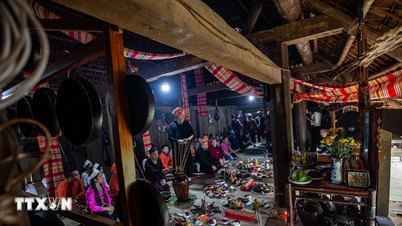
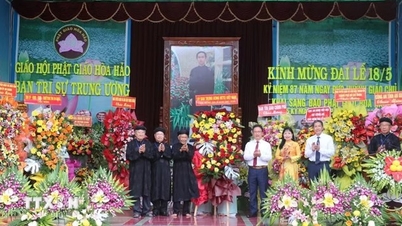
Major religious holidays such as Christmas for Catholics and Protestants; Buddha's Birthday for Buddhism; and other major religious and spiritual events like the Huong Pagoda Festival, the Ba Chua Su Festival, the Chol Chnam Thmay Festival, and the Dolta Festival of the Khmer people... have been celebrated with congratulatory letters from the Party, State, and Fatherland Front leaders, who have also organized delegations to visit, offer gifts, and provide encouragement.
Local authorities have facilitated and guided religious followers and dignitaries to organize activities that ensure the religious needs of the people are met; ensuring hygiene, environmental protection, security, and order. This has attracted millions of people and religious followers from both within and outside the country to participate, especially in large-scale religious festivals such as the United Nations Vesak Day; the 500th anniversary of Protestantism's arrival in Vietnam… These are vivid examples of the Party, State, and Fatherland Front's concern for the freedom of belief of citizens with and without religious beliefs; the absence of prejudice against religions; and the refutation of the distorted and slanderous allegations of hostile forces regarding the human rights and freedom of belief and religion in Vietnam.
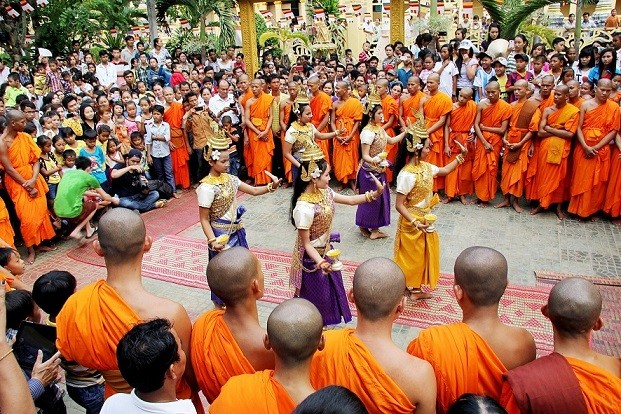 |
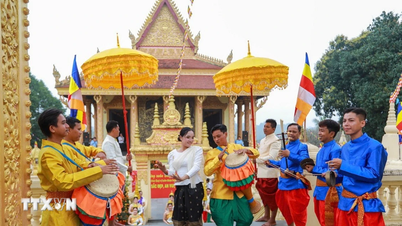
| Chol Chnam Thmay Tet is the largest and most comprehensive festival of the Khmer people. (Source: VNA) |
Promoting the spirit of national unity.
However, beliefs and religions are sensitive and complex issues. Hostile forces always consider religion as a pioneering force in the struggle against Communism worldwide in general and in Vietnam in particular, and have actively supported some extremist religious figures in opposing religions that go against the views of the Party and the State.
Furthermore, they exploit some religious leaders and followers who are dissatisfied with the government as a "trigger" to incite opposition against human rights, demanding democracy and freedom of religion, with the aim of eliminating the national independence that our people have fought for with so much blood and sacrifice.
Currently, hostile forces both domestically and internationally, including many who "disguise themselves as religious leaders" to gather followers, are seeking every way to undermine national unity; spreading false narratives and falsely accusing the State of violating democracy and human rights in order to divide and destroy national unity, and to separate the Party, the State, and the Fatherland Front from religious communities.
| Ensuring the freedom of belief and religion for all strata of the people, implementing the policy of national unity under the leadership of the Party, the management of the State, and the gathering and solidarity of the Fatherland Front and mass organizations, numerous directives and resolutions on religious affairs, most notably the Law on Belief and Religion promulgated in 2018, have created a stable and consistent legal framework to ensure the exercise of the freedom of belief and religion for citizens living in the territory of the Socialist Republic of Vietnam. |
Whenever the State amends, supplements, or promulgates new legal documents to regulate social management activities such as the Law on Beliefs and Religions; the Law on Cybersecurity, etc., hostile forces, including many extremist religious figures, again claim to be the "banner of democratic struggle" to lure a segment of the population who are "gullible and naive," and exploit the patriotism of religious followers to incite activities against the Party and the State, causing political instability and disrupting social order and security.
To consistently implement the policy of national unity, and to promote the spirit of solidarity and patriotism of over 96 million compatriots at home and over 5.3 million compatriots abroad who actively participate in the cause of building and defending the Fatherland.
In this context, the unity and cooperation of over 27 million religious followers will contribute to building a prosperous nation that can "stand shoulder to shoulder with the great powers of the world," as envisioned by President Ho Chi Minh. To achieve this goal, the political system at all levels, from central to local, needs to effectively implement the following:
Consistently implement policies and laws on state management of religious affairs, based on caring for the religious needs of the people and proactively combating the exploitation of religion by hostile forces.

This is a very important task aimed at ensuring the people's freedom of religion, creating conditions for religions to care for the lives and activities of their followers, and at the same time bringing religious activities within the framework of state management, contributing to eliminating illegal organizations that exploit religion, and sanitizing the activities of religious organizations.
Properly addressing and ensuring the legitimate religious needs of the people will reassure religious followers, build their trust in the Party's leadership, the regime, and the country's renewal process; help them understand the schemes and tactics of hostile forces; and raise their vigilance so that religious leaders and followers will consciously fight against the schemes and tactics of hostile forces, protect the legitimate freedom of religion, and safeguard national security.
Consistently upholding the Party's viewpoint on religious affairs is the work of mobilizing the masses. Religious dignitaries and followers are a unique group of people; the relationship between citizens and believers is always closely intertwined, complementing each other and inseparable, always aiming towards the motto "a good life and a beautiful faith."
Therefore, it is necessary to educate and persuade religious leaders and followers to understand their rights and responsibilities as citizens, including valuing their obligations to their homeland and country, and their duties to their religion and church. This will create conditions for religious people to actively participate in building a better life and contribute to the successful achievement of the goal of "a prosperous people, a strong nation, democracy, fairness, and civilization."
Strengthen coordination and unified action throughout the entire political system led by the Party to thoroughly address the relationships related to the Party and State's domestic and foreign policies in religious affairs. Promote the role of the Fatherland Front and other mass organizations to disseminate information and mobilize religious leaders and followers of all walks of life and age groups to participate in socio-political organizations, social organizations, and mass associations in accordance with the religious practices of each organization.
(*) Deputy Head of the Ethnic Affairs Department, Central Committee of the Vietnam Fatherland Front
Source

![[Image] Overview of the construction site for the underground station of metro line 5 at the Hanoi Ring Road 1 intersection.](https://vphoto.vietnam.vn/thumb/1200x675/vietnam/resource/IMAGE/2026/07/03/1783065595682_ndo_br_z7974930852369-100ca093c306e72675f1d3700966a86b-jpg.webp)