News that the US and Iran agreed to end the latest phase of confrontation and reopen the Strait of Hormuz caused oil prices to fall by 4%, giving the impression of a significant diplomatic victory.
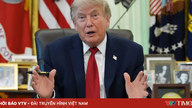
President Donald Trump quickly praised the development on Truth Social with the message: “Ships around the world , get moving. Let the oil flow!”
However, despite the positive market reaction, the reality is that transporting oil through this strategic shipping route still faces many risks.
This is seen as the most significant diplomatic breakthrough since the coordinated US and Israeli airstrikes on Iran in February sparked a conflict that killed thousands and rattled global energy markets.
The Strait of Hormuz, which Iran has blockaded for months, is expected to reopen on September 19th. However, the current agreement is not a final peace treaty.
The core issue remains Iran's nuclear program. The future of this program has been put on hold for 60 days to allow for further negotiations.
While Iran has amassed more than 400kg of uranium enriched to near weapons-grade levels, Trump – who withdrew from the 2015 nuclear deal negotiated under President Barack Obama – now has to return to the negotiating table under more unfavorable conditions.

This creates a clear political risk, as hardline Republican lawmakers have warned that any nuclear deal must be presented to Congress. Therefore, Trump risks being criticized as weak or seeing the entire deal collapse before the midterm elections in November.
Another threat comes from Israel. Prime Minister Benjamin Netanyahu and Israeli Defense Minister Katz have affirmed that the Israeli military will continue to maintain a presence in the “security zones” in Lebanon, Syria, and Gaza for an indefinite period.
Minister Katz also warned that if Iran attacks Israel in connection with the developments in Lebanon, Israel will respond "with full force."
Meanwhile, Iran considers a complete ceasefire in Lebanon one of its core demands. This makes Lebanon a flashpoint that could erupt at any time, regardless of any larger agreements between the US and Iran.
Financial markets may also have reacted too quickly. Sean Callow, an expert at ITC Markets, suggests that the lack of specific details, particularly regarding freedom of navigation, is concerning.
Investors quickly sold off oil, but the question remains what will happen if oil tankers are again confronted by Iranian patrol boats next week. A sudden price drop could be just as destabilizing as a sharp price surge.
Nevertheless, the current agreement still has certain foundations. Trump needs lower fuel prices before the midterm elections, while Iran needs sanctions eased and the release of $25 billion in frozen assets.



Western European nations, including Belgium, the United Kingdom, Germany, France, and Italy, have also pledged to consider easing sanctions in exchange for “verifiable steps” regarding Iran’s nuclear program.
The real question now is whether this fragile structure can last for 60 days. Because in the Middle East, the calm in the Strait of Hormuz may only be the calm before a new storm.
Source: https://giaoducthoidai.vn/nguy-co-bao-to-rinh-rap-eo-bien-hormuz-post781830.html