

SGGP
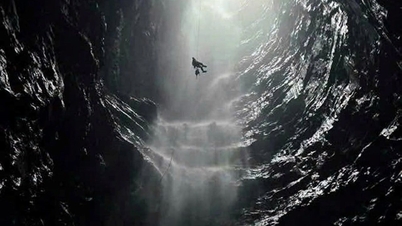
According to NHK, Japan's Ministry of Industry will fund several projects to put CO2 capture and storage technology into practical application. The CO2 capture process, known as CCS, separates and captures CO2 emitted from factories and stores it deep underground.
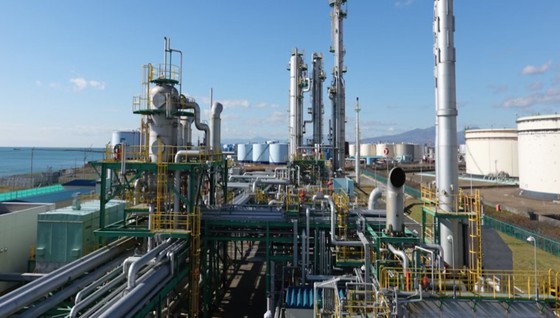 |
| CO2 capture and storage project in Hokkaido, Japan |
Pilot testing is currently underway in Hokkaido. The government will provide financial support for seven new projects, scheduled to begin in fiscal year 2030, including five in Japan and two overseas. One of these involves Japanese energy company Eneos and others, focusing on storing CO2 emissions from refineries and thermal power plants off the coast of North and West Kyushu.
Another project involves storing captured CO2 from steel mills in areas along the Sea of Japan, with participation from Itochu Trading Company and Nippon Steel Company. One of the two overseas projects involves Mitsui Trading Company & Co., where captured CO2 in Japan will be transported and stored offshore Malaysia.
The Japanese government aims to store up to 12 million tons of CO2 underground by 2030, equivalent to 1% of Japan's annual CO2 emissions.
According to data released by Japan's Ministry of the Environment at the end of April, greenhouse gas emissions in the East Asian nation increased to the equivalent of 1.17 billion tons of CO2 in the 2021-2022 fiscal year, compared to 1.15 billion tons the previous year. Therefore, in addition to CO2 capture and storage, Japan is planning to expand its offshore wind energy facilities into its exclusive economic zone (EEZ) to boost carbon neutrality efforts and ensure energy security.
According to Kyodo News, Japan, lacking abundant natural resources, relies heavily on thermal power. With the world increasingly moving towards carbon reduction measures, Japan also needs to explore more renewable energy sources, which currently account for a low percentage of its total energy production. Several European countries, such as the UK, Belgium, and the Netherlands, have already built wind farms within their Exclusive Economic Zones (EEZs). China and South Korea are also boosting wind energy production.
Japan currently has offshore wind turbines fixed to the seabed within its territorial waters. In the deepwater EEZ, experts believe it is suitable to install floating turbines, and it will take many years for these facilities to become operational.
Japan is currently aiming to increase its offshore wind power output to 30-45 gigawatts, equivalent to the capacity of approximately 45 nuclear reactors. The Japanese government also aims for renewable energy to account for 30%-36% of total energy production by fiscal year 2030, double the figure from fiscal year 2019.
The challenge for constructing offshore wind farms within the EEZ is that the Japanese government will have to decide which locations are permitted for installation and must consult with relevant stakeholders.
The expert group's report stated that the Japanese government could establish safe zones around facilities and structures such as wind turbines, but at the same time must ensure freedom of navigation for all countries.
Source
![[Image] National Assembly discusses the implementation of the socio-economic development plan.](https://vphoto.vietnam.vn/thumb/1200x675/vietnam/resource/IMAGE/2026/04/20/1776696707422_ndo_br_img-20260420-185419-jpg.webp)

![[Photo] General Secretary and President To Lam meets with National Assembly delegates from ethnic minorities.](https://vphoto.vietnam.vn/thumb/1200x675/vietnam/resource/IMAGE/2026/04/20/1776696701056_a1-bnd-8331-3342-jpg.webp)

























































Comment (0)