According to Nikkei Asia , the new fees will take effect from July 1st. The fee for a single-entry visa will increase from 3,000 yen to 15,000 yen, while the fee for a multiple-entry visa will increase from 6,000 yen to 30,000 yen.
This marks the first time Japan has adjusted visa fees in 48 years. The government stated that the fee is determined based on administrative costs and fluctuations in exchange rates.
Over 120 countries and territories, including China and the Philippines , still require a visa to enter Japan. In 2025, the country issued over 7.8 million visas, with approximately 73% going to Chinese citizens.
According to the Japanese government, visa processing costs are rising due to a sharp increase in international visitors. The fee adjustment is expected to generate approximately 120 billion yen in revenue.
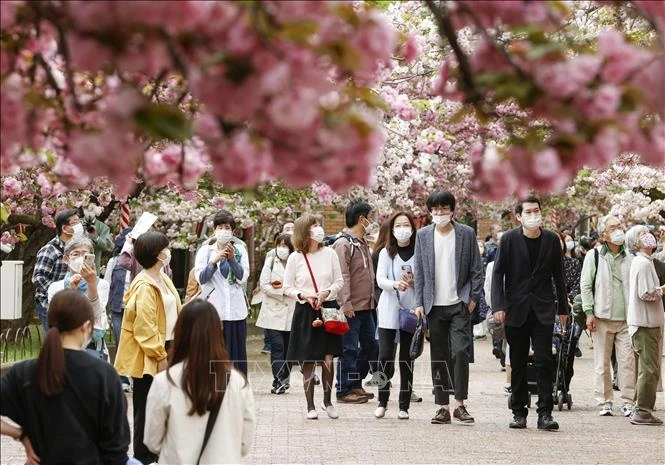
This move comes as Japan faces tourist overcrowding at many popular destinations. Local areas are reporting increased congestion, noise pollution, and litter as international visitor numbers continue to reach record highs.
In addition to increasing visa fees, the government also raised the exit tax, applicable to both Japanese citizens and foreign visitors, from 1,000 yen to 3,000 yen in order to provide more resources for measures to address tourism overcrowding.
Managing foreigners who come to Japan for tourism or residence has also become a prominent political issue following the 2025 Upper House election. This is one of the priorities of Prime Minister Sanae Takaichi, who for the first time appointed a minister specifically in charge of this area.



While tightening costs for international visitors, Tokyo has significantly reduced passport fees to encourage its citizens to travel abroad more.
For individuals aged 18 and over, the online application fee for a 10-year passport has been reduced from 15,900 yen to 8,900 yen. If applying in person, the fee is reduced from 16,300 yen to 9,300 yen.
For those under 18, the online passport fee is reduced to 4,400 yen, while the in-person fee is 4,800 yen.
According to data from the Japan National Tourism Organization (JNTO), Japan is expected to welcome a record 42.6 million international visitors in 2015, a 33.8% increase compared to 2019 before the COVID-19 pandemic.
Conversely, the number of Japanese people traveling abroad reached only 14.7 million, 26% lower than the peak of nearly 20 million in 2019.
Although the Japanese passport is among the most powerful in the world, granting visa-free access to 188 countries and territories, only about 18% of the country's population will possess one by 2025, down from approximately 24% before the pandemic.
According to the Japan Association of Travel Agents (JATA), this rate is significantly lower than that of South Korea (40%), the United States (50%), and Taiwan (60%).
The Japanese government aims to attract 60 million international visitors annually by 2030. However, officials believe that to maintain the international flight network and support aviation industry growth, the demand for overseas travel among Japanese citizens also needs to improve, rather than relying solely on international visitors.



In response to this policy, major airlines such as ANA and Japan Airlines have launched various programs offering free air tickets and frequent flyer miles to encourage people to travel abroad during the summer.
However, the prospects for a recovery in overseas travel for Japanese people still face numerous obstacles. Fuel surcharges on international flights, recently raised to record highs by ANA and Japan Airlines in July, while the weakening yen to around 162 yen/USD, its lowest level in nearly four decades, continues to make overseas travel more expensive.
Source: https://znews.vn/nhat-ban-tang-gap-5-lan-phi-thi-thuc-nhung-giam-phi-ho-chieu-post1665288.html