The dream of Brazilian football reaching its peak, envisioned by the Japanese 45 years ago, has been achieved, but they will have to continue pursuing those dreams, fueled by the very tears shed in Houston.
A dream from a manga
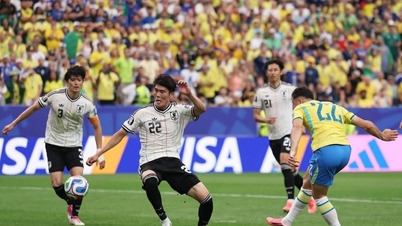
In 1981, the manga series "Tsubasa - Dream Field" transformed Japan , a country previously known only for baseball. Football, Brazil, and the World Cup were merely dreams depicted through brushstrokes. But 45 years later, everything they envisioned became a reality. Japan was world-class. Brazil was completely outplayed by Japan in the first 45 minutes. Only the resilience of their superstars saved Brazil from a defeat that seemed inevitable until the start of the second half. Then, the Samurai were defeated in the 90+5 minute of injury time.
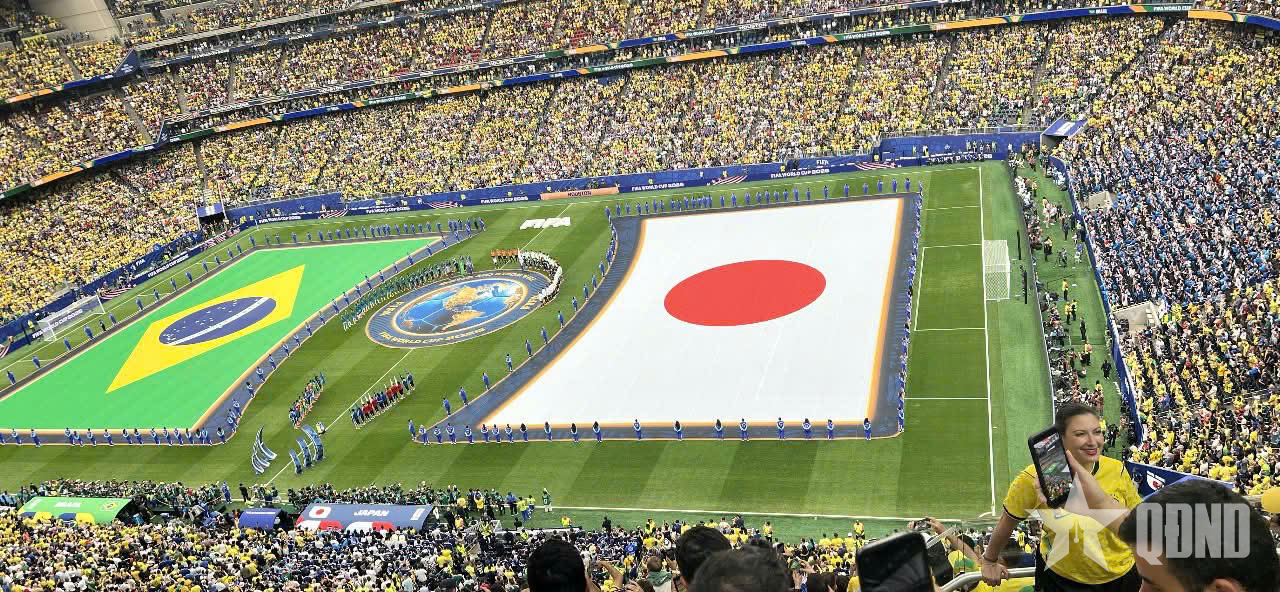 |
Japan has always been eager to face strong teams at the World Cup . |
Japanese fans make the atmosphere in Houston special. But you can see the nature and significance of it even when attending a national high school soccer game. Many players there were already famous and nationally known before signing professional contracts, such as Daizen Maeda, Daichi Kamada, Reo Hatate...
Watching Tshubasa is unbelievable. Giant pitches, spectacular bicycle kicks, players moving like superheroes amidst frenzied crowds. It seems surreal. But it's a true representation of the present. Japanese youth football is unlike anywhere else, even in Europe. High school soccer tournaments for 16 and 17-year-olds fill stadiums, are televised nationwide, and even compete internationally as university teams. It's one of the most-watched high school sporting events in the world. These tournaments create a trajectory of continuous development, potentially elevating it to the level of popular culture.


58 pages of the DNA project
For decades, Japan learned football from the Germans, with Diettmar Cramer being the first "ambassador" to bring football to Japan. Then, Okudera became the first Japanese player to join the Bundesliga. Following that, Littbarski came to Japan and created the J-League… Having learned the German way of organizing and the football philosophy, Japan went to Brazil to learn how to bring the original emotions and rhythm back into football. They rose strongly. But the extraordinary breakthrough came about 10 years ago, when the Japan Football Association launched the DNA project with a 58-page dossier, along with a long-term program and a far-sighted vision. They were the first Asian team to dare to set the goal of winning the World Cup.
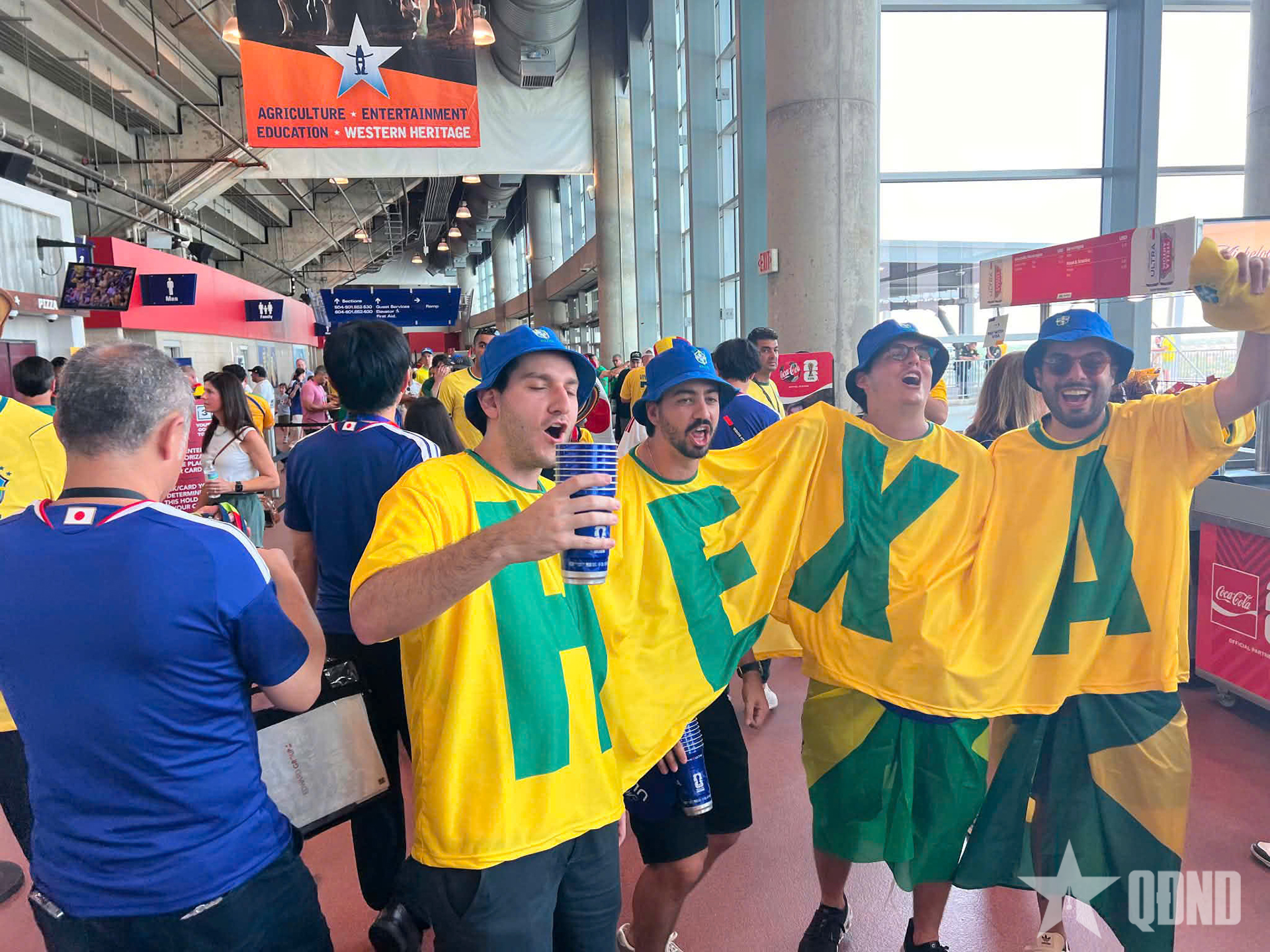 |
| Behind the joy of the Brazilian fans lies Japan's determination to build a strong football foundation. |
But the Japanese are practical, not rushing things. They set a target year for their championship win in 2092, which is still 66 years away. In this "manual," Japan goes into detail, regulating the sporting life of players, establishing the necessary skills for each position, the distance to be covered in matches, the number of sprints, training volume, diet, and more.
By 2026, Japan will have over 100 players playing for various clubs across Europe. They will open representative offices in Europe to communicate with and support the players. This is a blueprint for the future with a stable supply of talent. For this reason, the J-League is not only investing in players but also focusing on academies, coach training, infrastructure, television rights, fan engagement, and even management training.
 |
| Japanese fans left the Houston stadium with mixed feelings, but they remained confident in the future of Japanese soccer. |
Japan still viewed Europe as the center when deciding to adopt European tools and methodologies. J-League officials decided to study West Ham, one of the model clubs for developing the individual skills of young players. Terry Westley, West Ham's long-time head of youth development, quickly became a key figure in the development of Japanese football's technical skills.
With greater flexibility in training methods, talents are developed in all forms, making them more creative, more aggressive, and better suited to European football. Japan has actively engaged in European football. Japanese investors acquired Sint-Truiden in 2017, creating a gateway for players to enter Europe. Wataru Endo, Daichi Kamada, and Takehiro Tomiyasu all came here and then spread to the Old Continent. For many young Japanese players, Sint-Truiden is the ideal place to experience European football, in an environment competitive enough to foster development, but also where they feel protected when first encountering a different football ecosystem.



Japan is often described as a disciplined yet naive national team, elegant yet fragile. Their defeat against Brazil reflects this. But it's clear that Japan has matured. While they have a European model, they still retain their distinct Japanese identity and culture, evident in their resilience, discipline, and proud demeanor.
The World Cup is over for Japan. There will be no Tsubasa, no spectacular overhead bicycle kicks tearing through the air. But they hold everything they need to continue dreaming Tsubasa-like dreams... The lessons learned from building Japanese football will serve as an example for Vietnamese football to emulate.
Source: https://www.qdnd.vn/the-thao/worldcup-2026/nhat-ban-ve-tiep-uoc-mo-world-cup-1047074

![[Image] National conference summarizing one year of operation of the overall organizational model of the political system, the three-tiered government model.](https://vphoto.vietnam.vn/thumb/1200x675/vietnam/resource/IMAGE/2026/07/01/1782882811691_ndo_br_1-jpg.webp)