

The trees remain verdant as if writhing in agony / The sky remains blue as if its very essence is being torn out / (Between the trees and the sky - Literature and Arts 1968).

For some reason, every time I went to Hai Phong, I always tried to meet the poet Thi Hoang. He was very warm and friendly to his friends, especially those of the younger generation of writers like myself. Thi Hoang was innocent and somewhat naive. Even before the death of writer Bui Ngoc Tan, I always insisted that he and other Hai Phong writers take me to meet him. Even if it was very late at night or early in the morning, Thi Hoang, Dinh Kinh, and Kim Chuong would immediately appear to take me there.
Hai Phong is a port city and also a land of literature. It's no coincidence that the character Tam Binh from writer Nguyen Hong's work appears in the port city of Hai Phong. And Hai Phong has Thi Hoang.
In the past, whenever I visited Ho Chi Minh City, I would often invite the poet Thanh Tung, famous for his poem "The Time of Red Flowers," which was published in the Army Literature and Arts magazine under rather special circumstances, to my Southern office. Literature and life don't always go smoothly according to natural course. I never asked why Thanh Tung left his birthplace in Hai Phong so early to venture south; it was a way of respecting the individuality of each artist.
The poet Thi Hoang was the same; I never asked him how he lived or how he wrote, but only talked to him about things that needed to be handled, about immediate action to benefit the common good, especially regarding his work and creative endeavors. With the experience and keen insight hidden beneath Thi Hoang's seemingly naive exterior, I managed to glean many things from him that he probably didn't even know.
We young writers have always had great faith in Thi Hoang. We trust him in his honesty and, above all, his fairness in evaluating literary works in a very difficult area: poetry. It's quite normal that most Vietnamese poets rarely admire each other. Having one's own writing and another's wife is also necessary in life. As the poet Nguyen Anh Nong said: "One step seems to lead somewhere / A thousand steps still haven't reached me / I am like someone learning to walk with tiny feet / The road of life is long and wide / The road of love is precarious / My fate is adrift / Deep in the clouds, windswept / My hand is like a blade of grass / Where is the road to paradise and glory? / So many horses and carriages fall along the roadside" (Exile).
Thi Hoang never seemed to talk about his own poetry, much less instruct us on how to write poetry. But we were wise enough to read his poems directly and learn from them. It's not easy to write verses like these:
Oh, temple caretaker, please, I beg you!
Why bother arguing with those spoiled brats?
So, he's laughing now, isn't he?
Let them play, don't chase them away.
Suddenly I realized that children are the best.
Doing it in the afternoon is very similar to doing it in the morning.
Even the saint rejoiced, challenging anyone to guess.
Is He in there or out here?
(Children playing in front of the temple)
It seems there hasn't been an afternoon yet.
As green as this afternoon, a breathtaking shade of green.
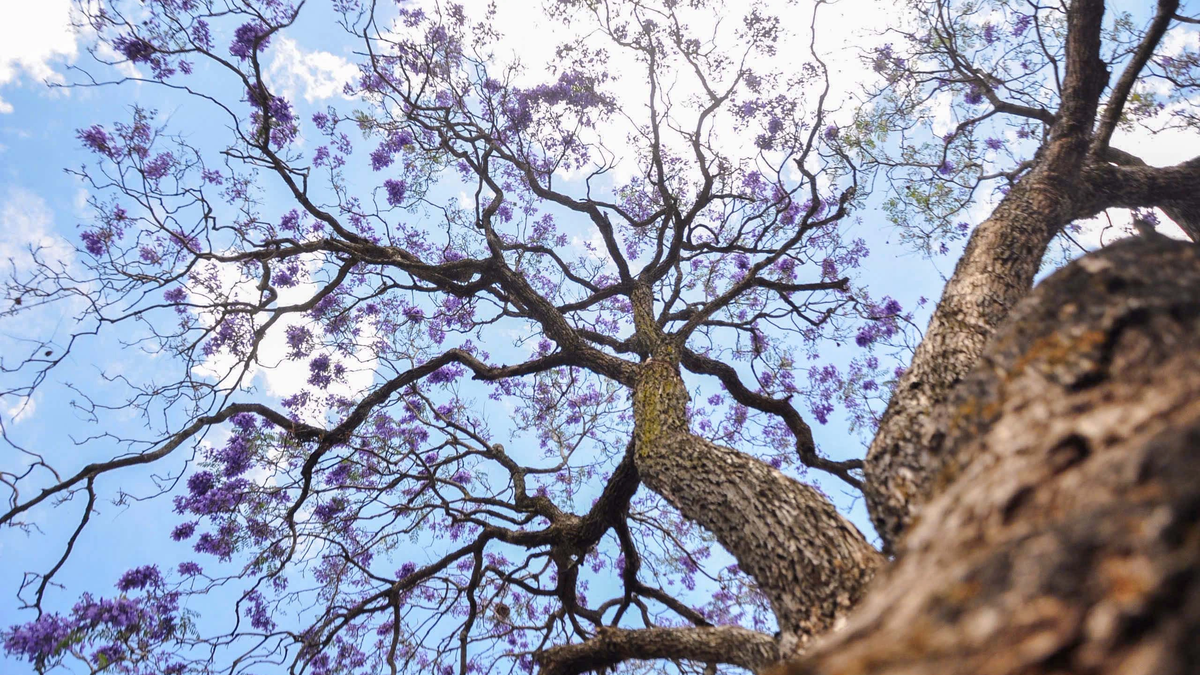
The tree stood there, facing the yearning sky.
Lift the seedling all the way to the top of the tall tree.
We need to improve significantly after this afternoon.
Being with nature is so precious.
The gentle rustling of leaves is like a mother's voice.
And the sky longs for it again, like a father.
(Between the trees and the sky)
Water flows to form streams and sources.
A mother's sadness is also for the sake of raising her children.
My mother is far away, in the mountains.
Come closer, right in the middle of my heart, Mom.
Bird, land on the roof!
Sing a song to ease my mother's old age.
(Poem dedicated to my mother)
Thi Hoang's poetry has always been like that.
Thi Hoang was very skilled at creating powerful poetic imagery in each stanza, poem, and especially each line. The pairs of lines in Thi Hoang's poetry often form complete couplets. For example: "The trees remain verdant as if writhing in agony / The sky remains blue as if its very essence is being torn out."
Thi Hoang was a civil engineer before joining the army. His origins didn't matter, as the saying goes, "a hero's background is irrelevant," and this seemed to hold true for Thi Hoang. In his poetry as in his life, Thi Hoang was both cautious and decisive. If you presented him with a bad poem, he would immediately remain silent and offer no criticism. But if a young writer from a later generation showed even a glimmer of hope, he would readily encourage them, even offering sincere guidance to help them grow. This is also a virtue of someone who has overcome countless challenges, knowing when to weigh the consequences to protect himself and to admonish himself.
Recently, a friend of Thi Hoang's, Nguyen Huu Quang, whom he greatly admires, introduced me to the task of writing several epic poems about historical figures. I was quite surprised by Nguyen Huu Quang's enthusiastic and dedicated work ethic, and especially the openness he displayed in his epic poems about historical figures. Nguyen Huu Quang mentioned that he has a mentor in the poet Thi Hoang. I saw him excitedly and passionately talking about his mentor, not only in poetry but also in his character and way of life. Nguyen Huu Quang has experienced many upheavals, some of which were major turning points, and he understands that having a friend is difficult, but having a mentor like Thi Hoang is even more challenging. Yet, he has found that from the sincerity, trust, and especially the heartfelt sharing in the works of the senior poet in a very natural way. That is the most valuable thing.
For Thi Hoang, working at the Poetry Council of the Vietnam Writers Association , where he was a key member for many years, reading, evaluating, and making decisions on the works of many writers was no easy task. He faced immense pressure. He encountered flattery, praise, and even sabotage, yet he overcame it all with ease and grace. Why? Because Thi Hoang remained true to himself, because in his blood and heart he was, is, and will always be a soldier who had survived the fires of war.
Few people know that Thi Hoang was very proficient in military jargon and, above all, very sociable with soldiers, including those who fought in battles. Thi Hoang was also very insightful in advising and suggesting to us on matters outside of poetry. When I was working on the literary script for the film "The Assembly Ship" - a symbol of "The Song of Victory," it was Thi Hoang, and no one else, who gave me many insightful suggestions. While talking to historical witnesses in Hai Phong city, Thi Hoang listened attentively from the beginning and helped me - the author of the literary script who was struggling to understand the scope and scale of the Assembly ships that transported hundreds of thousands of cadres, soldiers, and children of the people from the South to the North since October 1954. From Thi Hoang's heartfelt and insightful suggestions, I was able to create a coherent literary script for the documentary film "The Assembly Ship" - a symbol of "The Song of Victory."
Time flew by, and no matter how busy I was, I always made time to call or visit Thi Hoang in Hai Phong. Meeting him wasn't always about anything significant, but talking to him always gave me confidence, and even helped me make decisions that Thi Hoang himself might not have known about.
Poet Thi Hoang experienced a wide range of emotions in his creative work and writing. He also left behind many poems and verses that our generation, after mine, will read and use to enrich, enliven, and benefit our spiritual lives. That is what I want to express in this short article about Thi Hoang – a very respected elder brother of mine.
Source: https://daidoanket.vn/nha-tho-thi-hoang-nhu-troi-xanh-rut-ruot-10293812.html


























































Comment (0)