

Skin cancer is a malignant disease that occurs when skin cells grow uncontrollably, primarily due to the effects of ultraviolet rays from sunlight.
Skin cancer is a malignant disease that occurs when skin cells grow uncontrollably, primarily due to the effects of ultraviolet rays from sunlight.
If left undetected and untreated, skin cancer can metastasize to other organs such as the bones, liver, lungs, and brain, posing a life-threatening risk. So, is skin cancer hereditary?
 |
| Skin cancer is a malignant disease that occurs when skin cells grow uncontrollably, primarily due to the effects of ultraviolet rays from sunlight. |
Is skin cancer hereditary? According to Dr. Ngo Tuan Phuc, Department of Oncology, Tam Anh General Hospital, Ho Chi Minh City, most cases of skin cancer are diagnosed without being related to genetic syndromes or a family history of the disease. The leading cause of skin cancer is ultraviolet radiation from sunlight.
Ultraviolet rays can damage DNA in skin cells. Normally, the body is able to repair this damage on its own.
However, prolonged and frequent exposure to ultraviolet radiation can cause DNA damage that cannot be repaired, leading to abnormal changes in genes that control cell growth and division (tumor-proliferating genes and tumor suppressor genes), thus forming cancer. These changes are called acquired mutations or genetic alterations.
Although rare, a small number of skin cancers are associated with family history, such as Gorlin syndrome (basal cell nevus syndrome).
This is a rare syndrome associated with a mutation in the PTCH1 gene. Individuals with this syndrome often have multiple basal cell carcinoma lesions and abnormalities in the nervous system, eyes, and bones. Approximately 70% of patients have a family history of the disease, while 30% acquire it through a gene mutation.
Xeroderma pigmentosum (XP) is a rare condition caused by a genetic mutation in the XP (ERCC) gene, resulting in abnormalities in DNA repair.
People with xeroderma pigmentosum have poor DNA repair capabilities, making them more vulnerable to ultraviolet radiation, which increases their risk of skin cancer, especially in sun-exposed areas.
Melanoma: Some cases of melanoma are associated with genetics, such as abnormal changes in the CDKN2A (p16), CDK4, and BAP1 genes.
Merkel cell skin cancer: This is a rare and dangerous type of cancer due to its rapid metastasis. The main causes include exposure to ultraviolet radiation, Merkel cell polyoma virus infection, and a weakened immune system.
Kaposi sarcoma and cutaneous lymphoma: These conditions can manifest as skin lesions, such as brown or red lumps or patches appearing on the face, legs, arms, or genitals.
Who is at risk for skin cancer? The risk of developing skin cancer depends on many factors, including being white or having light-colored skin, red or blonde hair, and light-colored eyes.
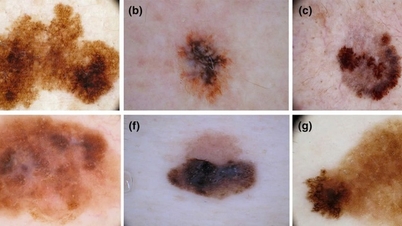
People with many unusual moles that are asymmetrical, have irregular borders, differ in color (brown, black, red), or have a diameter larger than 0.6 cm.
People who are frequently exposed to coal or arsenic compounds, work outdoors, or have a history of sunburn. People with weakened immune systems or who are taking immunosuppressant drugs (such as after organ transplantation).
Smoking increases the risk of squamous cell carcinoma, especially on the lips. People with a family history of rare genetic disorders, such as Gorlin syndrome or xeroderma pigmentosum, also have a higher risk.
To reduce the risk of skin cancer, everyone should avoid direct exposure to sunlight, especially between 10 am and 2 pm, when ultraviolet rays are strongest.
Use sunscreen with an SPF of 30 or higher. Apply evenly to your entire body at least 10 minutes before going outside and reapply every 2-3 hours.
Protect your body with sun-protective clothing, wide-brimmed hats, sunglasses, and face masks. Get regular health checkups every six months, especially if you are at high risk of skin cancer.
Build a healthy lifestyle: eat a balanced diet, include plenty of green vegetables and fruits, limit fat intake, avoid smoking, alcohol, and staying up late.
Control your weight and maintain regular physical activity. Proactively learn about your family history: if you have a family history of skin cancer, you should consult a doctor for advice and genetic testing if necessary.
Most cases of skin cancer are not related to genetics or family history. However, a small number of cases do have a genetic component, particularly melanoma.
Individuals with a family history of skin cancer or who have multiple unusual skin lesions should consult a doctor and undergo genetic testing to assess their risk of developing the disease.
Preventing and protecting the skin from the harmful effects of ultraviolet rays is the most effective way to reduce the risk of skin cancer, while maintaining a habit of regular health checkups helps detect and treat dangerous diseases early.
Source: https://baodautu.vn/nhung-ai-co-nguy-co-mac-ung-thu-da-d229837.html































































































Comment (0)