The World Economic Forum (WEF) has just announced its annual Top 10 emerging technologies report, in collaboration with research publisher Frontiers, based on insights from scientists, researchers, and futurists worldwide.
“The report identifies technologies that have the potential to significantly impact society and the economy, highlighting those with enormous potential to revolutionize connectivity, address the pressing challenges of climate change, and drive innovation across a wide range of sectors,” said Jeremy Jurgens, Managing Director of the WEF and head of the Centre for the Fourth Industrial Revolution.



First is aggregated data – a privacy-enhancing technology that replicates patterns in data but doesn't contain information that could be linked to an individual or group. It can still be used for data sharing, which is crucial for scientists , without compromising individual data. Next is reconfigurable smart surfaces. With this technology, surfaces like walls or mirrors can be transformed into components to enhance wireless communication. It can also make wireless networks more energy-efficient.
Next is the High Altitude Platform System (HAPS), which can be used to provide fixed broadband connectivity in rural areas. These operate at an altitude of approximately 20km above the Earth, often in the form of balloons, spacecraft, or fixed-wing aircraft, and can surpass the connectivity capabilities of satellites and ground towers. The WEF states that HAPS' innovative infrastructure could bring internet access to over 2.6 billion people in 100 countries, creating opportunities for education and economic growth. The Integrated Sensor and Communication System (ISAC) is another example. ISACs combine these capabilities in a single system, collecting and transmitting data simultaneously, resulting in greater cost and energy savings. ISACs can be used in practical applications such as urban planning, environmental conservation, and air and water quality monitoring; and virtual reality technology for construction.
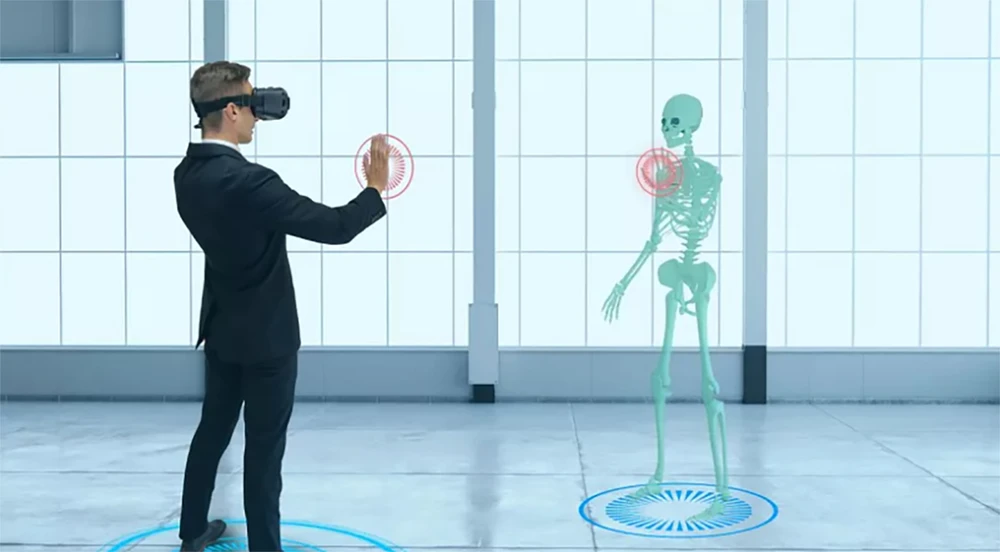
Virtual reality and augmented reality, combined with computing power and AI, can improve tools that could play a role in a greener future; elastomers described as “powering thermal systems that function like muscles,” caloric elastomers could be a more sustainable way to stay cool, potentially used for cooling in areas with limited or no grid infrastructure. Bacterial systems capture carbon. Organisms like algae can “eat” carbon through photosynthesis. This is one way bacteria capture carbon. CO2 is then converted into new products such as biofuels or even animal feed; alternative protein feeds.
The report states that proteins derived from single cells, such as algae, may be more sustainable and viable than traditional animal feed, especially as feed demand increases. Genetically modified organ transplant systems: The CRISPR-Cas9 gene-editing tool is a technology that scientists are very excited about. It is cheaper and faster than other DNA editing technologies and could help meet the growing demand for organ transplants.



LAM DIEN
Source: https://www.sggp.org.vn/nhung-cong-nghe-giai-quyet-thach-thuc-moi-post747284.html
![[Image] National conference summarizing one year of operation of the overall organizational model of the political system, the three-tiered government model.](https://vphoto.vietnam.vn/thumb/1200x675/vietnam/resource/IMAGE/2026/07/01/1782882811691_ndo_br_1-jpg.webp)