

The birthplace of record-breaking constructions.
"More than 10 years ago, when my father took me from Hanoi to Ho Chi Minh City to take the university entrance exam, the first place he wanted to go was the Thu Thiem Tunnel. I remember sitting in the taxi driving through the tunnel, my father kept asking the driver, 'Are we driving in the middle of the river?', 'How long is this tunnel?'… My father said that back then, the Thu Thiem Tunnel crossing the Saigon River was the most impressive infrastructure project in Ho Chi Minh City. Later, when telling friends about my daily commute to school, my father would still say, 'She studies in Thu Duc, and she drives through the Thu Thiem Tunnel every day,'" shared Ms. Quynh Mai (resident of District 7).
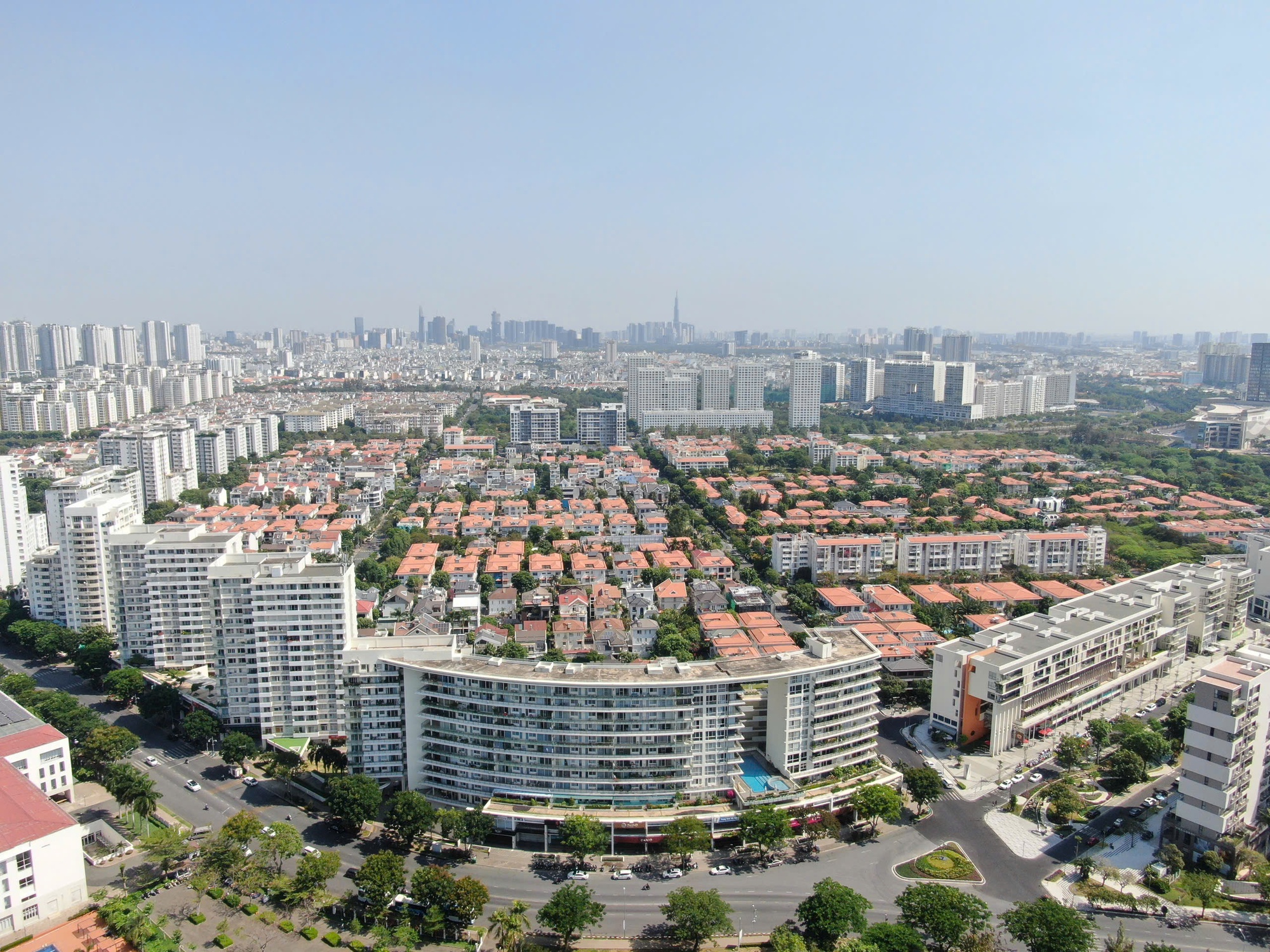
From a once desolate swampy area, Phu My Hung has emerged, Vietnam's first modern, model urban area.
PHOTO: HOANG QUAN
Not only visitors from afar, but even the people of Ho Chi Minh City are proud of the Thu Thiem Tunnel. With a total length of 1,490 meters, including 370 meters of four submerged tunnel sections, it was the first and largest river-crossing tunnel that no other country in Southeast Asia had been able to build at that time. Attending the opening ceremony of the Thu Thiem Tunnel and the East-West Boulevard (now Vo Van Kiet Street) on the morning of November 20, 2011, Major General Tran Thanh Lap, former Political Commissar of the 10th Special Forces Regiment of Rung Sac, emotionally shared with the Vietnam News Agency (VNA): "36 years ago, our soldiers bravely and resolutely fought the enemy right beside this river, and to cross the Saigon River, it took them 30 minutes amidst countless dangers. At that time, we only hoped for peace to be restored and for a prosperous life; we never imagined we would be standing here, witnessing the inauguration of the Thu Thiem Tunnel with its modern scale, beyond our imagination. We hope this project will contribute to promoting the socio-economic development of the city, making it increasingly civilized and modern."
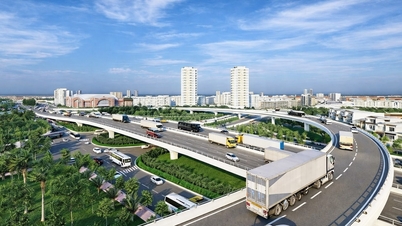
Not only Major General Tran Thanh Lap, but many people in Ho Chi Minh City still vividly remember the image of the wide, spacious road stretching nearly 22 km from Cat Lai intersection to Binh Chanh District, filled with banners and flags. Since 1975, Ho Chi Minh City has never been more beautiful and magnificent than on the day this monumental project, spanning the city center and connecting the East and West banks, was completed. Beyond being the longest central thoroughfare connecting the city center with Thu Thiem and relieving congestion on the Saigon Bridge, the East-West Boulevard project also dramatically transformed the urban landscape, as it was the largest-scale compensation and relocation project in the city – affecting 6,744 households and 368 agencies and organizations. From a dilapidated state, tens of thousands of residents living along the Tau Hu - Ben Nghe canal and on both sides of Ham Tu and Tran Van Kieu roads have been relocated to better, more convenient housing, in exchange for a new, spacious, and beautiful road. Currently, Ho Chi Minh City is continuing to study the option of extending this boulevard to Long An , connecting with the Trung Luong expressway to enhance regional connectivity.
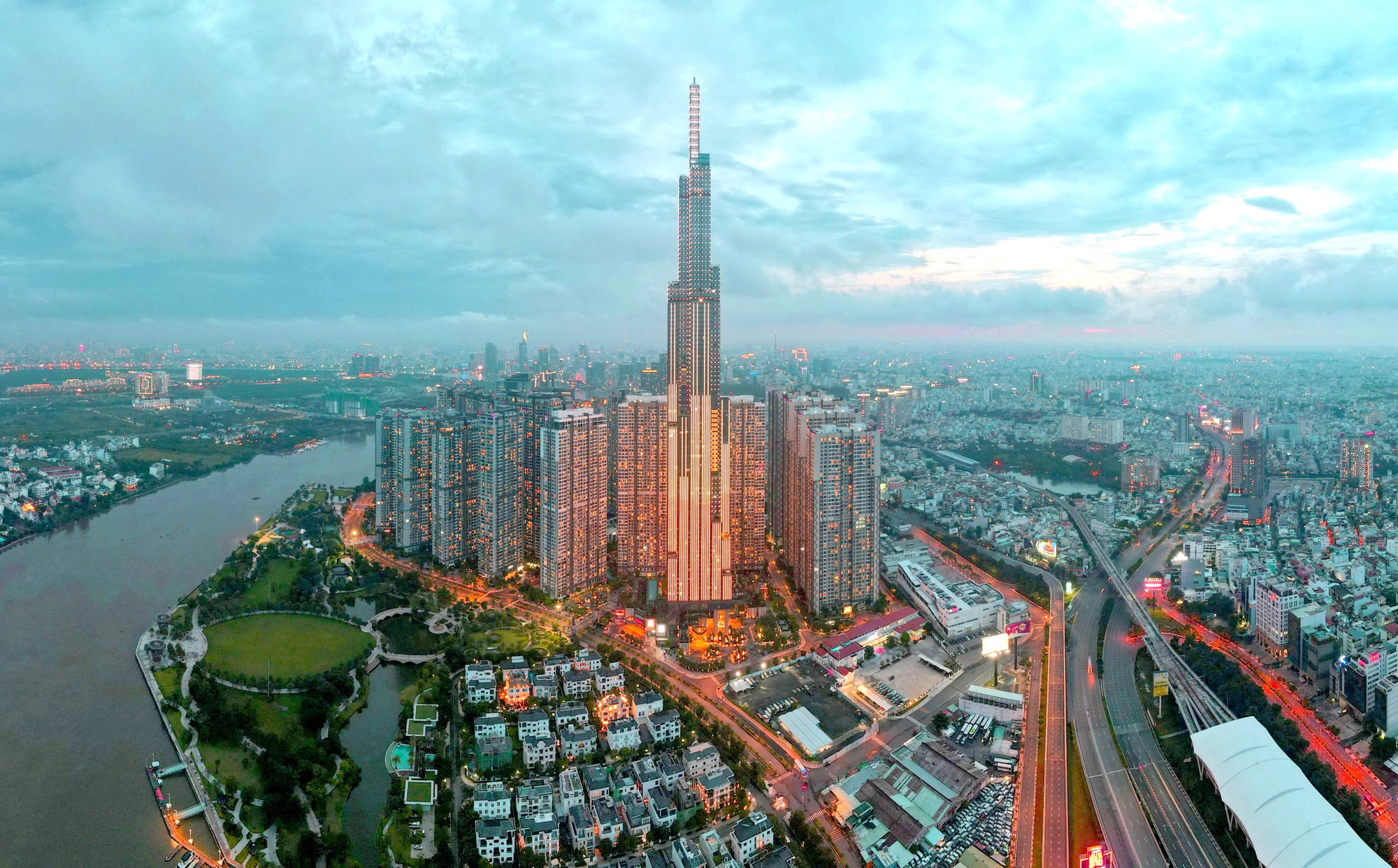
The Landmark 81 building is the tallest building in Vietnam.
PHOTO: NGOC DUONG
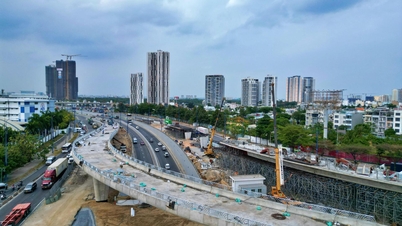
More than a year before the inauguration of the Saigon River Tunnel, Ho Chi Minh City also became the first locality in the country to have an inter-provincial expressway with the opening of the Ho Chi Minh City - Trung Luong Expressway. Part of the North-South Expressway system in the east, the Ho Chi Minh City - Trung Luong Expressway is over 40 km long, connecting Ho Chi Minh City with the provinces of Long An and Tien Giang, with an investment of nearly 10,000 billion VND. The opening of this expressway not only marks a major turning point for the transportation sector but also creates a breakthrough for the Southern economy by eliminating the sole route of National Highway 1 from Ho Chi Minh City to the Mekong Delta, which had deteriorated and become overloaded, bringing the Mekong Delta closer to the city. Instead of having to travel 90 minutes on the frequently congested national highway, trucks transporting goods and people from the Mekong Delta to work in the city can now travel smoothly on the wide, beautiful 4-lane expressway, reaching their destination in just 30 minutes. Since then, a network of expressways connecting Ho Chi Minh City to the provinces of the Southeast and Southwest regions has been and is being built, expanded, and extended by Ho Chi Minh City, broadening the space for economic development.
Over the past 50 years, Ho Chi Minh City has successively created record-breaking projects such as: The Landmark 81 building - at the time of its opening, it not only became the tallest building in Southeast Asia but also broke other records such as the highest observation deck in Vietnam, the highest apartment in Vietnam, and the highest restaurant and bar in Southeast Asia; or Phu My Bridge, one of the cable-stayed bridges with the most modern cable-stayed technology in the world; Metro Line 1, Vietnam's first urban railway line with an underground section...
From swampy areas to livable urban centers.
For those who have lived in Ho Chi Minh City for almost their entire lives, like Mr. Phan Chanh Duong (formerly a member of the "Group of Six," a group of passionate intellectuals), it's hard to imagine that the southern part of Ho Chi Minh City could become a developed urban area, known as the "wealthy neighborhood" as it is today. Mr. Duong recalls: In the years after 1975, part of the former Nha Be District, now District 7, was just a swampy, desolate area with very difficult transportation, mainly relying on waterways connecting the city center to Can Gio District and the western provinces. At that time, the local economy was underdeveloped; only 0.7% of the workforce was employed in industry in the 1990s, and trade and services were mainly small-scale businesses run by individual traders. This area had a low level of skilled labor and the highest poverty rate in the city at that time.
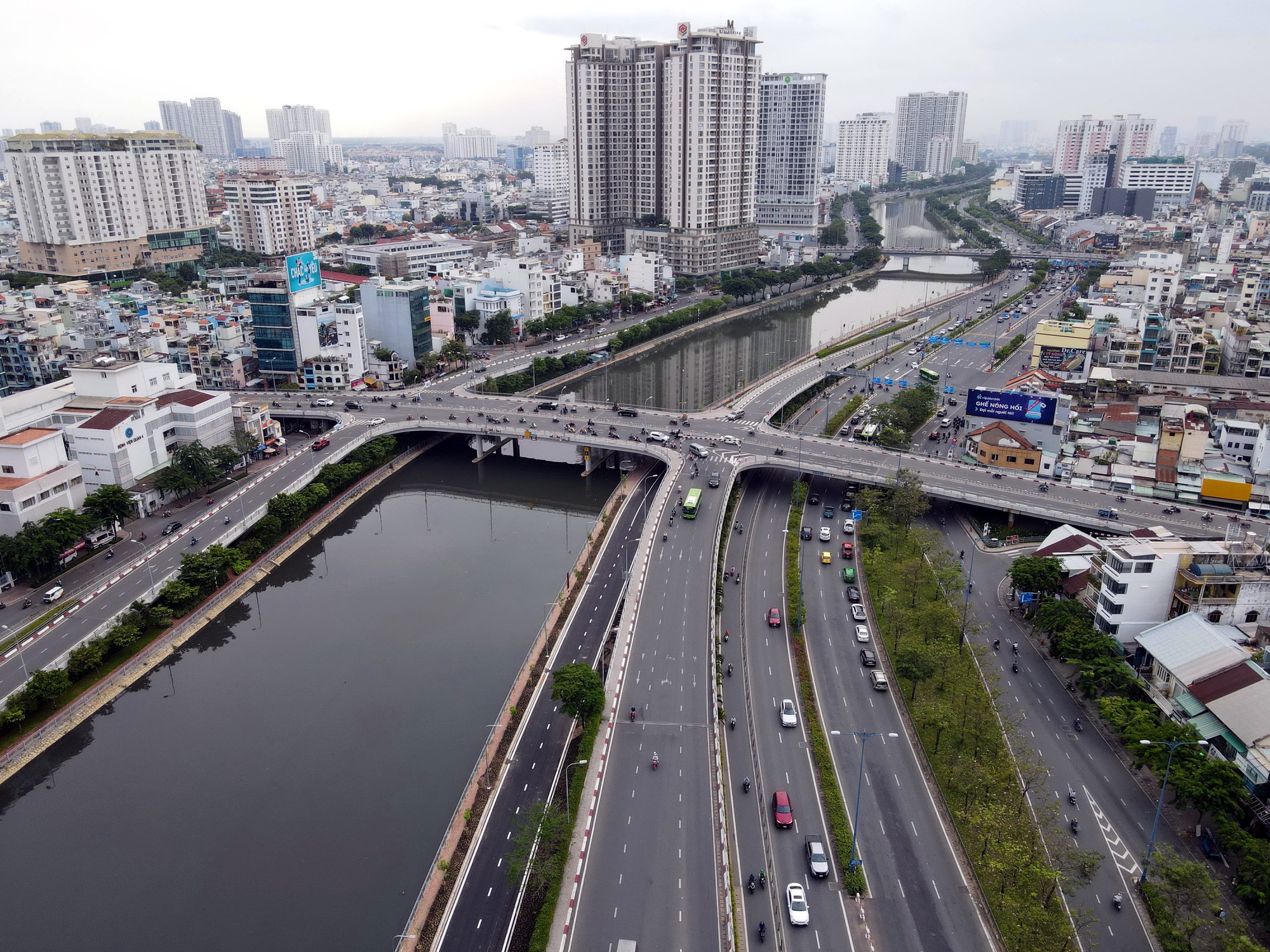
The wide East-West Boulevard, now known as Vo Van Kiet Street.
PHOTO: NGOC DUONG
However, driven by the desire to leverage regional economic development, many economic experts in the "sixth group" proposed developing the southern swampland into a livable urban area and establishing an export processing zone to boost exports and attract foreign investment. At that time, the Tan Thuan Dong peninsula in Nha Be (now Tan Thuan Dong Ward, District 7) was considered for the establishment of the Tan Thuan Export Processing Zone. In 1996, Phu My Hung Company, a joint venture between Tan Thuan Industrial Development Company Limited and CT&D Group (Taiwan), began constructing the Phu My Hung urban infrastructure. This included the 17.8 km long Nguyen Van Linh Boulevard, with a 120 m wide, 10-lane road, built entirely from scratch, crossing the swampland of Nha Be District (now District 7), District 8, and Binh Chanh District. From here, the first outlines of the urban area began to gradually materialize. May 2018 marked a milestone in Vietnam's journey to transform a swamp into its first modern, model urban area: Phu My Hung.
"The success of the South Saigon area is not just about the 'physical' urban development, but also about its 'spirit' – its ripple effect. Without the Tan Thuan Export Processing Zone and Nguyen Van Linh Boulevard, there might not be Dong Van Cong and Vo Van Kiet roads today; without Phu My Hung Urban Area, the entire South Saigon area, or even the whole city, might not have shone with so many modern urban areas and high-rise buildings as it does now. These projects have helped modernize the face of Ho Chi Minh City and allowed its people to live in more spacious homes," said Mr. Phan Chanh Duong.
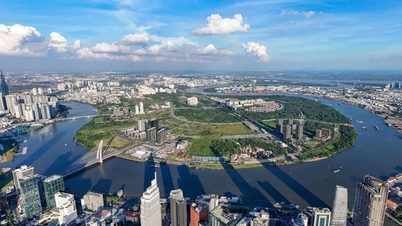
Similarly, in the memories of Saigonese people, Thu Thiem was a swampy area known as the "Tau O Hamlet." In the years after 1975, residents of Thu Thiem mainly lived off farming. Others chose boat rowing as a means of livelihood. In 1996, the government approved the Ho Chi Minh City master plan, designating the construction of the Thu Thiem New Urban Area on the east bank of the Saigon River, with a total area of 657 hectares. Located just a short distance from the historical city center, opposite the Saigon River, this peninsula was chosen as the new integrated center, meeting the development needs of a city of over 10 million people and a large number of visitors. It was expected to become an international-level financial and commercial center, and the most beautiful city in Southeast Asia. However, due to poor transportation infrastructure, Thu Thiem has yet to achieve significant progress. Just over 20 years ago, Thu Thiem was still a pristine swampy area with a sparse population. "Back then, transportation was difficult. The only way to get from Thu Thiem to the city center was by ferry. The Saigon Bridge was way over in Binh Thanh, too far away, and we didn't want to live there. But we didn't have the money. Thu Thiem was considered a poor neighborhood at that time, so land was very cheap," a local resident shared.
Yet, in just a decade, everything changed completely. In 2007, the Thu Thiem Bridge was completed, and residents from Binh Thanh District began gradually moving to District 2 (now Thu Duc City). When the Thu Thiem Tunnel officially opened, the area entered a new era. A series of high-end housing projects sprang up rapidly, roads were newly built and expanded, becoming clean and beautiful… Thu Thiem transformed into a "golden land" area that only the very wealthy could dream of owning.
Continuing its gradual development of new satellite urban areas in the east, Ho Chi Minh City is launching a series of connecting transportation routes. The Ba Son Bridge, connecting the Ton Duc Thang - Nguyen Huu Canh intersection (District 1) to the Thu Thiem urban area, has become an architectural highlight and a new symbol of the city immediately after the pandemic. Most recently, the pedestrian bridge across the Saigon River officially commenced construction, also expected to create a masterpiece of art in the heart of the river. The Thu Thiem 3 and 4 bridges, connecting Districts 4 and 7 with the Thu Thiem urban area, are also being promoted for early commencement next year. Thu Thiem is steadily progressing towards becoming the financial and economic center of the entire region.
Ready for a brilliant phase of growth ahead.
Arriving in Ho Chi Minh City at noon on April 30, 1975, Dr. Nguyen Huu Nguyen (Ho Chi Minh City Urban Planning and Development Association) was proud to have witnessed the complete transformation and development of Ho Chi Minh City over the past 50 years. As someone who specializes in urban planning and infrastructure policies, Dr. Nguyen felt even more acutely the remarkable transformation in the city's urban infrastructure development.
He recounted: "On April 30, 1975, when I arrived here from Hanoi, there were only a handful of high-rise buildings, mostly 4-5 to 7 stories tall at most. Now, there are countless high-rise buildings, some even reaching skyscrapers that have become iconic. The roads are also like that; we have the Phu My cable-stayed bridge, bridges over rivers, tunnels, wide 8-lane boulevards, and modern 2-3 level interchanges… These are all high-tech projects with distinctive architecture, creating turning points in Ho Chi Minh City's urban development over the past 50 years."
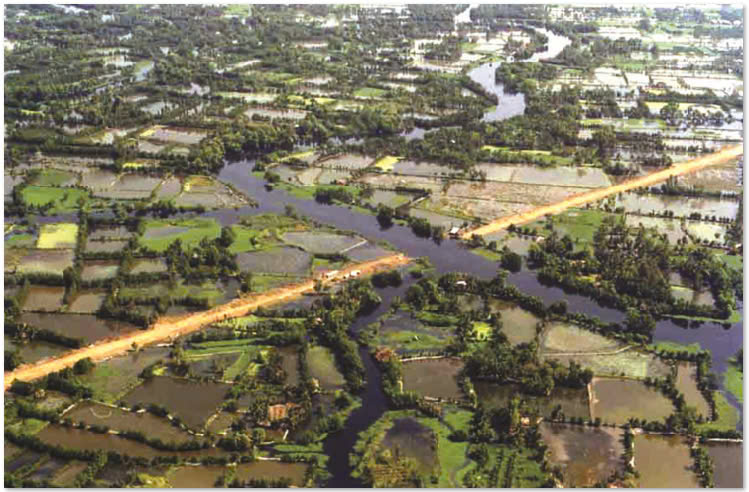
Phu My Hung used to be just a swampy area.
PHOTO: PMH
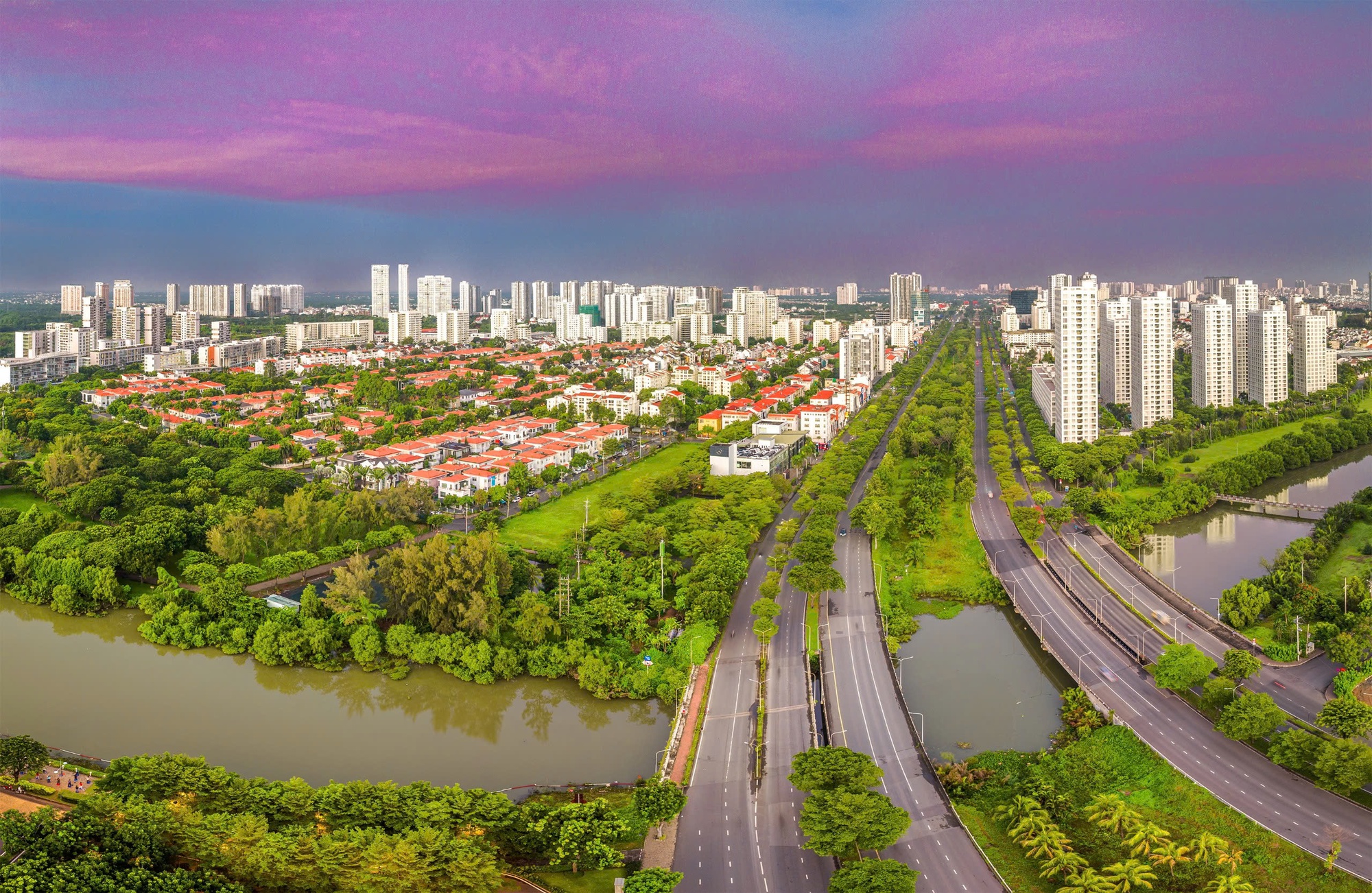
Phu My Hung today is Vietnam's first modern, model urban area.
PHOTO: PMH
While pleased with Ho Chi Minh City's remarkable development, Dr. Nguyen Huu Nguyen acknowledged that the city's infrastructure has not kept pace with the needs and population growth. Traffic congestion and flooding remain unresolved, transportation infrastructure growth is relatively low at only 10%, the public transportation system is being implemented slowly, and environmental pollution is increasing, affecting the lives of the city's residents. He expressed hope that with a strong future development orientation and groundbreaking large-scale projects, the city's leaders will be determined to deliver on their promises, gradually developing the city's urban infrastructure to continue building upon past achievements and transform Ho Chi Minh City into a civilized, modern, and livable metropolis.
Chairman of the Ho Chi Minh City Real Estate Association, Le Hoang Chau, also proudly stated: "To date, after 50 years, Ho Chi Minh City has expanded significantly, in terms of height, width, and depth. In the early years after liberation, the tallest building, the New World Hotel, was only 14 stories high in 1980. Today, the city has buildings up to 86 stories high and is preparing to have an 88-story building, with even taller ones in the future. Previously, Ho Chi Minh City only had 11 inner-city districts, without District 12 or other letter-shaped districts. Along with that, Ho Chi Minh City has expanded towards the sea with the largest ports in the region. The urban landscape has developed with the first model urban area, Phu My Hung, and other new urban areas."
"For me, the most impressive thing is the transformation of the lives of people living on and along the canals. During the war, it was a revolutionary base, and I myself lived in a house belonging to that base on the banks of the canal in District 8. To date, we have relocated more than 28,000 houses along the canals, transforming the lives of the people. Another thing is that old apartment buildings have been rebuilt into modern, high-rise apartment buildings in the inner city districts. Ho Chi Minh City was also the first place to build charity houses in Cu Chi and Hoc Mon districts in the 1980s. At that time, people didn't have money and exchanged it for rice, potatoes, and cassava. Ho Chi Minh City was also the first locality to renovate the urban area in Bau Cat, Tan Binh District, when it built 1,000 houses for sale on installment plans. Currently, the quality of life and living conditions have improved significantly; the dilapidated, hot boarding houses of 20 years ago are now much more spacious and comfortable. These are truly meaningful transformations." "This has a very significant meaning in the city's development journey," said Mr. Le Hoang Chau.
After 50 years since national reunification, Ho Chi Minh City has achieved great success. This stems from the concerted efforts and contributions of the Party and State leaders, the business community, especially private enterprises, and foreign investment. A key milestone of the 50 years is the revolution in restructuring the state apparatus into a two-tier system, eliminating intermediate levels. This creates a government closer to the people, where all their needs are addressed at the grassroots level. This will be a breakthrough that will lead the city to a new and more brilliant stage of development.
Mr. Le Hoang Chau, Chairman of the Ho Chi Minh City Real Estate Association
Thanhnien.vn
Source: https://thanhnien.vn/nhung-cong-trinh-thay-doi-dien-mao-tphcm-185250401223113028.htm






![[Photo] National Assembly Chairman Tran Thanh Man successfully concludes his participation in IPU-152](https://vphoto.vietnam.vn/thumb/402x226/vietnam/resource/IMAGE/2026/04/18/1776502638199_vna-potal-chu-tich-quoc-hoi-ket-thuc-tot-dep-chuong-trinh-tham-du-ipu-152-8709975-jpg.webp)


















































Comment (0)