China Central Television (CCTV) reported that on June 10, Chinese Defense Minister Li Changfu met with General Narongphan Jitkaewtae, Commander-in-Chief of the Royal Thai Army, in Beijing.
Accordingly, at the meeting, Minister Li affirmed that China is ready to work with Thailand to "maintain regional stability and ensure long-term security in the region." General Narongphan, in turn, expressed support for Beijing's "important role" in maintaining regional security and stability, and pledged to continue promoting relations between the two countries and their militaries.
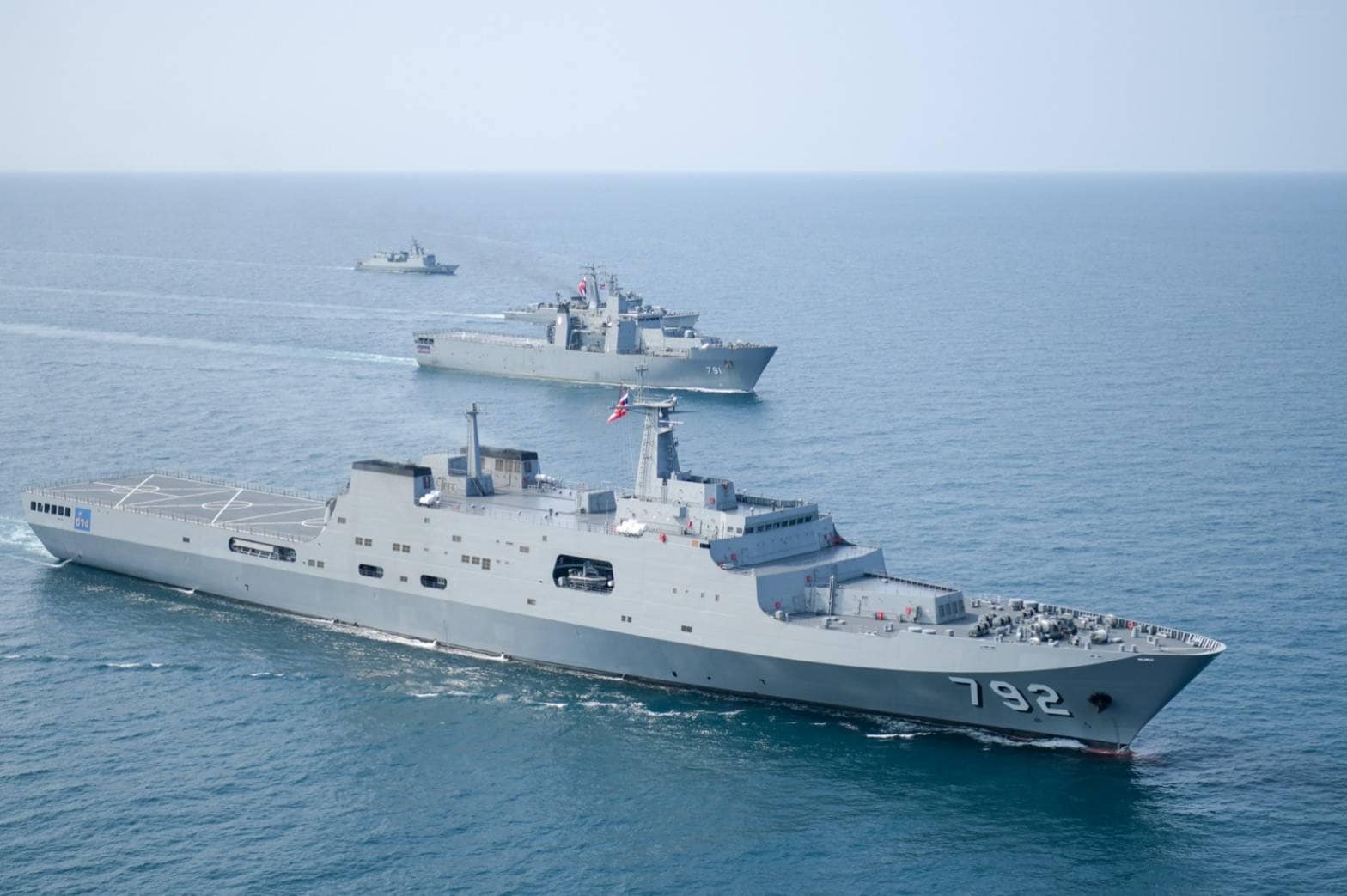
The HTMS Chang landing ship was sold by China to Thailand.
Massive arms deals
Over the years, Thailand has purchased numerous large-value arms orders from China. In late April, the Khaosod newspaper quoted Admiral Choengchai Chomchoengpaet, Chief of Staff of the Royal Thai Navy, as updating information on the Yuan-class (diesel-electric) submarines that Thailand is purchasing from China. According to the report, the submarines ordered by Thailand will use Chinese-made CHD 620 engines instead of those supplied by Germany. This is because Germany refused to supply them due to EU arms embargo regulations against China. The submarines are expected to be delivered to Thailand in over three years.
In 2017, Thailand ordered the vessel for $395 million. Bangkok subsequently planned to order two more of these submarines for a total of $657 million. However, construction of the first vessel encountered problems, and due to economic difficulties, Bangkok also suspended the purchase of the two additional submarines.
Meanwhile, at the end of April, the Royal Thai Navy officially received the HTMS Chang landing ship from China. A large Type-071 landing ship, the HTMS Chang has a full-load displacement of up to 25,000 tons, capable of carrying 800 soldiers, 4 hovercraft, dozens of armored combat vehicles… and multi-role combat helicopters. Thailand ordered this ship from China in 2019 for approximately $130 million.



Furthermore, according to the Bangkok Post, Thailand ordered 28 VT4 heavy tanks from China in 2016 for a total value of approximately $140 million. In 2017, Bangkok ordered an additional 11 tanks for about $58 million, and then purchased another 14 VT4 tanks for over $66 million in 2018.
Commenting in the South China Morning Post, international affairs expert Ian Storey assessed that the US's restrictions on arms supplies to Thailand since the 2014 coup have paved the way for Beijing to become Bangkok's arms supplier.
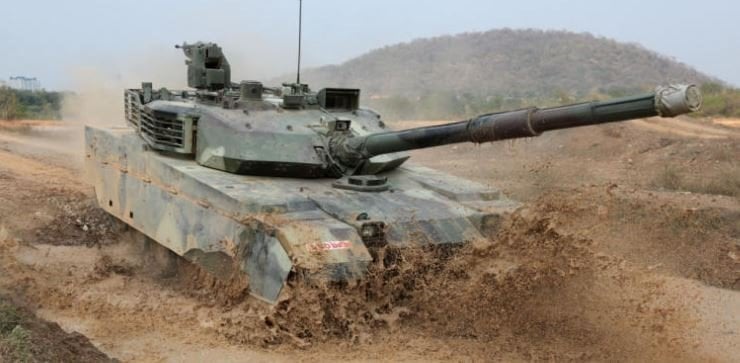
The VT4 tank is in service with the Thai army.
Did a Thai general once want to help China deter maritime threats?
Regarding Bangkok's arms deals with Beijing, in late 2020, the Khaosod newspaper published a copy of a letter allegedly sent in September of the same year by Admiral Luechai Rutdit, then Commander of the Royal Thai Navy, to the Deputy Director of the Chinese Defense Industry Technology Bureau.
In the letter, General Luechai requested that China send representatives to secretly travel to Thailand to sign the necessary agreements to expedite the plan to purchase the second and third submarines.
The document includes a mention by General Luechai of the Type-071 landing ship that Thailand ordered from China in 2019. In the letter, General Luechai suggested that the Type-071 ships sold to Thailand should be equipped similarly to those used by the Chinese navy. He proposed that Thailand's Type-071 landing ships should be equipped with a 76 mm AK-176MA cannon and four 30 mm AK-630 close-in weapon systems.



Mr. Luechai argued that this would create a "strategic deterrent when Thailand deploys Type-071 landing ships in the Gulf of Thailand or the South China Sea. This would make 'other parties' understand that the Type-071 ships have the capability to operate far offshore without limitations."
Recently, China has frequently deployed Type-071 ships to participate in patrols and exercises in regional waters such as the South China Sea and the East China Sea.
Another section of the document shows the Thai general stating: "This demonstrates the deterrent capability and readiness of the Chinese navy in Southeast Asia." However, in response to the Khaosod newspaper at the time, a spokesperson for the Royal Thai Navy declined to comment on the letter. Nevertheless, given the publicly available information about military cooperation between the two countries, the relationship between China and Thailand has steadily strengthened over the years.
Source link


![[Photo] Strengthening character and expertise: Intense training for artillery soldiers.](https://vphoto.vietnam.vn/thumb/1200x675/vietnam/resource/IMAGE/2026/06/30/1782815602541_lu-368-1875-4571-jpg.webp)