

C. ACCEPTANCE, PERSEVERANCE, PATIENCE
Each month, the cost of their child attending preschool and the early intervention center is approximately 8 million VND, forcing Mr. Hoang and his wife (names have been changed), residents of Binh Thanh District, Ho Chi Minh City, to be extra frugal. Both have had to reduce their working hours, taking turns dropping off and picking up their child from school to the center. But now, despite the hardship, the couple feels more at ease accepting their child's developmental disorder and supporting the teachers at the center.
"The special education teachers record videos of themselves playing with the children and teaching them activities so that parents can watch and play along with their children at home. The most important thing I've realized is that parents should accept their children, be patient, persistent, and love them deeply to support them," the father said.
"In the beginning, we were tormented, miserable, and blamed ourselves and our relatives for not taking the best care of our child. But if we couldn't accept our child, who else could embrace him?" Mr. Hoang said. His son is now 28 months old, has just spoken his first words, and when he does speak, he looks into his parents' eyes.
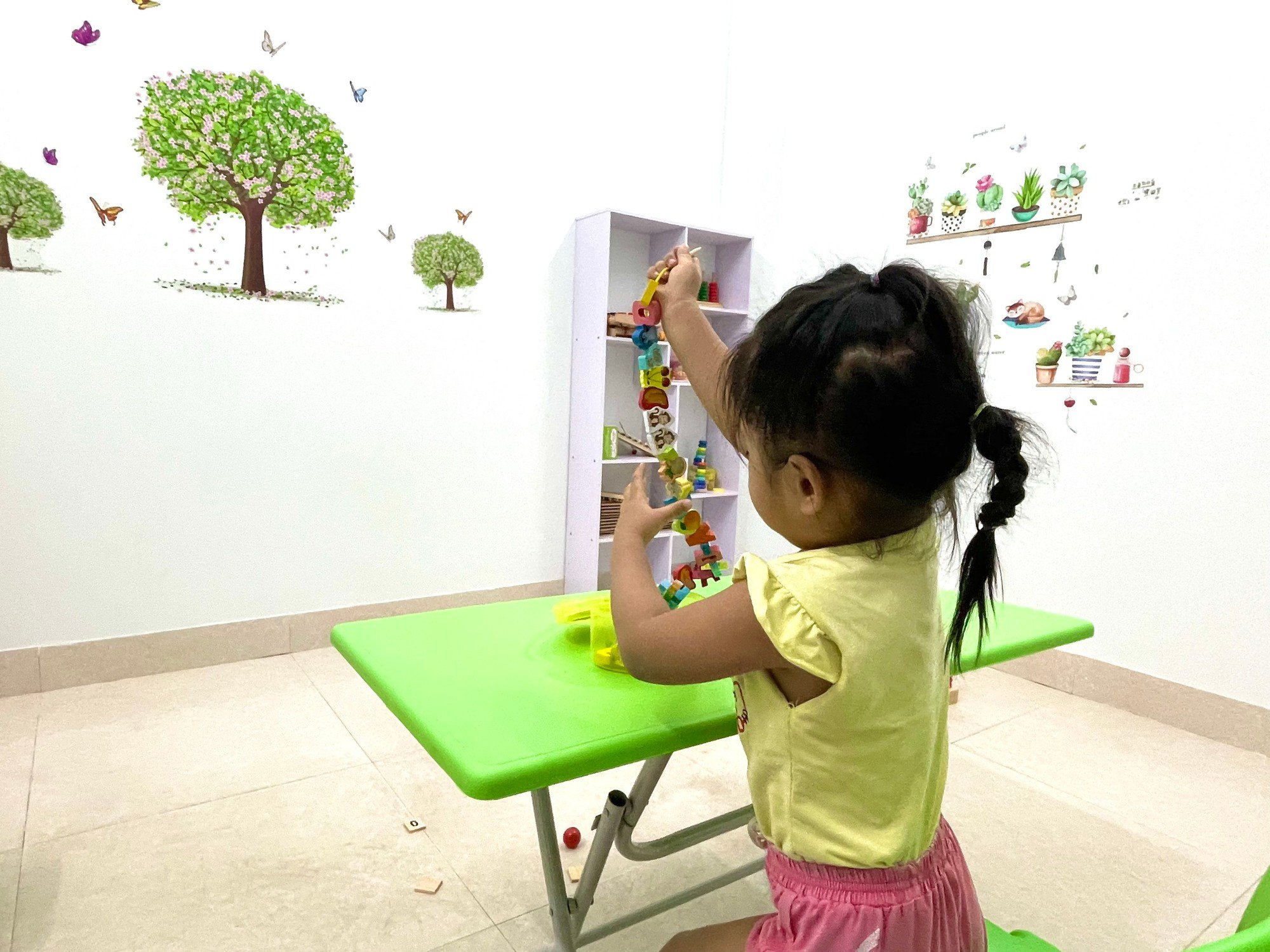
Children were able to focus on playing with toys independently after a period of early intervention.
C. ACCEPT YOUR CHILD WITH ALL ITS DIFFERENCES
Ms. Huynh Kim Khanh, who has 12 years of experience in special education and is currently a private tutor at Kindergarten No. 6, District 3, Ho Chi Minh City, said that after hearing parents report unusual behavior in their children, teachers will observe the children, conduct surveys, and advise parents to take their children to major hospitals for examination.
However, a significant problem is that when a child is diagnosed with developmental delay, autism spectrum disorder, etc., by one (or more) hospitals, up to 70% of parents do not accept that their child has such a condition.
"The common reaction is non-acceptance; they think that both they and their partner are healthy and successful, so how could their child be affected? Either the wife or the husband, or relatives… tend to blame the other parent for not caring for or raising the child well. But in reality, autism is congenital; there is no complete, specific, or clear cause. Parents are even more unwilling to accept that their child has this syndrome, and they don't seek early intervention. The later the intervention, the more severe the child's condition becomes," Ms. Khanh said.
Ms. Khanh advises parents that when they notice unusual behavior in their children, they should take them to reputable hospitals for examination. It's important to accept your child with all their differences and support them throughout their journey. Early intervention helps children eliminate unwanted behaviors, makes it easier for them to understand the world around them, enables them to care for themselves, express their needs, and improve their quality of life…
Ms. Huynh Kim Khanh stated that regardless of whether children attend a center or a school, parental guidance and support play a significant role in their progress. Parents should not leave everything to the teachers. Each day, parents should spend more time playing games, talking, and interacting with their children. They should be patient and loving in their children's lives. In reality, children who receive early intervention and parental care and support at home show significant progress after a period of time.
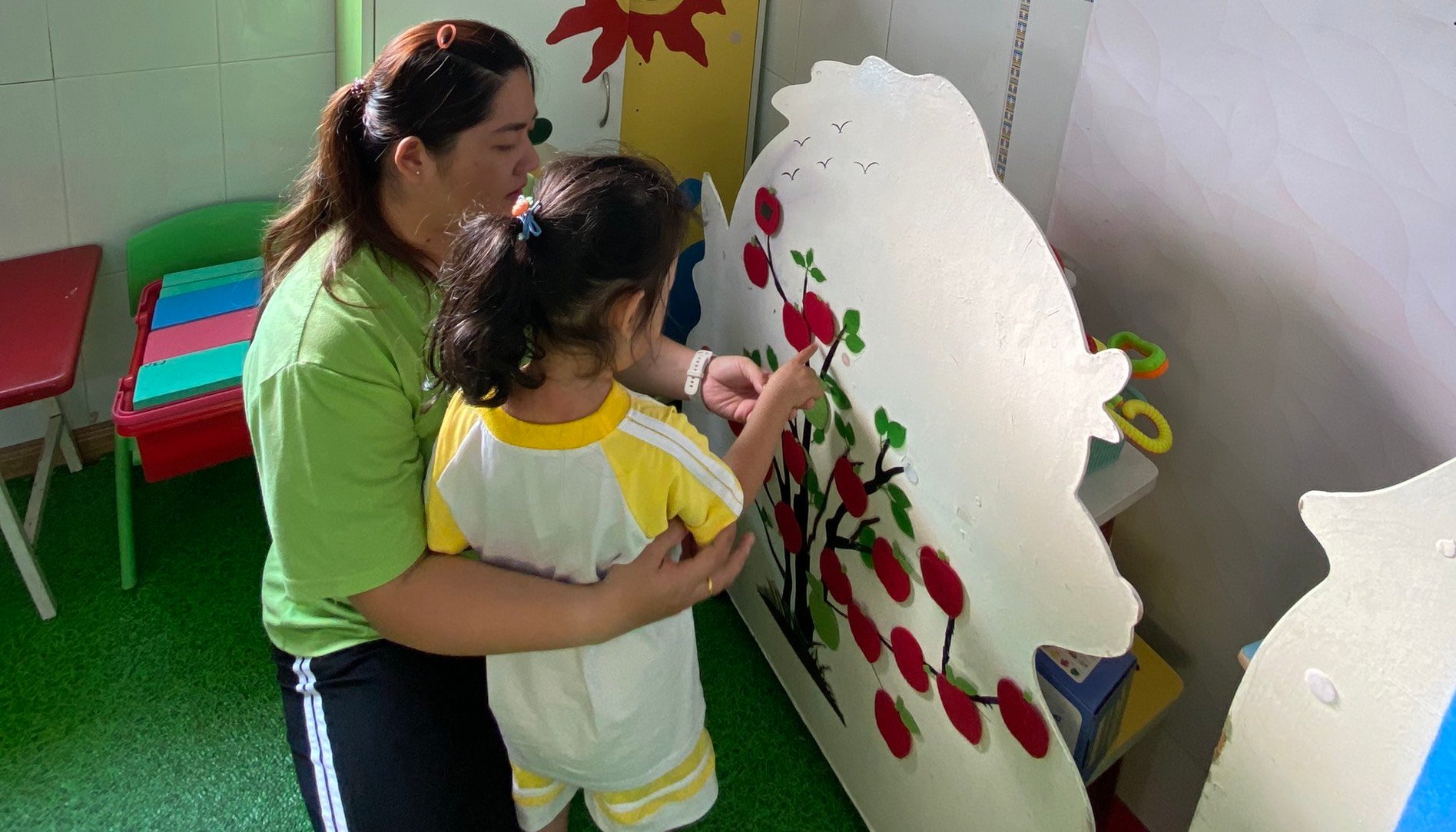
A preschool child who receives early intervention.
Parents are their children's greatest teachers.
Mr. Nguyen Minh Phung, Director of the New Life Psychological Counseling and Skills Development Center (Da Nang), said that his center is providing intervention support for many children with speech delays, concentration difficulties, communication difficulties, and learning difficulties.
Not all of these children have medical problems, and not all have autism spectrum disorder or attention deficit hyperactivity disorder. Some simply have speech delays, communication difficulties, and learn slower than their peers due to psychological factors, environmental influences, and many other factors.
These children receive one-on-one intervention with a teacher, or there are also day-care intervention classes where children receive both group intervention and one-on-one intervention with a teacher. Professionals organize games and exercises in the form of games to help children develop listening, speaking, motor, communication, and teamwork skills with their peers and teacher.
"Some children develop very quickly. Recently, there was a child who came to the center at 3 and a half years old but hadn't spoken yet. The doctor diagnosed it as not being due to a medical condition. The center conducted tests and gave the child a personalized lesson plan to learn with the teacher. After only 1.5 months, the child could speak a lot and loved asking questions to parents and teachers. However, there are also children who need long-term and persistent intervention over a long period, because they are older and have issues that require more intervention," Mr. Minh Phụng said.
According to Mr. Minh Phung, besides parents always paying attention to their children's development, checking for any abnormalities so they can take them to reputable hospitals for early examination, and accepting their children's condition, parents also need to accompany them in their educational journey, supporting them to progress every day.
For children with speech delays, concentration difficulties, and learning problems that are not due to a medical condition, parents also need to be more patient and persistent in supporting their children.
"Parents are their children's greatest teachers, accompanying them throughout their lives. After school, or at psychological counseling and skills development centers, parents should spend more time taking their children out to play, playing with them, talking to them more, and limiting the amount of time children spend watching TV or using iPads," shared Mr. Nguyen Minh Phung.
Source link







































































































Comment (0)