Each person finds their own way through the sweltering heat, carrying with them "flowery dreams" of a more bountiful harvest, more sufficient meals, and a less arduous tomorrow.
As the flowers awaken with the seasons
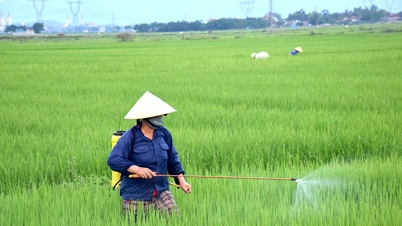
The workday in the fields of Hoa Tien commune begins before dawn. While the villages are still asleep, the farmers follow the beam of their flashlights to the fields, taking advantage of the rare cool hours. On the rows of melons still damp with dew, their figures bend down, small and persistent in their race against the summer sun.
At 69, Mrs. Tran Thi Cuong still goes to the fields with her husband from 2 a.m. One hoes the soil and fertilizes the rice paddies; the other adjusts the vines and stakes the watermelon plants. Around 11 a.m., when the earthy heat rises intensely, the couple quickly return home to rest, waiting to go back to the fields in the early afternoon. Nearly half a century of working the land, this rhythm of life for Mrs. Cuong has remained almost unchanged. Only their physical strength weakens each year, while the sun and wind seem to become increasingly harsh.
While many households in the area have abandoned farming and switched to other professions due to increasingly arduous production and unstable income, she still chooses to stay with the fields. “Farming is like my calling. No matter how hard it is, I have to stick with it because it’s the source of livelihood for the whole family. Any extra income I earn helps my children,” she confided. That simple answer encapsulates the years Mrs. Cuong has spent with the land, the sun, and the endless rows of melons.
With over ten acres of rice paddies, the elderly couple quietly continue their daily work. Their children have left the fields to find other livelihoods. During the busy season, they have to hire extra help, as their hands, calloused from years of hard work, are no longer strong enough to handle all the farm work that follows one season after another.
While carefully pinning each vine branch to ensure the plant grew in the right direction, she showed us how to identify male and female flowers and how to pollinate the melons. These seemingly routine tasks were the result of over sixty years of experience working in the fields. Mrs. Cuong said she had been familiar with farming since she was five years old, when she followed her parents to the fields and tended buffaloes in the pastures. A lifetime of hard work had left indelible marks on her small, resilient figure, enduring the sun and wind.
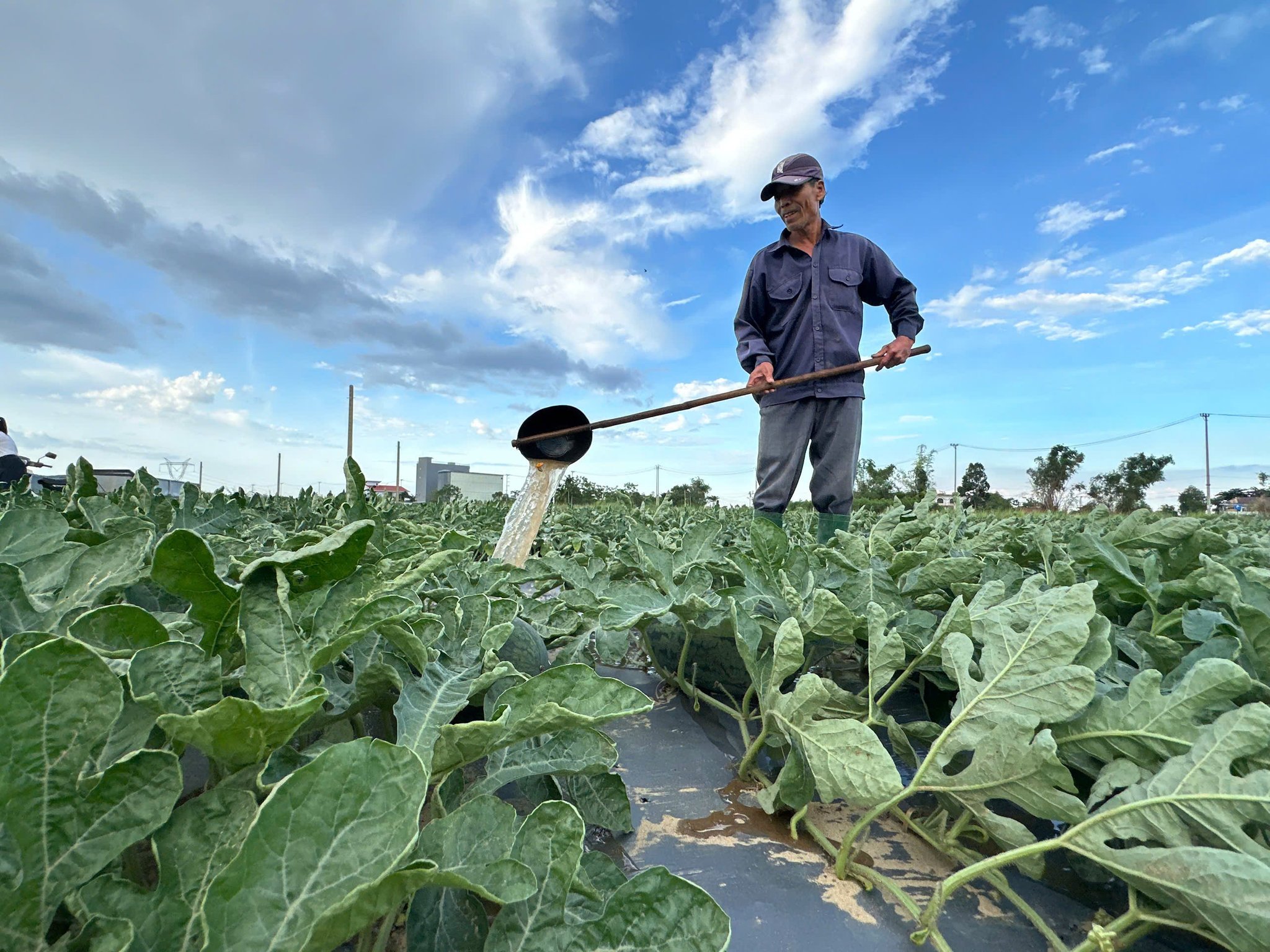
Leaving Mrs. Cuong's melon patch, we followed the edge of the field to the next plot. The sun had just risen, gently illuminating the melon rows still damp with dew. Small yellow flowers began to open, signaling the busiest time of the morning for the melon growers. "The flowers close as soon as the sun comes up," said Mrs. Phan Thi Lan, her hands nimbly selecting male flowers to pollinate the female ones.
Recalling her nearly 20 years as a factory worker, Mrs. Lan smiled and said those were "less hot days than now." Back then, she worked in an automotive wiring factory, with air conditioning, stable hours, and no need to worry about the weather. About 3-4 years ago, her eyesight deteriorated, so she quit and returned to farming. Farming, which her husband used to do more, has now become the main part of their lives.



"Farming is harder work," Mrs. Lan said, then laughed. It was the hearty laugh of someone accustomed to hiding their fatigue, accustomed to accepting the sun and wind as a daily routine. Her days are no longer measured by shifts, but by the time the melons bloom, the water is ready for irrigation, and the days she returns home with her clothes drenched in sweat.
What keeps her working in the fields isn't just a means of livelihood. Her youngest child has just finished high school and has a long road ahead with many expenses to worry about. Her two older children are grown up, but the family still faces worries about making ends meet. Therefore, the melons growing in the fields are not only the fruits of the land, the sun, and her hard work, but also the hope that the mother quietly saves for her children.
In the fields, the golden melon flowers bloom from early morning and close as the sun rises. Their life is short, but for the melon farmers, it's the beginning of many long-held hopes: their children can continue their education, their families can struggle less, and their hard work pays off. Amidst the scorching sun, these dreams of flowers quietly grow, fragile yet resilient, just like the people who cling to the land.
Adapt your lifestyle to maintain your livelihood.
The flowering season in the fields isn't just about the golden hues of newly bloomed melon flowers and the young fruits growing beneath the green leaves. Mrs. Bui Thi Xanh, 54, had only returned to the fields two days prior after nearly half a month confined to her home due to sunstroke. That morning, she was completely covered from head to toe: a conical straw hat over a cloth cap, a face mask covering almost her entire face, gloves covering her hands, and socks extending to her knees. In the middle of the field, only her eyes were visible behind the dark sun-protective fabric. "I was sweating so much, I kept getting sunstroke," she confided.
The prolonged heatstroke forced Mrs. Xanh to change her work schedule. On scorching hot days, around 9 a.m., when the fields began to radiate heat, she had to leave. On milder days, she would try to work until 10 a.m. Working in the fields now wasn't about finishing the job, but about her physical endurance. Staying home made her restless because of the crops that were in the right care stage; returning to the fields, she was wary of every wave of fatigue and every layer of heat rising from the ground.
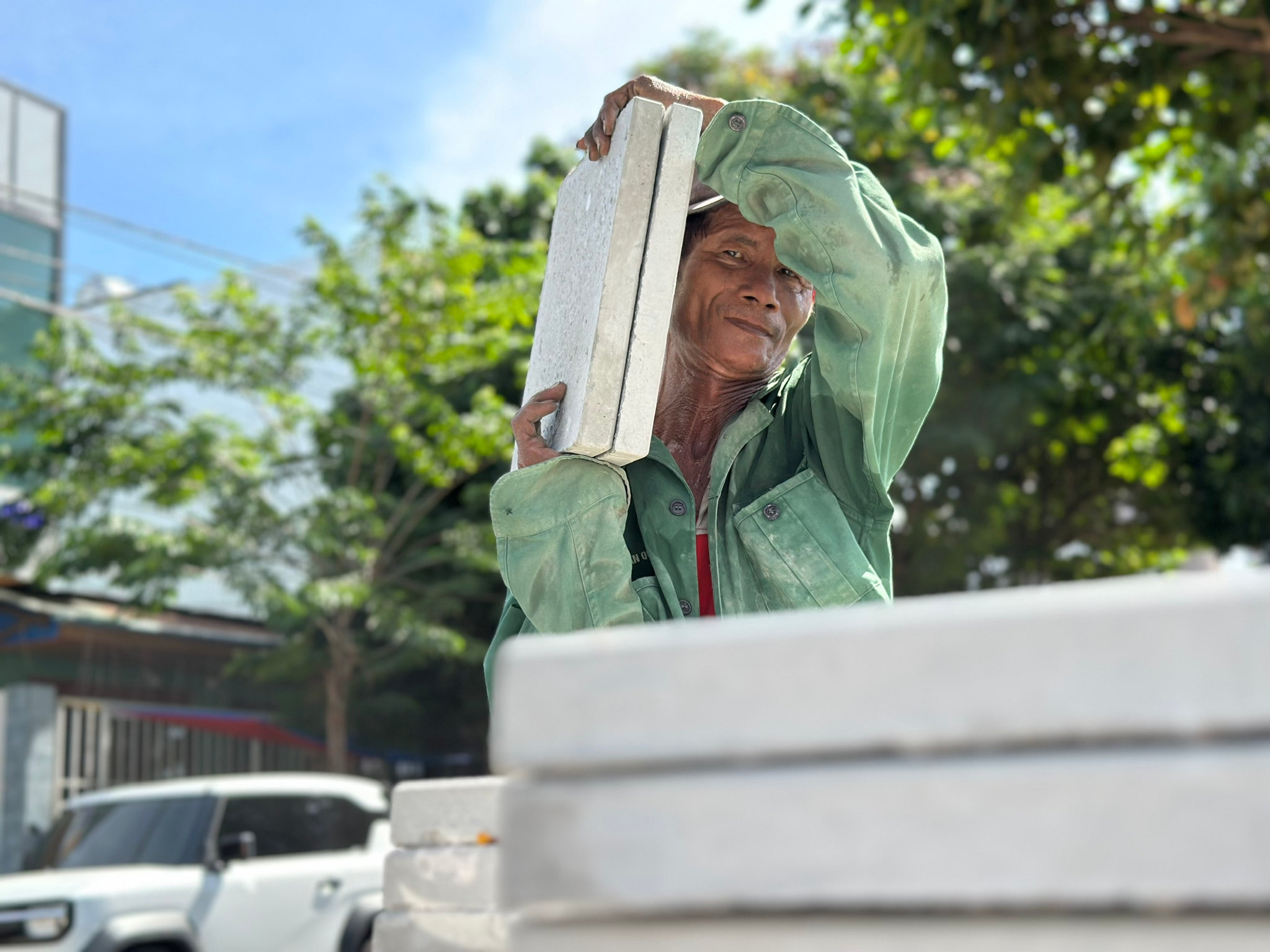
For many outdoor workers, the heat is no longer just a weather issue. It permeates their livelihoods, forcing them to rearrange their workdays, change their commute times, or accept working during the sweltering hours to maintain their income. From melon fields and construction sites to delivery routes, the health of these workers becomes a test during the summer .
Hoang Quang TB still remembers the delivery at midday, when the road surface was scorching hot. On the way to deliver the goods, the sun beating down on the asphalt made him exhausted. Unfortunately, he had an accident, leaving the delivery unfinished. The recipient later understood and didn't request a refund. B. said it was lucky things weren't more serious, but since then he's been more cautious with deliveries during the hottest part of the day.
Another delivery driver recounted an incident where he received a drink order quite far away. He arrived at the destination in the midday sun, and the ice in the glass had almost melted due to the heat radiating throughout the journey. He called several times but couldn't reach the recipient, so he waited for over 15 minutes in the sun before returning home. Later, realizing he had left his phone on vibrate mode and missed the call, the recipient didn't request a redelivery.
Over time, outdoor workers develop their own kind of clock. It's the road surface becoming increasingly hot, the shadows of the trees shortening, the sweat drying on the back of their hands as soon as it falls. By observing these signs, they know when to push themselves further and when to stop.


One morning in the city, on a short ride-hailing trip, we met a driver in his sixties. He usually drove from around 5 a.m. to 8 a.m., taking advantage of the time before the streets got too hot. Due to his age and declining health, he could no longer tolerate the sun radiating from the road. "It's a shame to miss a few rides, but if I push myself further and end up dizzy and faint in the middle of the road, the price I pay will be much higher than the wages of a whole day's work," he said thoughtfully.
Some people shorten their workdays to avoid the heat. Others extend their shifts into the night. Around midnight, the city finally stops radiating heat. On a ride-hailing ride, we met Le Van Khoi in the middle of his shift, which starts at 10 PM and lasts until 6 AM. Eight months ago, Khoi left Ho Chi Minh City for Da Nang, choosing to work as a ride-hailing driver to make a living. Initially, he also worked during the day like many other drivers. But the prolonged heat made the roads scorching, quickly draining his energy, while the number of customers during the day was much lower.
For the past two months, he's completely switched to night shifts. "It's cooler at night, there are more trips, and the pay per trip is better. I know staying up late isn't good for my health, but it's too hot this season, so I have to change my shift times," Khoẻ said. His life has been almost completely reversed. When the city lights up, he starts his shift; when many people wake up to go to work, he returns to his rented room to rest. The heat isn't just about the burning sensation on his skin and exhaustion on the road. It subtly disrupts the sleep of a young man trying to make a living in the city.
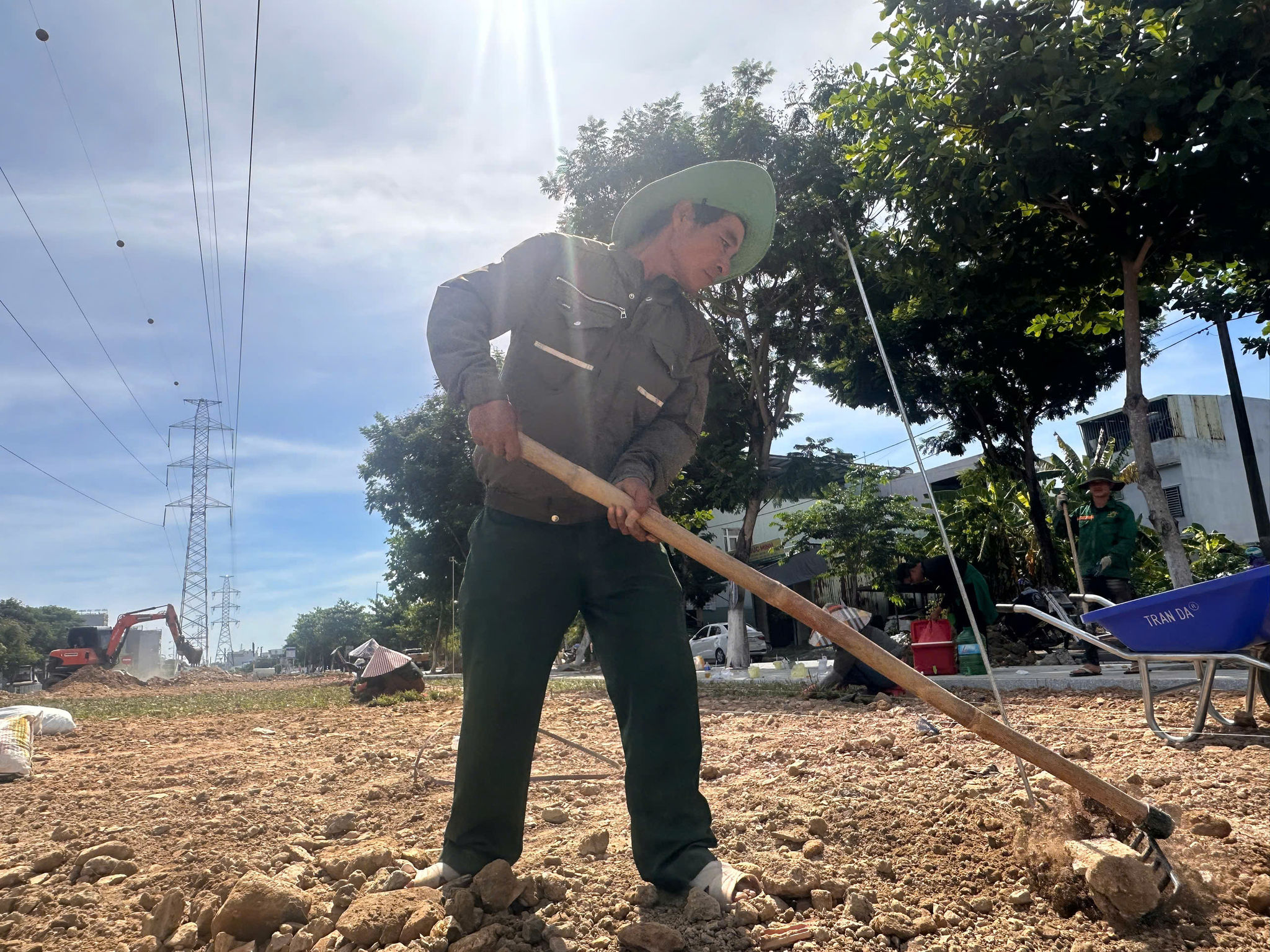
The sun spares no one. It blankets melon fields, roads, construction site roofs, and the lives of those struggling to make a living. People adapt to it in their own ways. Some try to avoid the sun. Others are forced to brave it. Neither choice is easy, for behind them are family meals, unfinished medications, and expenses that can't wait!
Source: https://baodanang.vn/nhung-giac-mo-hoa-giua-nang-lua-3343068.html