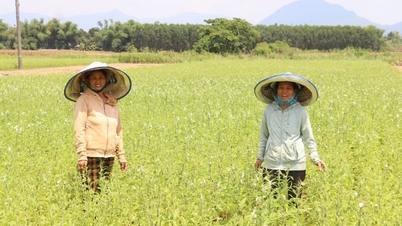
Telling the story of Vietnamese silk.
For many years, Quang Nam province has been a gathering place for lovers of silk and brocade. The Silk and Brocade Festival has repeatedly chosen Hoi An to tell the public about the world of silk threads. Throughout these gatherings, one recognizes the reverence and respect of those who have chosen silkworm farming as their livelihood.
The premium nature of a product line creates challenges for its creators. Overcoming those limitations leads to a higher level of vision.
The owner of Toan Thinh silk production business ( Ho Chi Minh City), Mr. Ho Viet Ly, is a native of Phu Bong, Go Noi – a man who has almost reached the pinnacle of silk production. Toan Thinh silk, with each product line positioned for different customer segments, has a presence in the United States and European countries.
Ho Viet Ly's enduring pursuit of high-end silk began over 20 years ago when he and designer Minh Hanh collaborated on outfits for 21 heads of state at the first APEC summit held in Vietnam in 2006. These traditional Vietnamese ao dai dresses were made from premium silk fabric from Lam Dong province, featuring stylized lotus flower patterns.
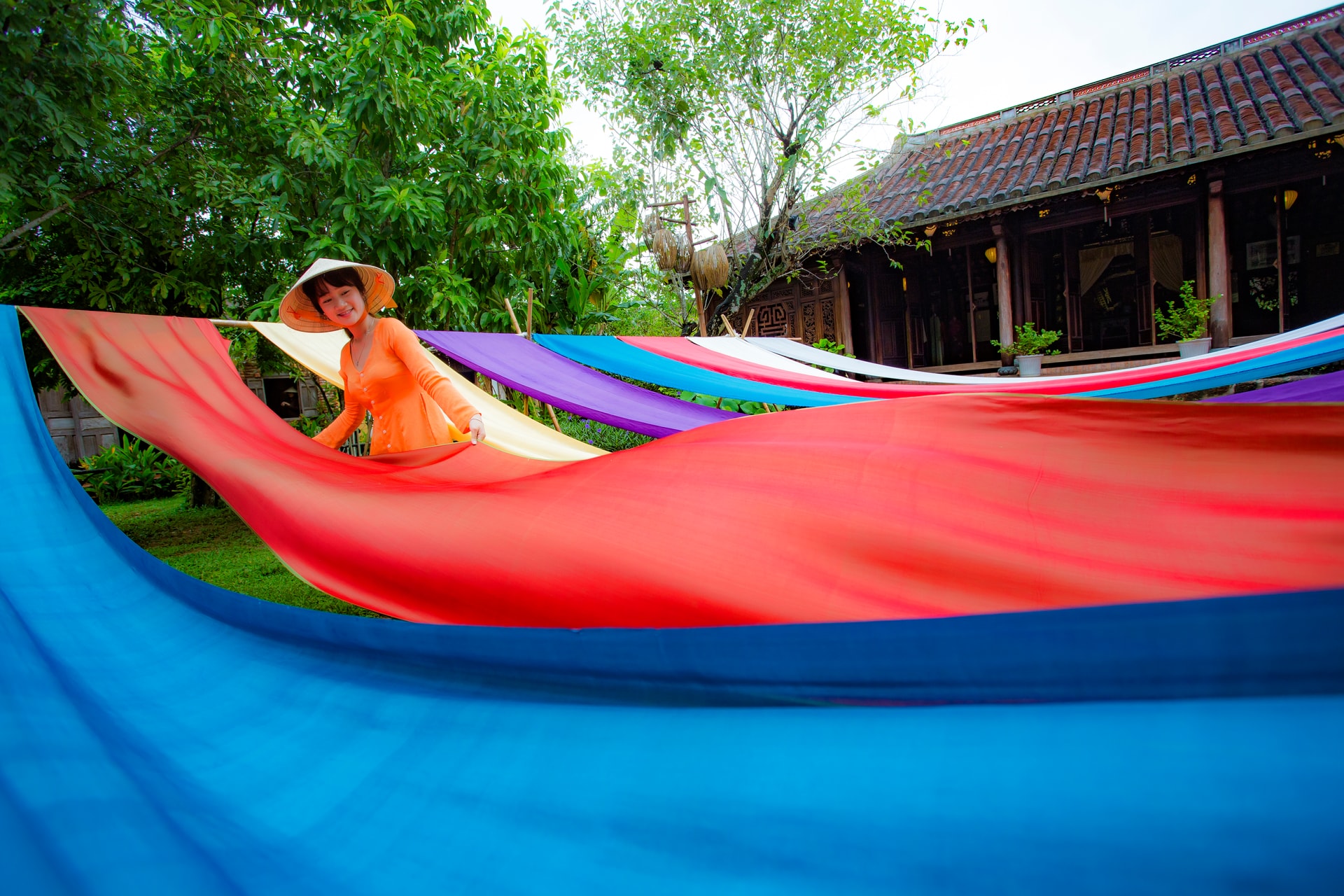
“The biggest difference with this fabric is its shimmering three-dimensional effect and the way the colors change depending on the viewing angle. At that time, I thought I had to create these silk squares with all my heart and national pride,” Ho Viet Ly confided.
It was a spectacular transformation of traditional Vietnamese silk, leaving its mark as a superior material for wearers. For many years afterward, Toan Thinh silk – Ly silk – became the first choice for international diplomatic events.
But the person who truly revived the value of Vietnamese silk is designer Minh Hanh. Along with international fashion weeks highlighting Vietnamese silk ao dai (traditional dress), in 2017, Minh Hanh brought these silk ao dai to the "Oriental Silk Night" in Hoi An. Alongside silks from various silk-producing villages across Vietnam, silks from countries with long histories of silk production were also celebrated.



Designer Minh Hanh said: “We have no other way than to use Vietnamese silk, design and produce Vietnamese silk to reach the world. It has a unique creative voice that is hard to compete with. Vietnamese silk today is beautiful, inspiring, and worth wearing because it brings elegance to the wearer.”
And the efforts to ensure that, if not Vietnamese silk, then no other material would be suitable, especially for the ao dai (Vietnamese traditional dress), are sufficient proof of Minh Hanh's determination to honor Vietnamese silk.
Weaving threads of silk
And silk is quietly making a comeback. There are dazzling transformations under the spotlight, and there are geometric patterns woven silently, choosing their moment to shine.

If Minh Hanh is considered one of the pioneers in bringing Vietnamese silk to the world, then designer Sy Hoang continues that story by building an ao dai museum and developing highly practical silk product lines. He doesn't view silk as an old material, but as a foundation for new creativity. This interpretation helps silk break free from its "closed-off traditional" image and enter the realm of contemporary fashion.
For Sy Hoang, silk and brocade are extremely valuable materials for fashion designers and for modern fashion life. Therefore, developing silk weaving villages is a must.
“Silk will become ingrained in people's minds and consciousness, as it is a traditional product and will develop even more strongly in the future if there is adequate investment. In my collections when touring abroad, especially the ao dai (Vietnamese traditional dress), I have always chosen silk. When silk-producing villages come together, they will learn from each other, creating synergy and building a brand for Vietnamese silk,” said designer Sy Hoang.
Linking up traditional silk-producing villages is a worthwhile endeavor in the revival of Vietnamese silk. This is also what Mr. Huynh Tan Phuoc, Director of Nhat Minh Silk Company Limited (Bao Loc, Lam Dong), hopes for.
“Based on experience, we must know how to link farmers, silkworm breeders, weavers, and finally designers to produce products that are accepted by the market. In particular, we must focus on quality to integrate with the global market. Currently, we have improved all our technology, so our products are accepted by the global market, and we sell them at high prices, thus farmers also benefit from high profits,” Mr. Huynh Tan Phuoc shared.


It is known that Bao Loc currently has about 20 silk reeling companies, but most have switched to modern technology, and the market consists of local weavers nationwide. Bao Loc's silk products have also been exported to Japan and India, and the price of silk is currently high.
Mr. Huynh Tan Phuoc believes that the market now understands and appreciates silk. Currently, the raw material areas of Bao Loc only meet 60% of the demand from silk factories in the area and nationwide.
The conquest follows the trail of threads, therefore, it requires a great deal of passion...
Source: https://baodanang.vn/nhung-hoa-than-moi-cua-lua-viet-3334307.html