In the rice-shrimp fields of Nhuy Cam hamlet, Vinh Loc commune, Ca Mau province, the atmosphere is bustling and enthusiastic these days. Farmers are busily harvesting ripe rice using combine harvesters. The sounds of harvesting and transporting rice, along with the cheerful laughter of the farmers, signal a bountiful harvest.
Mr. Tran Van Vu, Party Secretary, Head of the hamlet, and also the head of the Nhuy Cam hamlet production cooperative in Vinh Loc commune, said: The 2025-2026 rice crop on shrimp farming land was a successful harvest for local farmers in recent years. The rice not only yielded a good harvest but also sold at a good price. The average yield per hectare of rice was about 900 kg to 1 ton, with a selling price of over 8,000 VND/kg. After deducting costs, farmers earned a profit of 4.5 to 5 million VND per hectare. In addition to income from rice, farmers also earned several million VND per hectare from freshwater prawns (priced from 80,000 to 120,000 VND/kg, depending on the type) and various freshwater fish species.
Mr. Nguyen Hoang Vu, Vice Chairman of the People's Committee of Vinh Loc commune, Ca Mau province, said: For the 2025-2026 rice crop on shrimp farming land, Vinh Loc commune will plant nearly 9,000 hectares with two varieties: ST24 and BL9. These are high-quality rice varieties that meet export standards and are favored by the market, selling at high prices.
According to the assessment of the People's Committee of Vinh Loc commune, the rice-shrimp farming model not only increases sustainable income for farmers but also contributes to improving the soil environment. Based on the model's effectiveness, the local government, in coordination with relevant agencies, has organized the planning of concentrated production areas and applied synchronized technical processes towards organic production. In addition, cooperatives and production groups have been established to act as a bridge between farmers and businesses in the procurement, processing, and consumption of products. The People's Committee of Vinh Loc commune has also encouraged farmers to utilize embankments to grow additional vegetables, creating diverse livelihoods for people to develop their family economies .
In Bien Bach commune, Ca Mau province, farmers are currently harvesting rice on land used for shrimp farming, with joy clearly visible on their faces. This year, the commune has over 9,000 hectares where farmers have combined rice cultivation with the raising of freshwater prawns, taking advantage of the existing ecosystem in the fields. When the rice ripens, it is also time for farmers to harvest the prawns.


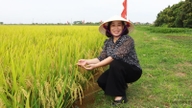
Mr. Nguyen Van Nam, who has nearly 3 hectares of land for rice cultivation combined with freshwater prawn farming, shared: "This season, my family harvested over 20 tons of rice along with nearly 500 kg of prawns. After deducting expenses, the profit reached nearly 200 million VND, much higher than monoculture rice production."

"Combining rice cultivation with freshwater prawn farming in rice paddies is cost-effective and low-risk. The rice grows well, and the prawns are also healthy and less prone to disease. This is a sustainable model that helps farmers get rich," shared Mr. Nguyen Van Nam.
Mr. Nguyen Thanh Hai, Chairman of the People's Committee of Bien Bach commune, Ca Mau province, said: "Over many years of cultivation, the rice-shrimp farming model has brought many outstanding benefits. Statistics show that on average, farmers can earn a profit of 80-100 million VND per hectare per year from rice-shrimp farming. With such effectiveness, the People's Committee of Bien Bach commune has determined that rice-shrimp farming is a suitable model that opens up an effective and sustainable development direction for farmers. The People's Committee will continue to encourage people to participate and expand this model, considering it a suitable production direction in the context of increasingly complex climate change."
Ca Mau province has over 93,000 hectares of land dedicated to rice-shrimp farming. According to the Ca Mau Provincial Department of Agriculture and Environment, the effectiveness of this model is steadily increasing. The model has proven to be exceptionally effective, not only helping farmers proactively manage production in the face of unpredictable weather conditions, but also opening up new avenues for enhancing the value of agricultural products through ecological and organic farming practices.
The agricultural sector in Ca Mau province will continue to expand concentrated production areas, apply synchronized technical processes, and strictly control the quality of inputs and outputs; at the same time, it will promote the issuance of planting area codes, fish pond codes, and implement traceability, gradually forming a closed value chain.

Ca Mau province also focuses on building brands, promoting trade, and expanding markets for rice and shrimp products. At the same time, it calls on domestic and foreign businesses and investors to participate in production chain linkages, from supplying materials and technology to product distribution, along with supporting the promotion of product images through trade fairs, exhibitions, and digital platforms.
Source: https://baotintuc.vn/kinh-te/nong-dan-trung-dam-vu-lua-tren-dat-nuoi-tom-20260126120116931.htm


![[Photo] General Secretary and President To Lam attends the 13th National Congress of the Ho Chi Minh Communist Youth Union](https://vphoto.vietnam.vn/thumb/1200x675/vietnam/resource/IMAGE/2026/06/25/1782356968989_ndo_br_1-jpg.webp)



















![[Photo] General Secretary and President To Lam attends the Central Public Security Party Committee Conference](https://vphoto.vietnam.vn/thumb/1200x675/vietnam/resource/IMAGE/2026/06/24/1782302063612_a1-bnd-9302-9166-jpg.webp)