

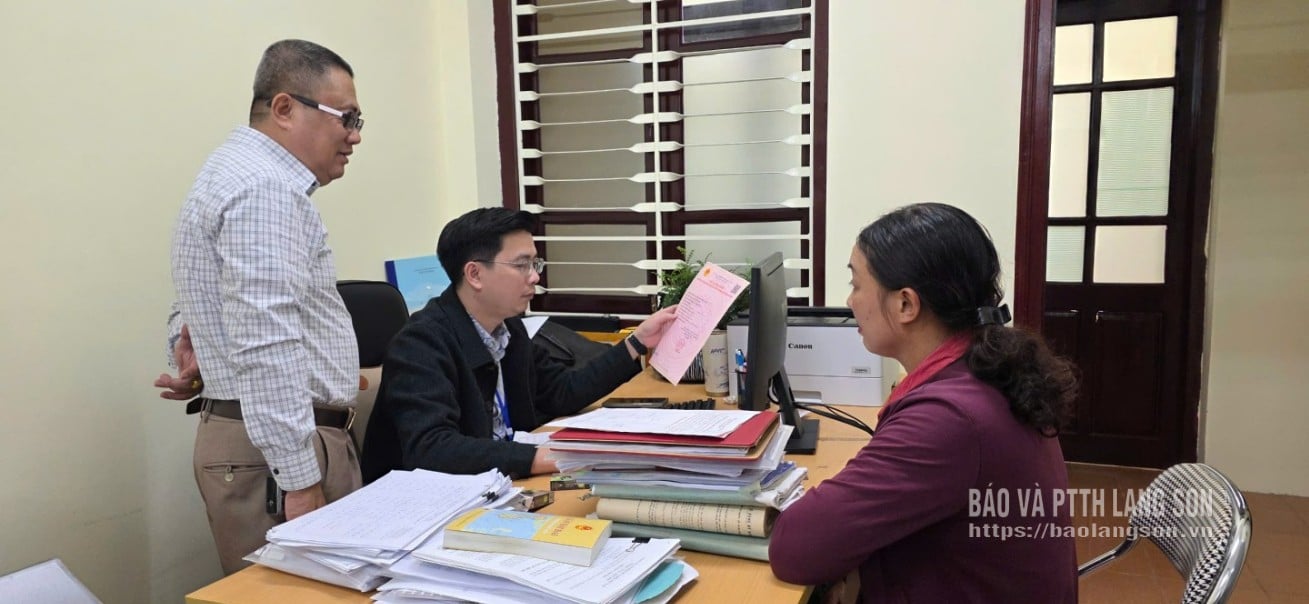
In mid-November, the working atmosphere in communes and wards throughout Lang Son province became even more hectic. After the review and classification phase, the entire province has now entered the final stage - digitizing, entering data, and completing, synchronizing, and sharing the land database.
Of the 2,721,762 land parcels requiring data supplementation, completion, and verification with the national population database, there are: over 156,000 parcels requiring verification of information on land users and owners of assets attached to the land; 831,538 parcels requiring additional scanned information; 664,772 parcels requiring correction, supplementation, and verification of information on land users and owners of assets attached to the land; and 1,069,411 parcels that have not yet been issued land certificates and require correction and updating of place names according to the two levels of local government. |
Accelerate the achievement of goals.
In Ky Lua ward, land administration officials are focusing on scanning and entering information from land use right certificates, comparing the land user's identification code with the citizen identification card (CCCD) to ensure consistency.
Ms. La Thi Hong, Vice Chairman of the People's Committee of Ky Lua Ward, said: Implementing the "90-Day Campaign to Enrich and Clean Up Land Data," the ward has mobilized maximum manpower, working even in the evenings to ensure progress. The entire ward has 19,220 land parcels requiring data collection and cleaning. Initially, some households were hesitant, but after being informed and clearly explained the benefits of digitizing land data – making it more transparent, efficient, and secure – the people all agreed. To date, the ward has collected and digitized over 17,000 parcels, reaching over 88%; the ward police are currently cross-checking over 10,000 information files, achieving over 50% of the workload.
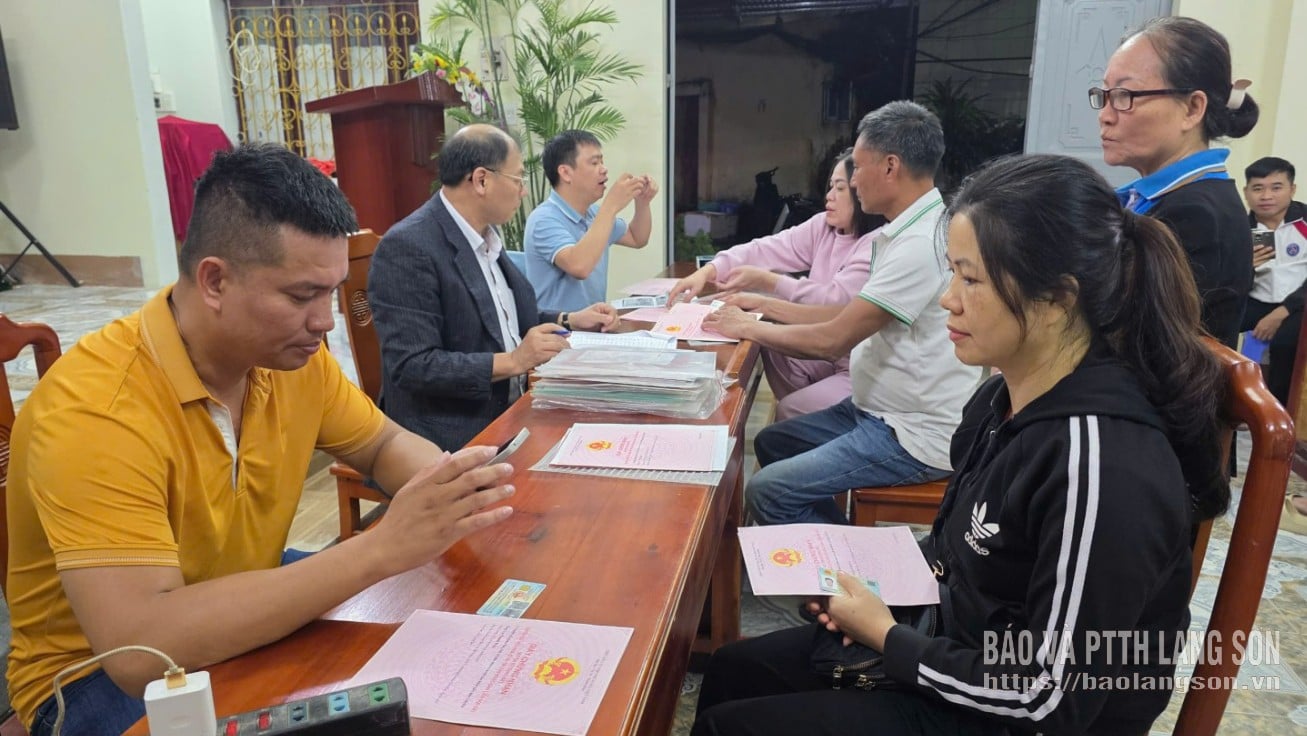
In accordance with Plan No. 515 dated August 31, 2025, of the Ministry of Public Security and the Ministry of Agriculture and Environment on the implementation of the campaign to enrich and clean up the national land database (from August 31, 2025, to November 30, 2025), the Provincial People's Committee has developed a plan for implementation, assigning the Department of Agriculture and Environment to take the lead in advising and coordinating with relevant departments and agencies to carry out the implementation. According to the plan, by November 30, the entire province will complete the synchronization of the database to meet the criteria of "accurate - complete - clean - viable".
In implementing the campaign, officials and civil servants in wards and communes promptly collected and digitized land use right certificates, achieving positive results. Regarding the completion of the existing land database, the province has finished reorganizing the database from a three-tiered government model to a two-tiered model, ensuring synchronization with the national system. To date, 100% of land data has been updated with new information; data synchronization has reached 84.4%, enabling almost instantaneous updating of land changes.
Since the beginning of the campaign, the entire province has reviewed and classified 2,738,092 land parcels. Of these, 16,330 parcels have met the "correct - complete - clean - habitable" standards; the remaining more than 2.7 million parcels need to have their data supplemented, completed, and verified against the national population database. To date, the Department of Agriculture and Environment has sent data for nearly 984,930 land parcels with 142,875 land users to the Provincial Police for verification against the national population database, achieving approximately 60% of the data requiring verification; and has completed the supplementation and adjustment of the database for over 80% of the land parcels requiring verification.
Although significant results have been achieved, the implementation took place in a short period of time, with a huge workload, creating considerable pressure on the staff, civil servants, and workers.
Mr. Ta Quoc Vinh, Deputy Director of the Provincial Land Registration Office, said: Some communes and wards are still slow in collecting land certificates and citizen identification cards. Many old files are faded or damaged and need to be re-verified; the information technology infrastructure at the commune level is still limited, affecting scanning and data entry. For localities that have not yet built a database, to date, only more than 17,000 land certificates have been handed over to the Land Registration Office, reaching nearly 40% of the total number that need to be collected; of which more than 9,500 certificates have been scanned and entered into the system. Currently, the office is increasing its workforce to directly support localities in collecting, scanning documents and entering data to ensure progress.
To overcome these difficulties, the Department of Agriculture and Environment directed its specialized units to coordinate with the People's Committees at the commune level to intensify propaganda, accelerate data collection and entry, and organize on-site support. Propaganda was carried out through public address systems, social media, electronic portals, and directly at households. Land administration officials visited each family to provide specific guidance on how to submit documents, fostering trust and widespread consensus.
Mr. Nguyen Ngoc Thuc, residing in Hop Thanh Hamlet, Ky Lua Ward, said: "Previously, the information between the land ownership certificate and the citizen identification card sometimes didn't match, making the procedures very difficult. Now, officials come directly to the area, provide clear guidance, and the procedures are quick and efficient. I find this very practical, helping to manage more transparently and reducing inconvenience for the people. We feel reassured and support this policy."
Public consensus has facilitated the digitization process, creating a positive shift in land management – from paper records to unified, modern digital data.
Foundation for transparent management
The "90-Day Land Data Cleaning Campaign" is not only a peak period but also marks a new phase in land management in Lang Son. With standardized data and interconnected with the population database, all procedures – from issuing certificates and registering changes to searching for information – will be conducted online, transparently, and quickly.
In the last days of November, the lights remained on late in the offices of the province's agriculture and environment departments, as well as in many commune and ward headquarters. Each scanned file, each line of data entered and verified… all demonstrate the local government's strong commitment to digital transformation.
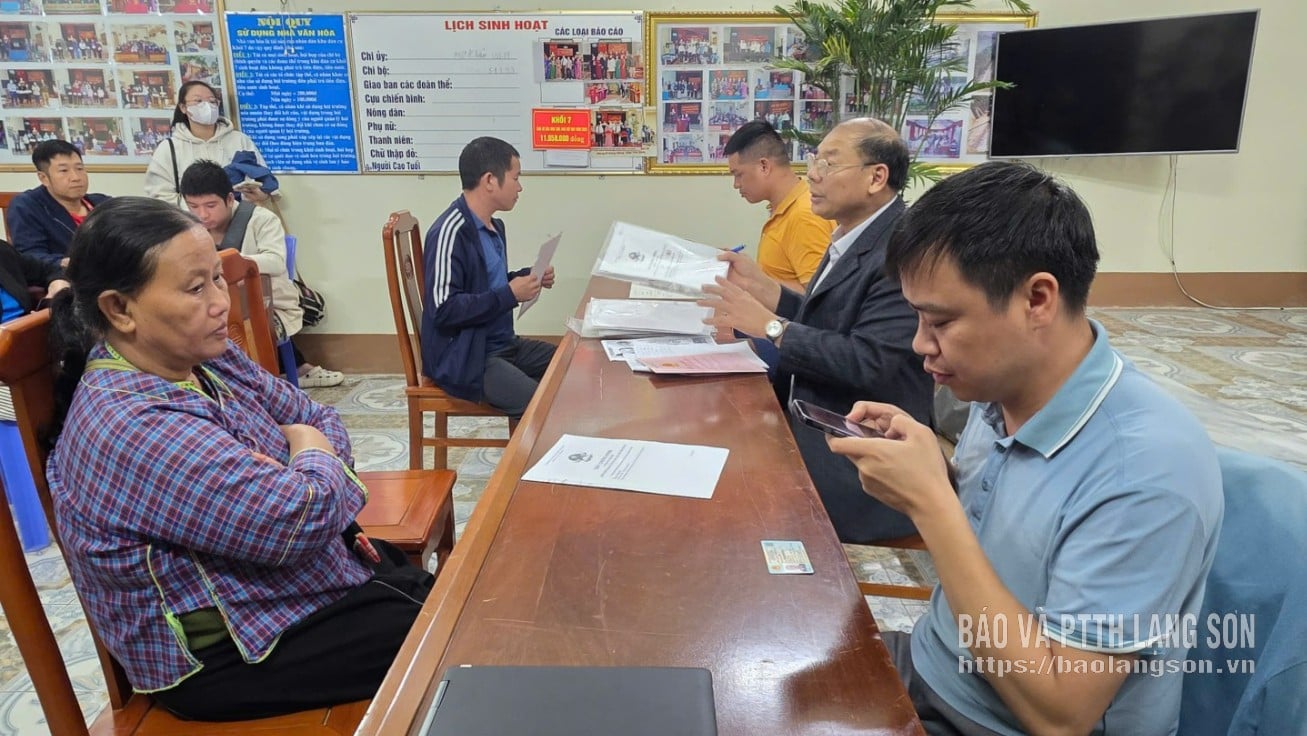
Mr. Trieu Duc Minh, Deputy Director of the Department of Agriculture and Environment, said: "The campaign has now entered its final stage, focusing on digitizing and synchronizing data. The Department directs specialized units to coordinate closely with commune-level authorities, mobilizing maximum human resources to input, cross-check, and verify information. The goal is to ensure accurate, consistent, and transparent data, while connecting and sharing with the national population database, helping people easily and reliably access information and supporting open and modern land management."
Ms. An Thi Hong Uyen, Head of the Economic, Infrastructure and Urban Planning Department of Luong Van Tri Ward, said: Implementing the "90-Day Campaign to Enrich and Clean Up Land Databases," the ward has so far collected over 5,200 land use right certificates, property ownership certificates, and 4,500 citizen identification cards (CCCD) belonging to more than 3,500 households, achieving 100% of the required collection volume. The Economic, Infrastructure and Urban Planning Department is closely coordinating with the land registration office branch to classify, scan certificates, and create land user data according to regulations.
Currently, in some communes in the province, the collection of land plot records and information is still incomplete. The main reasons are that households are working far away, are not present in the locality, or their land certificates are mortgaged at banks. Units are continuing to coordinate with banks and land registration office branches, directly contacting households to supplement and complete the records, while ensuring the progress and quality of the data.
The "90-Day Campaign to Enrich and Clean Up Land Databases" is nearing its end, but its value will have a lasting impact. This is the solid foundation for a modern, transparent, and "alive" land data system that serves the people, the development of the province, and the country.
Source: https://baolangson.vn/nuoc-rut-chien-dich-lam-sach-du-lieu-dat-dai-5065247.html

![[Photo] Conference on the transfer and reception of Party organizations and Party members between the Party Committee of the Government and the Party Committees of the Central Party Agencies](https://vphoto.vietnam.vn/thumb/1200x675/vietnam/resource/IMAGE/2026/04/01/1775036784472_ndo_br_bnd-2620-jpg.webp)

![[Photo] Conference announcing the Politburo's Decision on organizational and personnel matters](https://vphoto.vietnam.vn/thumb/1200x675/vietnam/resource/IMAGE/2026/04/01/1775017881825_bnd-2410-1472-jpg.webp)























































![[Photo] Prime Minister Pham Minh Chinh receives the Ambassador of the Russian Federation to Vietnam](https://vphoto.vietnam.vn/thumb/402x226/vietnam/resource/IMAGE/2026/04/01/1775046774818_anh-man-hinh-2026-04-01-luc-19-32-33.png)
























Comment (0)