 |
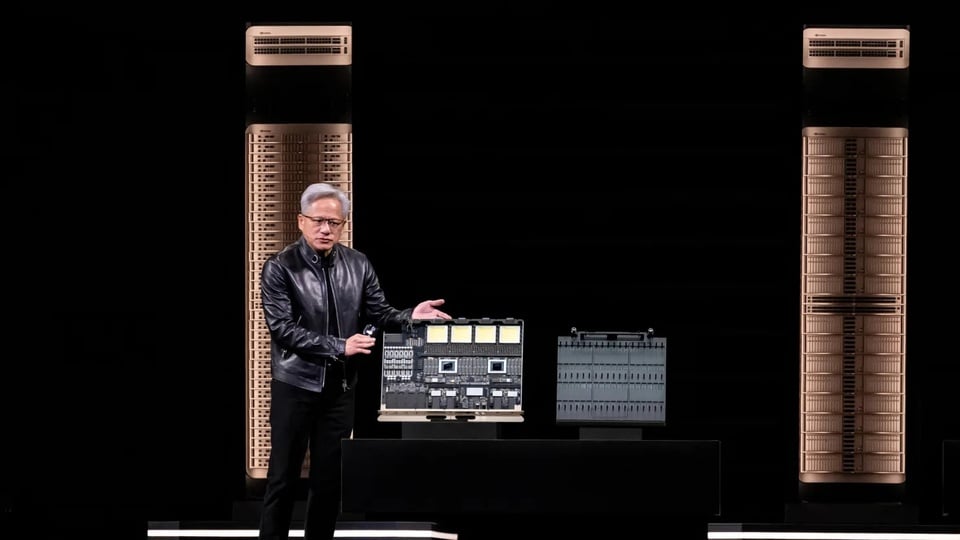
Nvidia CEO Jensen Huang introduces the Kyber AI system at the GTC 2026 conference. Photo: Bloomberg . |
Nvidia is reportedly delaying the launch of Kyber, its next-generation AI server system, to 2028 instead of the originally planned 2027. Information released by research firm SemiAnalysis indicates that the AI giant is facing new challenges in its hardware development process.
Kyber is designed to run on Rubin Ultra chips, the next generation of AI GPUs expected to launch in 2027. Each system can house 144 high-performance GPUs, acting as a unified supercomputer to train and operate large-scale AI models.
Unlike traditional designs, Kyber arranges the GPU trays vertically to increase component density and reduce latency when transferring data between processors.
However, according to SemiAnalysis, development is encountering obstacles in a critical component: the midplane PCB, a multi-layer circuit board that connects the modules within the system. Mass production of this component is proving more difficult than anticipated, causing the entire project to be delayed.
Besides Kyber, SemiAnalysis also reported that the NVL576 system, a configuration connecting eight AI racks via optical links, is likely to be slow or produced in limited quantities. Nvidia has not yet commented on this information.
The latest report raises concerns that Nvidia's annual product launch cycle is beginning to feel pressured by limitations in hardware manufacturing.
SemiAnalysis reports that Nvidia considered an alternative solution involving combining two current-generation rack systems to achieve Kyber-like performance. However, this idea was abandoned after cloud service providers objected due to the cumbersome design and high operating costs.
According to the research firm, the lack of a viable alternative to the Rubin Ultra could create a rare "gap" for rivals like AMD and Google to compete in the high-end AI segment.
However, Nvidia's current business operations remain unaffected. First-generation Rubin systems have entered mass production and are expected to begin shipping this fall to eight cloud computing partners, including Amazon Web Services, Microsoft Azure, and Google Cloud.
SemiAnalysis also forecasts that Nvidia's data center revenue in the second half of fiscal year 2027 will still be about 20% higher than Wall Street's consensus forecast.


Source: https://znews.vn/nvidia-lo-ke-hoach-post1666700.html


![[Photo] General Secretary and President To Lam working with the Technical and Professional Center, Ministry of Public Security](https://vphoto.vietnam.vn/thumb/1200x675/vietnam/resource/IMAGE/2026/07/06/1783318005842_a1-bnd-1129-2263-jpg.webp)