

It's not just about selling at a high price to rake in $5.7 billion; the world sees Vietnamese rice differently, and as a result, the income of Vietnamese farmers is also different. It's similar to the perspective of young people through the song 'Rock Rice'.
Article 1: The spectacular breakthrough of the 'king of fruits', Vietnamese vegetables and fruits rapidly reach record highs.
Article 2: Vietnamese coffee becomes a 'money-making ATM' raking in billions, the most expensive in the world.
Article 3: Quietly becoming the world's number one supplier, the cashew industry rakes in a record $4.34 billion.
Article 4: With the world's largest warehouse, Vietnam's 'black gold' is soaring in price, entering its golden age.
Editor's Note: 2024 was a banner year for Vietnam's agricultural sector. Many traditional industries regained their position, generating record-breaking foreign exchange earnings. Farmers in many areas experienced a significant transformation in their lives as a result. In addition, new sectors also presented bright prospects for accelerated growth.
Join VietNamNet in looking back at the bright picture of Vietnam's agricultural sector last year, with confidence in a breakthrough year in 2025, through the series of articles 'The Road to Records for Vietnamese Agricultural Products'.
Vietnamese rice has experienced a 'turnaround' in its fortunes.
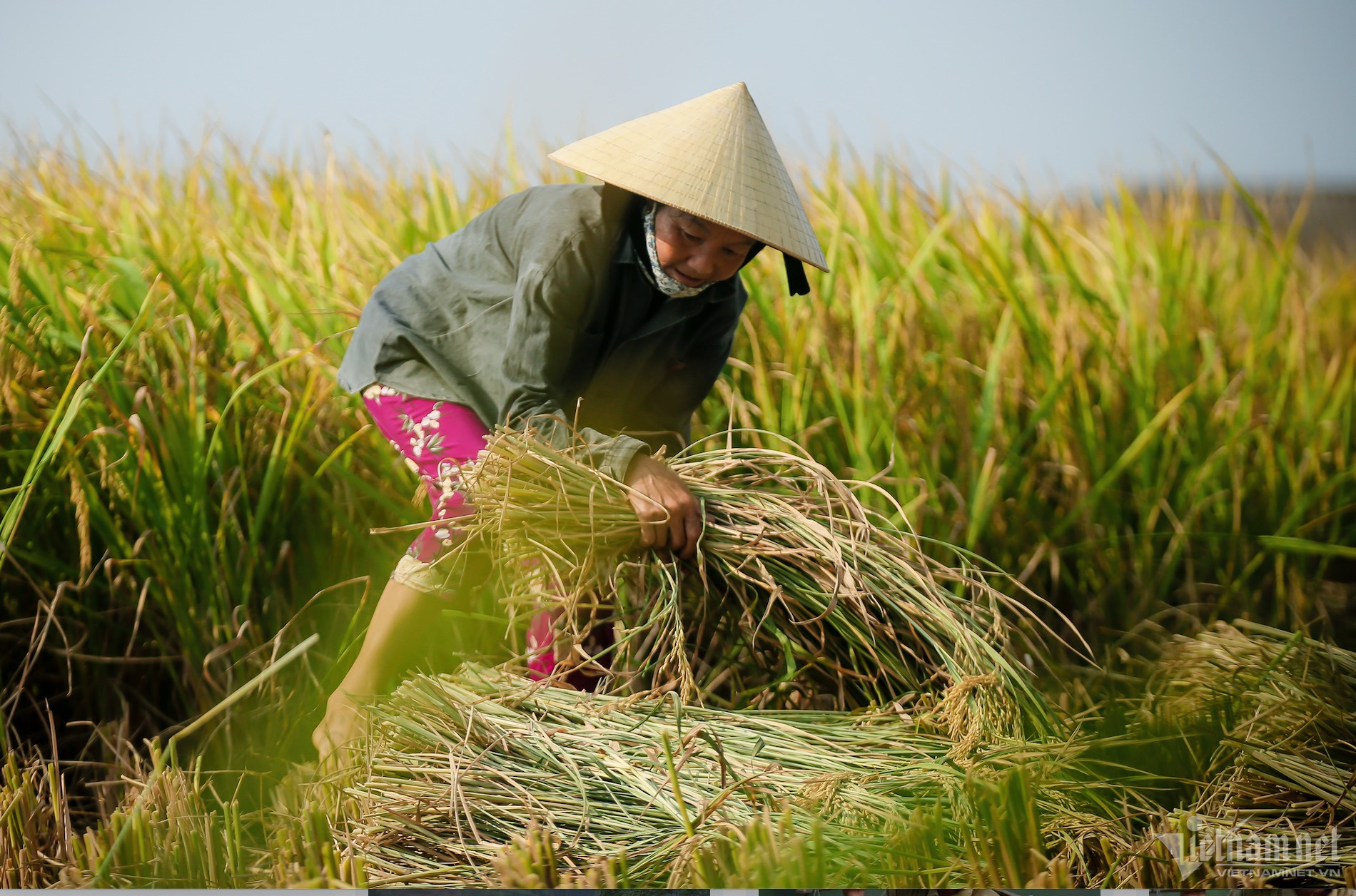
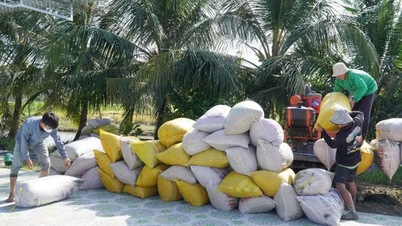
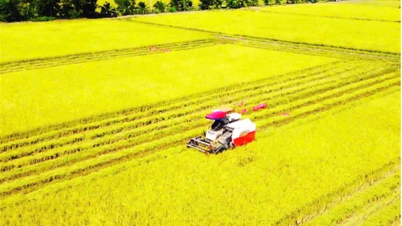
By the end of 2024, Vietnam had exported over 9 million tons of rice, generating nearly $5.7 billion in revenue. Compared to the previous year, rice exports increased by only 11% in volume, but the value surged by 21.2%.
Accordingly, Vietnam's rice industry set historical records in both production volume and value; and maintained its position as the world's third largest rice exporter, after India (17 million tons) and Thailand (9.3 million tons).
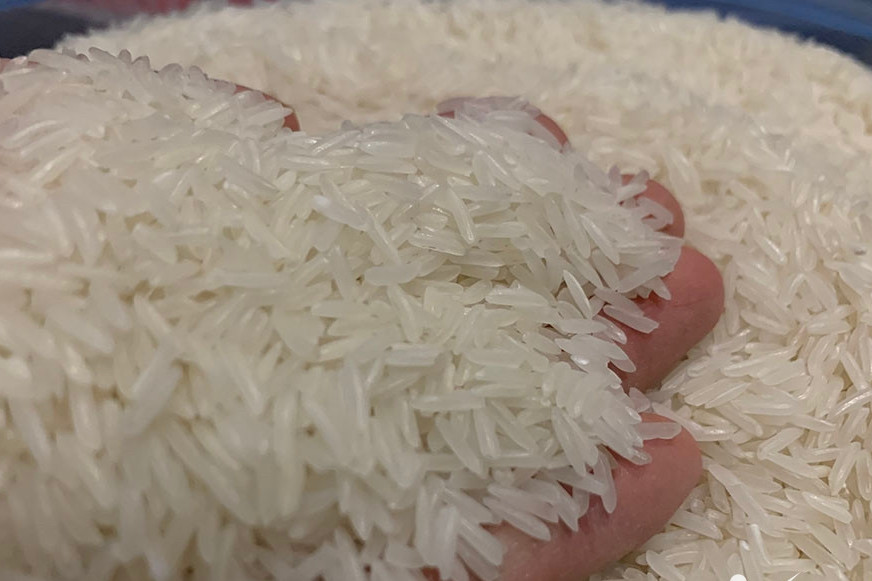
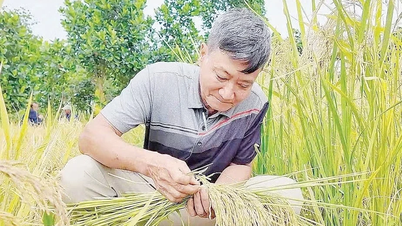
Vietnam is one of the cradles of rice civilization. From the towering mountain peaks of the Northwest to the fertile plains, almost everywhere in Vietnam, rice can be grown, producing pristine white, fragrant, and nutritious grains.
From a country plagued by food shortages, in 1989 Vietnam exported 1.4 million tons of rice for the first time, earning $322 million. The following year, the rice industry marked a historic milestone when export revenue exceeded $1 billion for the first time, with a production volume of 4.6 million tons. Vietnam officially became one of the world's leading rice exporting nations.
From 2000 to the present, rice export turnover has consistently increased, successively surpassing the milestones of 2 billion USD, 3 billion USD, 4 billion USD, and reaching 5.7 billion USD in 2024, becoming the 4th highest-value agricultural export sector.
Moreover, after many years of Vietnamese rice being associated with low quality and cheap prices, in the last two years, prices have gradually improved, consistently rising to the position of the country with the most expensive rice exports thanks to improved rice quality.
At its peak, during the recent global rice price surge, Vietnam's average export price for rice soared to $663 per ton, $100 per ton more expensive than other countries.
In some markets, the average export price of Vietnamese rice in 2024 was extremely high, such as in Brunei at 959 USD/ton, the US at 868 USD/ton, the Netherlands at 857 USD/ton, Ukraine at 847 USD/ton, Iraq at 836 USD/ton, Türkiye at 831 USD/ton... Some companies exported rice to Germany at prices as high as 1,800 USD/ton, and to Japan at 1,200 USD/ton.
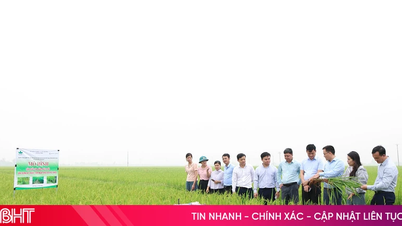
Vietnamese rice has experienced a "turnaround" thanks to gradually improved rice varieties, which not only yield high productivity and short growing seasons (90-105 days) but also boast superior quality compared to competitors.
This is also why many farmers in Cambodia have switched from producing local rice varieties to famous Vietnamese specialty fragrant rice varieties such as OM 5451, ST, and Dai Thom 8 because of their higher economic efficiency. Thai farmers are also competing to grow them.
Vietnamese rice is now not only sold to poorer countries but is gradually entering high-end markets such as Japan, South Korea, the US, and Europe... Bags of rice branded "Vietnam Rice" confidently appear on the shelves of major supermarket chains worldwide.
Vietnamese rice has been honored among the world's best rice varieties, appearing on the menus of politicians and being the choice of renowned chefs. In 2019 and 2023, Vietnam's ST25 rice surpassed competitors from 10 major rice-producing countries to be recognized as the "World's Best Rice".
Producing high-quality, multi-value products.
In early 2025, during a conversation with the press, Minister of Agriculture and Rural Development Le Minh Hoan played the song "Rock Rice Grain," with its fresh, energetic, and modern melody:
After growing into a stem, it blossoms / The rice grain nourishes so many brothers and sisters as they gradually grow up.
After becoming close friends, they embroider flowers into brocade/The Vietnamese people create brocade with flowers...
“Rock Rice Grain” is different from “Singing About Today’s Rice Plant,” different from the familiar image of the rice plant and rice grain that has become ingrained in cultural and spiritual life through folk songs, chants, and melodies...
With market fluctuations and shifting consumer trends, we also need a fresh and different perspective on rice and its grains. Growing rice is not just about selling the grains; if we integrate multiple values, from the simplest things, even a small grain of rice can create priceless, boundless, and endless "brocade."
The project "Sustainable Development of 1 Million Hectares of High-Quality, Low-Emission Rice Cultivation Linked to Green Growth in the Mekong Delta by 2030" is not simply about designating areas for high-quality production. It marks the beginning of a new revolution in production, demonstrating how Vietnam can produce delicious, high-quality rice in a transparent and responsible manner.
Furthermore, there, farmers can grow low-emission rice and then sell carbon credits.
In the second half of 2024, the Ministry of Agriculture and Rural Development and the Carbon Transition Finance Fund held numerous meetings to agree on how to prepare for the pilot implementation of payments for greenhouse gas emission reductions to support the project to develop 1 million hectares of high-quality rice.
Following the agreement, the Carbon Transition Finance Fund approved a total budget of $33.3 million, which could increase to $40 million. This money will be paid to rice farmers to reduce emissions.
Some rice-growing areas that reduced emissions received support from businesses in the form of a subsidy of $20 per ton of carbon. Some households earned tens of millions of dong thanks to large-scale production.
However, besides the carbon credit value, the benefits of this project are enormous and more useful for Vietnam's agricultural production. Rice straw can be used to make pellets and fertilizers for the next crop, allowing farmers to save on input costs while increasing output prices. Vietnam can confidently bring its brand of delicious, plump "green rice" to the global market.
Rice grains can be processed into many food and cosmetic products to increase their value. Even vast rice paddies and terraced rice fields can help farmers "make money" by combining tourism and selling the scenic beauty.
As Minister Le Minh Hoan said, we need to be agile in order to integrate. But to integrate well, we first need to build a solid foundation, carefully select unique values, and cherish the simple, familiar things. Just as rice grains change, so too does the income of farmers.
Next article: Vietnam's strengths overcome obstacles to earn $16.3 billion, exploiting a 40 million ton 'gold mine'.
Source: https://vietnamnet.vn/om-ve-5-7-ty-usd-va-bai-hat-rock-hat-gao-2366458.html




![[Image] National Assembly discusses the implementation of the socio-economic development plan.](https://vphoto.vietnam.vn/thumb/1200x675/vietnam/resource/IMAGE/2026/04/20/1776696707422_ndo_br_img-20260420-185419-jpg.webp)
![[Photo] General Secretary and President To Lam meets with National Assembly delegates from ethnic minorities.](https://vphoto.vietnam.vn/thumb/1200x675/vietnam/resource/IMAGE/2026/04/20/1776696701056_a1-bnd-8331-3342-jpg.webp)





























































Comment (0)