

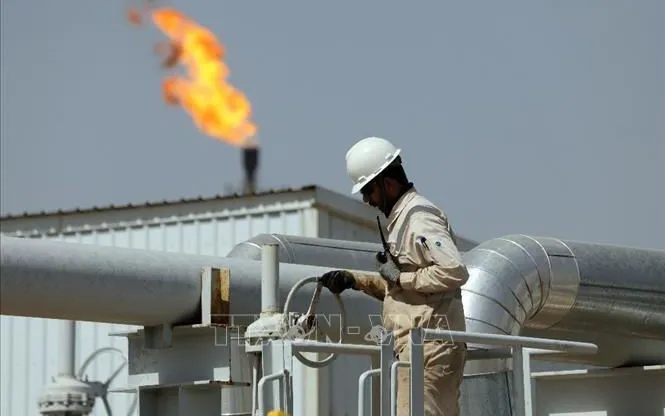
OPEC faces a new challenge from Venezuelan oil.
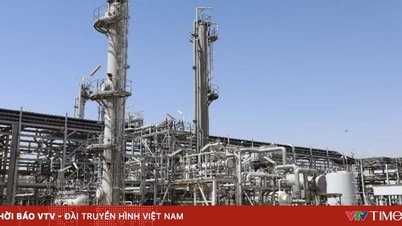
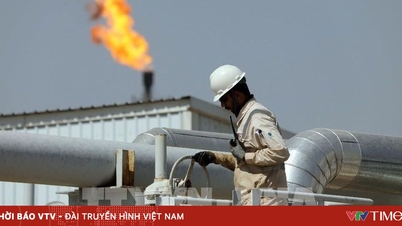
In the context of a global energy market sensitive to any fluctuations in supply and demand, the Organization of Petroleum Exporting Countries (OPEC) and its partners, also known as OPEC+, are facing a new challenge that could disrupt global oil flows and pose a risk of putting downward pressure on oil prices in the long term, as Venezuela is likely to significantly increase its production.
OPEC+ is currently maintaining stable production levels until early 2026. However, analysts believe that the prospect of Venezuela returning to the market with significant production could disrupt the organization's traditional oil price regulation mechanism. The possibility of US oil companies returning to Venezuela will be a decisive factor in determining the rate of production increase. Experts believe that, in the long term, Venezuela's production could increase significantly, posing a serious challenge to OPEC+.
Robin Mills, CEO of Qamar Energy Consulting (UAE), said: "We'll have to see how the US companies perform, how quickly Venezuela's oil production increases. If sanctions are eased or lifted, Venezuela's oil production will increase immediately, but not by much, perhaps only a few hundred thousand barrels per day. But in the long term, over the next three to four years, production could increase by about two million barrels per day. That would really be a challenge for OPEC."
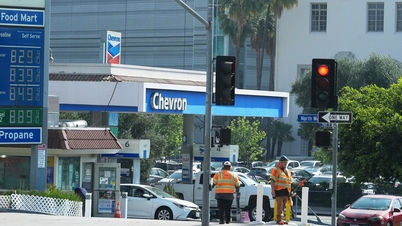
Beyond impacting OPEC+'s regulatory role, the return of Venezuelan oil could disrupt global oil flows and put long-term downward pressure on oil prices. These impacts will force OPEC+ to reconsider all production targets of its member countries and consider bringing Venezuela back under the common regulatory mechanism. These strategic adjustments in the coming period will not only determine oil price stability but also have far-reaching effects on the global economy .
Source: https://vtv.vn/opec-truc-thach-thuc-moi-tu-dau-mo-venezuela-100260112103857062.htm
![[Photo] General Secretary and President To Lam presents the Politburo's Decision on personnel matters to 4 Party Committees directly under the Central Committee.](https://vphoto.vietnam.vn/thumb/1200x675/vietnam/resource/IMAGE/2026/04/13/1776077847172_a1-bnd-8005-950-jpg.webp)
![[Image] Expediting land clearance at Alley 310 Nghi Tam to facilitate the construction of Tu Lien Bridge](https://vphoto.vietnam.vn/thumb/1200x675/vietnam/resource/IMAGE/2026/04/14/1776160406551_ndo_br_z7724148990408-9e5d4777e3c4504998b4286178b2e66e-jpg.webp)
![[Photo] General Secretary and President To Lam holds telephone conversation with Chairman of the Liberal Democratic Party of Japan and Prime Minister of Japan Takaichi Sanae](https://vphoto.vietnam.vn/thumb/1200x675/vietnam/resource/IMAGE/2026/04/13/1776077840503_a1-bnd-7942-6402-jpg.webp)










![[Photo] Prime Minister Le Minh Hung and Prime Minister Robert Fico attend the Slovakia-Vietnam Business Forum](https://vphoto.vietnam.vn/thumb/1200x675/vietnam/resource/IMAGE/2026/04/13/1776075264359_ndo_br_dsc-6775-jpg.webp)







































Comment (0)