Philippine authorities have issued tsunami warnings for many coastal areas in the country and several nations in the Asia-Pacific region.
According to the U.S. Geological Survey (USGS), the earthquake measured 7.8 on the Richter scale and occurred just before 7:40 a.m. (local time). The epicenter was located near Mindanao Island at a depth of approximately 35 kilometers below the surface.
Earlier, some monitoring agencies and media outlets initially recorded the earthquake's intensity as high as 8.2 magnitude.
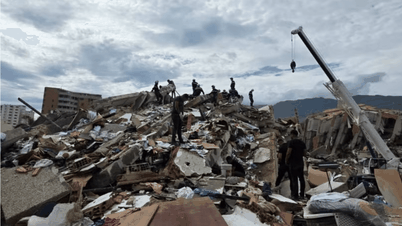
Immediately after the earthquake, numerous videos were shared on social media showing buildings shaking violently, cracks appearing in ceilings and walls, and debris falling into the streets. Residents in affected areas rushed out of their homes, offices, and shops to find safety.
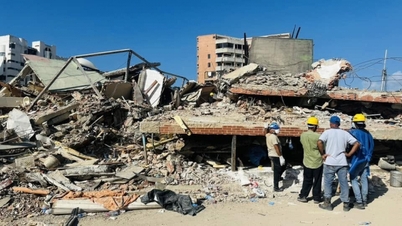
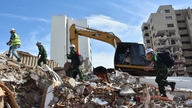
Some videos also show buildings severely damaged, some even partially collapsed. However, authorities have not yet released the full extent of the damage caused by the earthquake.


Following the earthquake, authorities issued tsunami warnings for many coastal areas. The Pacific Tsunami Warning Center said tsunamis could reach heights of up to 3 meters in some coastal regions of the Philippines.
Additionally, smaller waves are also likely to affect many other areas in the western Pacific, including Indonesia, Malaysia, Japan, Taiwan (China), Guam, and Papua New Guinea.
Local authorities have urged residents to stay away from beaches, harbors, and low-lying areas, and to move inland or comply with evacuation orders until the tsunami threat is confirmed to have ended.
As of now, there is no official information on casualties. Rescue forces and authorities are urgently assessing the situation in the hardest-hit areas on Mindanao Island.
Safety checks are also underway on roads, bridges, ports, power systems, and other public infrastructure to determine the extent of the damage.
According to initial reports, tremors from the earthquake affected not only the Philippines but were also felt in several areas of eastern Indonesia, including North Sulawesi and North Maluku.



The Philippines lies on what is known as the "Pacific Ring of Fire," one of the most geologically active regions in the world . It is a frequent site of earthquakes, volcanic eruptions, and other tectonic plate-related natural disasters.
Source: https://suckhoedoisong.vn/philippines-dong-dat-du-doi-khien-nhieu-toa-nha-do-sap-1692606080844445.htm