

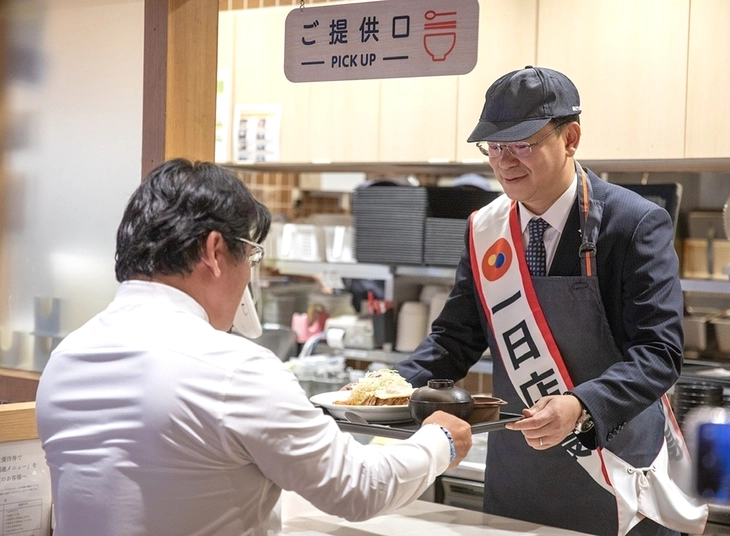
Vietnamese Ambassador to Japan Pham Quang Hieu, in his role as store manager, serves Vietnamese broken rice to customers at a Matsuya restaurant (Roppongi, Japan) - Photo: VNA
While Vietnamese diners are already familiar with Japanese dishes on the menus of many restaurants in Vietnam, recently, Japanese people were able to order broken rice (com tam) for the first time at an authentic Japanese restaurant right in Japan.
Broken rice dish added to menu of Japanese F&B chain.
In late August 2025, the Japanese restaurant chain Matsuya officially introduced its "pork rice bowl in the style of a broken rice dish" to consumers across Japan, adding the dish to the menus of over 1,000 restaurants in the chain.
The story of Vietnamese broken rice in Japan began thanks to trade between the two countries. As one of the three largest gyudon (beef noodle soup) chains in Japan, the leaders of Matsuya, during a market survey in Vietnam, tried and were impressed with broken rice, and from there came the idea of developing this "specialty" Vietnamese dish to introduce to the Japanese people.
The process of "Japanese-style broken rice" is fully supported by the Vietnamese Trade Office in Japan. Mr. Ta Duc Minh, Vietnam's Commercial Counselor in Japan, said that the Trade Office connected Matsuya with Vietnamese businesses to select and incorporate the most authentic Vietnamese ingredients and spices into the dish.
"We suggested that Matsuya consider using typical products such as Vietnamese sausage, ST25 rice, and traditional fish sauce imported directly from Vietnam," Mr. Minh stated.
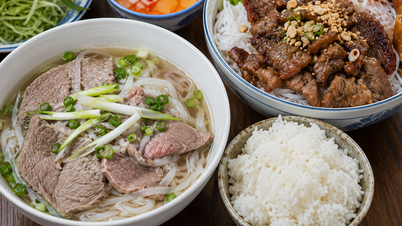
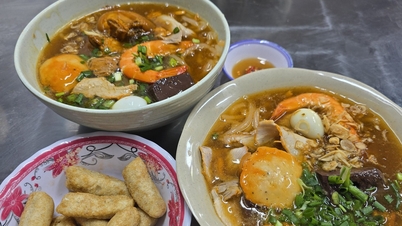
Speaking to Tuoi Tre newspaper, Mr. Minh said that in recent years, Vietnamese cuisine has been increasingly well-received by Japanese people, with many Vietnamese restaurants opening up and offering diverse menus of dishes such as pho, bun bo Hue, banh mi, bun cha, nem ran, etc.
In particular, Pho Day, initiated by Tuoi Tre newspaper in Japan in October 2023, is considered to have further enhanced the image of pho as an iconic dish of Vietnamese cuisine.
"The appearance of Japanese-style broken rice on the Matsuya chain's menu further demonstrates that Vietnamese cuisine is not just a discovery but has gradually found its place in the daily lives of Japanese people. In particular, Vietnamese fish sauce is now available in some supermarkets and food stores in Japan, although its popularity is still limited," Mr. Minh said.
According to Mr. Minh, Vietnamese cuisine has the advantage of being balanced, light, and suitable for the "delicious and healthy eating" trend favored by the Japanese.
"To go further, Vietnamese businesses need to focus on three points: ensuring food safety standards, investing in packaging and cultural storytelling, and closely cooperating with local distribution systems such as AEON, Beisia, Donkihote...", Mr. Minh suggested.
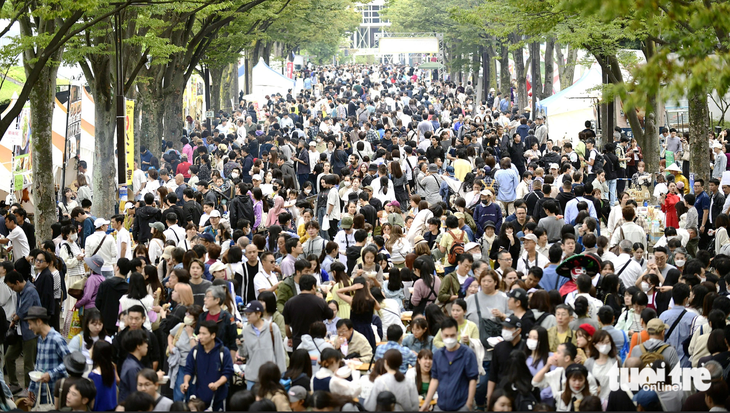
Tens of thousands of diners visited and enjoyed pho at the Pho Festival in Tokyo on the morning of October 8th - Photo: Q. DINH
Pho and broken rice dishes are suitable for the chain model.
Speaking to Tuoi Tre newspaper, Mr. Arakawa Ken, General Director of Matsuya Foods Vietnam, said that Matsuya decided to do business in Vietnam after assessing that the market has a young population and a promising economic growth trajectory.
Having opened its first store in Vietnam at the end of 2024, the Matsuya beef rice bowl chain now has 4 stores in Ho Chi Minh City. Matsuya plans to open 10 stores in Vietnam by 2026.
Commenting on Vietnamese consumer preferences, Mr. Arakawa noted that Vietnamese customers are somewhat more discerning compared to other countries. "When a new store opens, the 'want to try it out' mentality seems weaker than in other countries," the Matsuya representative stated.
However, once they've tried the food and found it to their liking, Vietnamese customers tend to become regulars and visit more frequently.
"Essentially, we're recreating the flavors of Japan right here in Vietnam. Like with this broken rice dish, we also hope to actively incorporate flavors familiar to Vietnamese people in the future," said Mr. Arakawa, adding that Matsuya also uses typical Vietnamese seasonings such as fish sauce and shrimp paste as "hidden spices."
Matsuya prioritizes sourcing ingredients directly from Vietnam. Matsuya's chain of restaurants in Ho Chi Minh City uses white wine for its beef stew sauce, sourced from Da Lat; rice is sourced from the Mekong Delta; and most of the vegetables and fruits are also locally sourced in Vietnam.
Based on Matsuya's success with over 1,000 beef rice bowl restaurants across Japan, and its presence in markets such as China, Taiwan, and Vietnam, Mr. Arakawa believes that the number of food chains in Vietnam is still very small, especially those specializing in traditional dishes like broken rice and pho, which are even rarer.
While acknowledging that these dishes already possess delicious flavors and a streamlined format suitable for the fast food chain model, Mr. Arakawa added that with the combination of investment capital, product development capabilities, and operational capacity, the landscape of the domestic F&B chain in Vietnam will quickly change.
Many favorable factors contribute to boosting exports.
Mr. Ta Duc Minh believes that with over 126 million people, Japan is a market with a large import and consumption demand. "With the increasing awareness of Vietnamese goods among Japanese people, Vietnam has many favorable factors to further promote exports to this country," Mr. Minh affirmed.
According to statistics from the Vietnam Trade Office in Japan, in the first six months of 2025, the total import and export turnover between Vietnam and Japan reached nearly US$24.4 billion, an increase of 9.93% compared to the same period in 2024. Of this, exports from Vietnam to Japan reached US$12.81 billion, an increase of 11.79% compared to the same period in 2024.
Source: https://tuoitre.vn/pho-com-tam-vao-chuoi-fast-food-20250909224754923.htm





































































Comment (0)