Establishment of the Tran Hung Dao War Zone
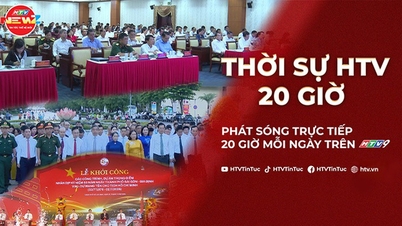
On June 8, 1945, the Tran Hung Dao War Zone (also known as the Dong Trieu War Zone) was established in Quang Ninh . This was one of the seven major war zones nationwide during the pre-insurrection period, playing a crucial role in gathering revolutionary forces, building bases, and preparing for the August 1945 General Uprising.
Beyond being a military base, the revolutionary zone also mobilized the strength of the masses in the Northern Coastal region, contributing to the momentum and strength of the revolution.
After 80 years, Dong Trieu, once a resistance base, has become one of the most dynamically developing localities in Quang Ninh province. In 2015, Dong Trieu officially became a town, marking a significant transformation in its socio -economic development and continuing the glorious historical tradition of this revolutionary homeland.
The US announces the first phase of troop withdrawal from Vietnam.
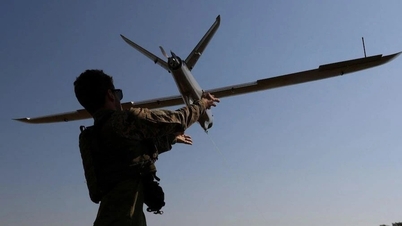
On June 8, 1969, US President Richard Nixon announced the withdrawal of 25,000 American troops from Vietnam, beginning the "Vietnamization" process. This decision was made amidst significant difficulties faced by the US military on the battlefield and a growing anti-war movement domestically.
This was seen as a crucial strategic adjustment by Washington after years of direct military involvement in Vietnam. Two months later, the US announced a second troop withdrawal of 35,000 soldiers. The withdrawal process, which lasted for several years, reflected the impasse of the war strategy and paved the way for negotiations to end the conflict.
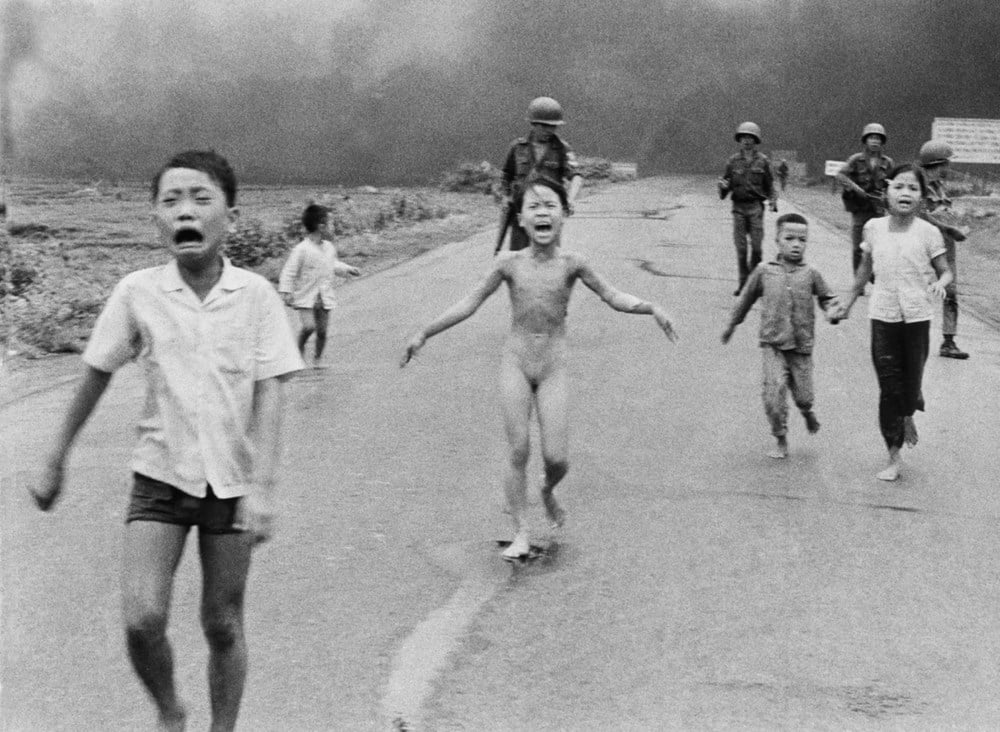
The "Napalm Girl" photograph stirred the conscience of the world.
On June 8, 1972, Associated Press reporter Huynh Cong “Nick” Ut took the famous “Napalm Girl” photograph in Trang Bang, Tay Ninh. The photo shows nine-year-old Phan Thi Kim Phuc, severely burned by napalm, running frantically along the highway with many other children.
The photograph not only stirred global public opinion but also contributed to the anti-war movement in the United States and many Western countries.
In 1973, the photograph earned Nick Ut the prestigious Pulitzer Prize. Decades later, "Napalm Girl" remains one of the most influential photojournalism images in history, a testament to the power of imagery in awakening conscience and the desire for peace in humanity.



The National Assembly ratified the EVFTA and ILO Convention 105.
On June 8, 2020, at its 9th session, the 14th National Assembly approved the Vietnam-European Union Free Trade Agreement (EVFTA) with a 94.62% approval rate. This is considered one of Vietnam's most important new-generation free trade agreements, opening up opportunities to access the market of over 450 million people in the European Union.
At the same time, the National Assembly also ratified Vietnam's accession to International Labour Organization (ILO) Convention No. 105 concerning the abolition of forced labor.
These two decisions demonstrate Vietnam's determination to integrate deeply with the world, both promoting trade and raising international labor standards. In the years that followed, the EVFTA became a crucial driver of export growth and strengthened Vietnam's position on the global trade map.
Composer Luu Huu Phuoc has passed away.
On June 8, 1989, composer Luu Huu Phuoc passed away, bringing to a close the life of one of the greatest figures in Vietnamese revolutionary music. Born in 1921 in Can Tho, he left a profound mark with many works closely associated with the historical milestones of the nation.
Songs like "Onward ," "Putting Aside the Pen and Ink ," "Bach Dang Giang ," "Liberating the South ," "Marching Towards Saigon ," and "Praising President Ho Chi Minh" have become part of the memories of many generations of Vietnamese people. Besides revolutionary music, he also composed famous children's songs such as "Singing at Dawn" and "World Children's Festival ."
In 1996, he was posthumously awarded the Ho Chi Minh Prize for Literature and Arts, in recognition of his significant contributions to the national music scene.
The United Nations established the Nelson Mandela Prize.
On June 8, 2014, the United Nations General Assembly adopted a resolution establishing the Nelson Mandela Prize to honor individuals who have made outstanding contributions to the goals and principles of the United Nations. The award is named after the legendary South African leader, a global symbol of the struggle against apartheid and for human rights.
Establishing the award is not only a recognition of Nelson Mandela's historical contributions but also helps to spread the values of peace, equality, democracy, and compassion.
To this day, the award remains one of the United Nations' most prestigious forms of recognition for individuals who have had a positive impact on the international community.



World Oceans Day
On June 8, 2008, the United Nations officially recognized World Oceans Day, realizing an initiative proposed by Canada at the 1992 Rio de Janeiro Earth Conference.
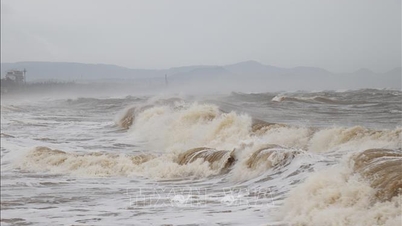
This anniversary aims to raise awareness of the vital role of the ocean in the sustainable development of humankind. The ocean covers approximately 70% of the Earth's surface, is home to the vast majority of biodiversity, and plays a role in regulating the global climate.
With over 3,260 km of coastline, Vietnam actively participates in initiatives to protect the seas and oceans, contributing to fulfilling international commitments on sustainable development.
Source: https://baovanhoa.vn/bao-chi/phong-vien-nick-ut-chup-buc-anh-em-be-napalm-235002.html


![[Image] National conference summarizing one year of operation of the overall organizational model of the political system, the three-tiered government model.](https://vphoto.vietnam.vn/thumb/1200x675/vietnam/resource/IMAGE/2026/07/01/1782882811691_ndo_br_1-jpg.webp)