The waste-to-energy capacity in the Power Development Plan VIII is still too small.
In its submission to the Government requesting the issuance of the Plan for implementing the Power Development Plan VIII, the Ministry of Industry and Trade proposed that the scale of electricity production capacity from waste by 2030 be 493 MW in the North, 122 MW in the North Central region, 60 MW in the Central Central region, and 448 MW in the South... The total waste-to-energy capacity across all regions would be 1,212 MW.
According to environmental experts, this capacity is very small compared to the actual needs and potential of waste-to-energy projects in Vietnam.
In Vietnam today, numerous provinces and cities are inviting bids for the development of waste-to-energy projects, including Hanoi , Ho Chi Minh City, Can Tho, Phu Tho, Hue, Da Nang, and Khanh Hoa. However, the draft Decision on the implementation plan for the national power development plan for the period 2021-2030, with a vision to 2050, submitted by the Ministry of Industry and Trade to the Government, shows that the electricity capacity of waste-to-energy projects is very low.
Furthermore, some localities, such as Can Tho, are only allowed a waste-to-energy capacity of 15 MW, Tra Vinh 10 MW, and Da Nang 15 MW... while waste treatment remains a very pressing issue.
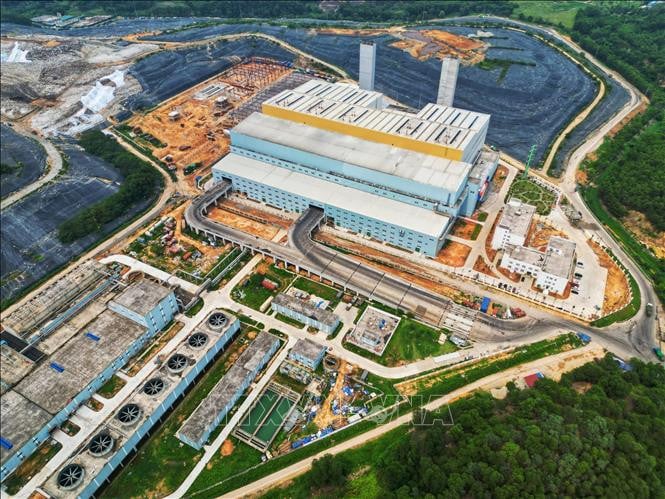
In reality, the current trend in waste treatment in Vietnam is towards waste-to-energy incineration, as other methods have either failed or are unsuccessful, resulting in severe environmental pollution. For example, landfill technology has faced strong opposition from local residents, hindering the development of new landfills. Traditional incineration, using outdated technology, has also failed.
“Almost 90-100% of incinerators are either non-functional or inefficient, causing air pollution, waste, smoke, insects, and odors. Composting technology is also ineffective because Vietnamese household waste contains many chemicals such as shampoo, shower gel, salts, and food scraps in unsorted bins, making composting or burying unsuitable. This makes waste-to-energy incineration the most optimal technology in Vietnam today,” commented an environmental expert.


Environmental expert Hoang Duong Tung assessed: Currently, there are only a few technologies for waste treatment. In recent years, many localities have invested in numerous small-capacity incinerators.
Currently, there are about 300-400 such incinerators nationwide, with investments ranging from 2-4 billion VND per incinerator, or even less than 1 billion VND per incinerator, all manufactured by Vietnamese companies. These incinerators do not meet emission standards, are of poor quality, and only operate for a short time before breaking down. Many of them even end up as garbage dumps.
Waste-to-energy incineration is a trend that should be encouraged.
Essentially, waste-to-energy projects are not conventional commercial power generation projects, but rather primarily aimed at environmental treatment (household waste treatment). In addition to effective environmental treatment, they also generate heat through waste recovery.
Household waste management in the provinces is a pressing issue, directly related to social welfare. The government and relevant ministries and agencies must support localities in this matter to prevent environmental pollution and reduce budget expenditures on waste treatment.
Regarding waste-to-energy incineration technology, expert Hoang Duong Tung believes it is a good solution, with several technologies already applied in many countries to address solid waste problems. They pay particular attention to the treatment of dioxins and furans. Localities generating several hundred tons of waste per day can build this type of incinerator.
According to experts, waste-to-energy incineration technology has many advantages. It is currently the most advanced technology, saving local authorities waste treatment costs while utilizing energy from incineration; and simultaneously achieving environmental protection. Every developed country uses waste-to-energy incineration technology.
According to calculations, localities such as Da Nang, Khanh Hoa, and some other provinces and cities will collect up to 1,800 tons of waste per day by 2030, which is about 75 tons per hour, equivalent to about 40 MW of electricity generated and fed into the grid.
Therefore, the total capacity of waste-to-energy power plants nationwide is at most just over 2,000 MW, which is insignificant compared to coal-fired, gas-fired, wind-fired, solar-fired, and other types of electricity.



So the question is: in this story, has the Ministry of Industry and Trade fully considered the benefits for the provinces, especially in ensuring environmental security and social welfare?
A leader from a Department of Industry and Trade stated that prioritizing waste-to-energy power generation is essentially prioritizing environmental treatment (household waste treatment). More importantly, the plants are located in the centers of provinces and cities, close to electricity consumption areas, resulting in lower production and transmission costs. In particular, revenue from electricity generation helps reduce costs and budgets for provinces and cities in waste treatment and environmental protection.
For the reasons mentioned above, waste-to-energy projects need to be given attention, prioritized, and allocated capacity to localities, so that they have a basis to attract investment. For each province or city with a waste generation volume exceeding 1,000 tons/day, the required capacity for waste-to-energy projects is 30-40 MW.
If planning is less comprehensive, in 2-3 years a series of provinces and cities will have to apply for capacity upgrades to build waste-to-energy plants, wasting time and money, causing delays in local waste treatment operations, and affecting social welfare.
Source