Summer is short.
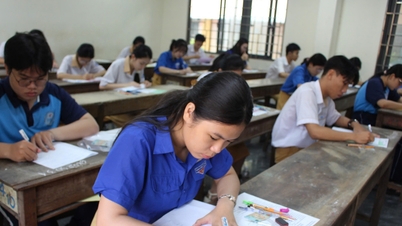
Before he could even enjoy his days off after the closing ceremony, Tran Van Nhat Huy, a student at Le Lai Primary School (Hai Chau Ward), the son of Ms. Ha, started attending extra classes on June 1st. He arrives at class at 7:30 AM and leaves his teacher's house at 5 PM. On weekends, his schedule is almost completely booked with English and swimming lessons. Huy no longer has time to play soccer or ride his bike around the apartment complex with his friends like he used to.
Ms. Ha recounted that sometimes, when her child asked why the summer break was so short, she couldn't help but feel a pang of sadness. "I don't want to force my child to study; if I could spend the whole summer with them, I'd gladly let them play. But both my husband and I work, and leaving them at home alone makes me uneasy. Sending them to school, at least I know they're being looked after, have friends, and are supervised," she said.
This is also the choice of many young families today. Busy work schedules, a lack of childcare, and concerns about children's safety when left alone at home make summer classes the most viable option. Given this reality, summer classes are seen as a way to help children stay away from danger and electronic devices when adults are away.
According to regulations from the Ministry of Education and Training , students' summer vacation lasts from the end of May to the beginning of September. However, for most children, this vacation actually only lasts a little over a week after the closing ceremony. After that, it's filled with cultural classes, foreign languages, talent development, life skills, or experiential courses with a schedule similar to the regular school year.
Many parents admit that they also recognize this shortcoming, but giving their children back their summers is not simple because they lack the time to accompany and care for them. Ms. Ha acknowledges that the busyness of adults forces children's summers to be shaped by school schedules instead of fun experiences.



Not to mention that in the past, summer was a time for children to return to their hometowns to visit their grandparents and help their parents with age-appropriate chores. Back then, summer vacation wasn't fragmented by extra classes, but offered a long enough period for children to fill themselves with unique experiences.
Learn from games
The United Nations Children's Fund (UNICEF) states that play is not only a natural need but also a fundamental right of children, as stipulated in the United Nations Convention on the Rights of the Child. Play helps children develop holistically in terms of physical, emotional, and social aspects, while also forming a foundation of important life skills for the future.
However, there is still a significant gap between the regulations regarding the right to play and the reality of summer for many children today. Amidst the hustle and bustle of adults' lives, not every family has the means to create a truly meaningful summer vacation for their children. In this context, parents are concerned about how to ensure their children have both opportunities to learn and to enjoy a truly fulfilling summer.
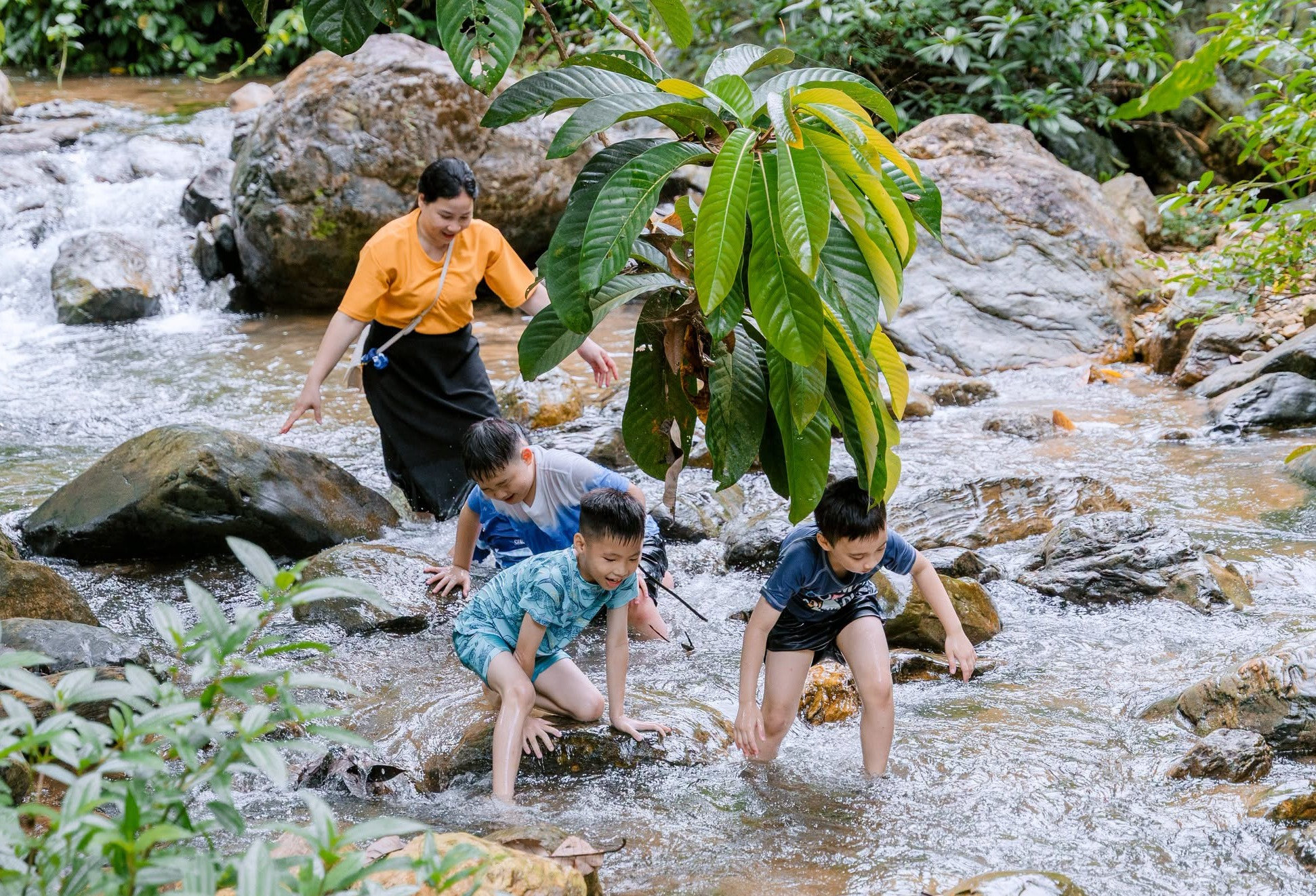
Professor Dr. Le Quang Son, a psychologist from the Department of Clinical Psychology, School of Medicine and Pharmacy - University of Da Nang, suggests that for children, playing is also a way of learning. When playing soccer with friends, camping, assembling models, or exploring nature, children learn how to communicate, cooperate, resolve conflicts, accept failure, and control their emotions. These skills are not easily developed through books or classroom lectures alone.
An ideal summer doesn't necessarily have to be completely free from books, but it requires a reasonable balance between learning, experiences, and rest. Allowing children to participate in outdoor activities, group activities, or simply have free time to play in their own way helps regenerate mental energy after a stressful school year.
In recent years, the Da Nang Children's Cultural Center has changed its approach to summer education for students, with over 80% of the subjects taught being extracurricular activities, and even excluding Math and Vietnamese from the list of subjects offered during the half-day program.
According to Professor Le Quang Son, summer school is not something to be dismissed. Some classes, if suited to a child's interests and abilities, can still be valuable. The important thing is that adults should avoid turning the summer vacation into an extension of the regular school year.


"Children also need time to play freely and resolve everyday conflicts with their friends on their own. It is during these seemingly idle periods that children learn independence, creativity, and how to adapt to life," he explained.
A truly meaningful summer isn't measured by the number of classes completed, nor by how many extracurricular activities a child has taken. Sometimes, the joy of a game of soccer or badminton, or simply relaxing and reading their favorite comic book, will be a beautiful memory that stays with them for a long time.
Source: https://baodanang.vn/quyen-duoc-vui-choi-3343051.html