According to scientists , teeth and bones share some characteristics, but they are also two very different types of structures, from function and composition to their ability to regenerate.
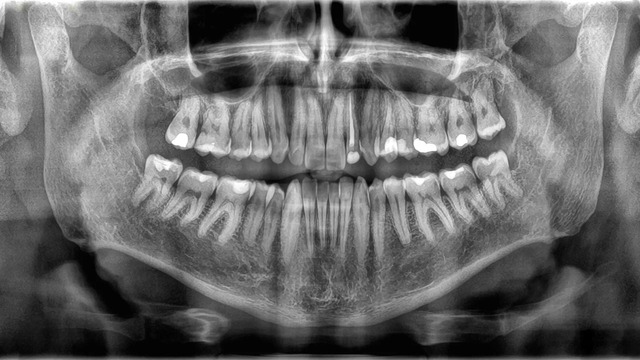
At first glance, teeth and bones seem similar. (Source: Getty Images)
Teeth and bones both belong to the group of mineralized tissues, meaning they are formed from minerals such as calcium, phosphorus, magnesium, and fluoride.
At the molecular level, these minerals bond together to form strong crystals, giving both teeth and bones significantly greater strength than other tissues in the body.
Dr. Edmond Hewlett, Professor Emeritus at the UCLA School of Dentistry, stated that this is the greatest similarity between the two types of tissue. According to him, the resemblance almost stops there.
Teeth and bones have completely different functions.
The primary function of teeth is to bite, grind, and tear food before it enters the digestive system. Additionally, teeth play a crucial role in pronunciation and sound production during speech.
Because of this function, teeth are often considered part of the digestive system. Meanwhile, bones perform many different tasks for the body. The skeleton forms the framework that supports the entire body, allowing us to stand, walk, and move. Bones also provide attachment points for muscles and protect vital organs such as the heart, lungs, and brain.
Furthermore, bone marrow is also the "factory" that produces blood cells, including red blood cells that carry oxygen and white blood cells that help protect the body against disease.
Nevertheless, there are certain connections between teeth and bones. For example, the jawbone provides the foundation for teeth and plays a crucial role in chewing. According to Hewlett, these two structures work closely together but remain separate parts.


The structure of teeth is very different from bone.
The outermost layer of a tooth is enamel, an extremely hard mineralized tissue. It is the hardest material in the human body because it is composed of densely packed calcium-phosphate crystals.
Beneath the enamel is dentin, which is slightly softer but still very hard. Dentin makes up most of the tooth's volume and contains countless tiny tubules connected to nerves and blood vessels.
At the center is the dental pulp, the soft tissue containing a system of blood vessels and nerves that nourishes the tooth and transmits sensations of pain, heat, or cold.
Bones are surrounded by a thin membrane called the periosteum. This layer contains many blood vessels and nerves that help the bone grow and repair itself when damaged.
Beneath the surface lies a layer of dense bone, while inside is spongy bone tissue resembling a honeycomb network. The spaces within this spongy bone tissue contain bone marrow, where new blood cells are produced.
Bone is living tissue, but teeth are not.
Bone is living tissue; it contains a system of blood vessels, nerves, and specialized cells that are constantly working to build or remove old bone tissue. Thanks to this, bones can repair themselves after a fracture and adapt to changes in the body.
In fact, the majority of an adult's skeleton is completely replaced approximately every 10 years.
Conversely, the majority of the hard structure of teeth is not living tissue. During fetal and early childhood development, specialized cells produce enamel and dentin. Once their task is complete, these enamel-producing cells disappear.
This means that if tooth enamel is chipped or damaged, the body cannot create a new layer of enamel to replace it. Although the pulp inside is still living tissue, it is unable to regenerate the lost enamel and dentin.
That's why a damaged tooth usually can't heal on its own like a broken bone.



Why is it important to take better care of your teeth?
The ability to self-repair is what most distinctly differs between bones and teeth. When damaged, bones can repair themselves and continuously regenerate throughout life. Teeth, on the other hand, have almost no such mechanism.
Once tooth enamel is destroyed by cavities, trauma, or wear, the lost tissue cannot regrow naturally. Therefore, dental professionals always emphasize the importance of protecting teeth from the start through proper oral hygiene and regular dental checkups.
As Dr. Hewlett observed: "Bones are a living part of the body. But take good care of your teeth, because they won't grow back like bones."
Source: https://suckhoedoisong.vn/rang-co-duoc-xem-la-xuong-khong-169260608161408126.htm