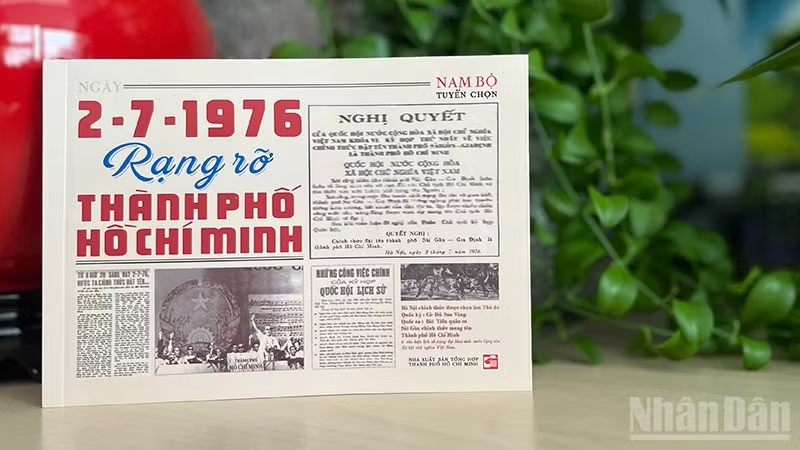
This is a collection of documents and information from city newspapers in July 1976 reporting on activities and events marking the important and meaningful historical moment when the city was honored to be named after President Ho Chi Minh.
This selection of works is compiled from city press materials with the aim of fully conveying the sentiments of the Party Committee, government, and people of the city regarding this momentous historical event.
At that time, newspapers such as Saigon Liberation, Workers' Liberation (Laborer), Saigon Women (Women of Ho Chi Minh City), Youth, Catholic and National , and Morning News responded to the events and reported on important milestones and vibrant activities to commemorate the city named after President Ho Chi Minh.
This was the wish of the people of Southern Vietnam. At a meeting in Hanoi on August 25, 1946, commemorating the first anniversary of the successful August Revolution, the Central Southern Vietnam Office held a meeting with Southern Vietnamese people. There, Doctor and People's Teacher Tran Huu Nghiep recounted the situation in Southern Vietnam over the past year: the glorious achievements of the soldiers who died and those still fighting; but above all, the doctor spoke of the merits of President Ho Chi Minh, the pioneering fighter of the national liberation movement, the great hero of the Vietnamese people.
The newspaper Cuu Quoc, issue 329, dated August 27, 1946, reported: After citing a few examples in major countries where cities are named after national heroes, Dr. Nghiep proposed that, in recognition of President Ho Chi Minh's contributions, Saigon should be renamed Ho Chi Minh City. Everyone agreed with Dr. Nghiep's proposal and signed the resolution to change the name of Saigon, which was then submitted to the Government.



The resolution, submitted to the National Assembly and the Central Government, requests that the National Assembly and the Central Government immediately change the name of Saigon to Ho Chi Minh City to symbolize the struggle, sacrifice, and devotion of the people of Southern Vietnam to President Ho Chi Minh.
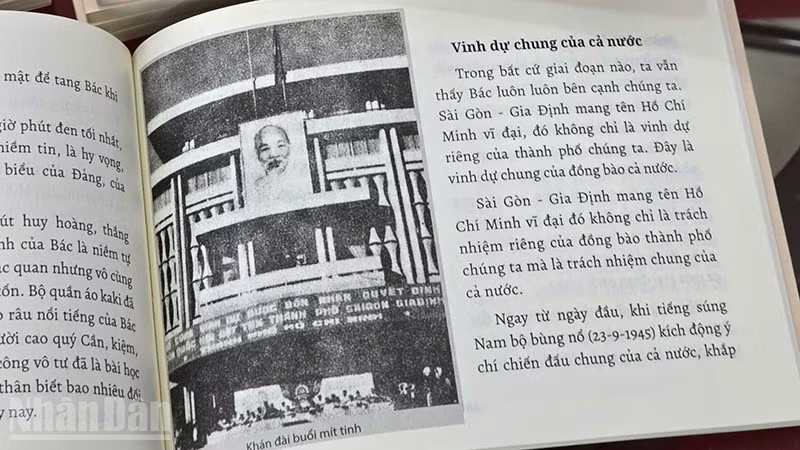
Following a proposal in 1946, Dr. Tran Huu Nghiep, representing the intellectuals of Southern Vietnam, suggested renaming Saigon to Ho Chi Minh City. In 1976, the National Assembly of the Socialist Republic of Vietnam passed a resolution renaming Saigon-Gia Dinh to Ho Chi Minh City.
"This morning, more than 20,000 people from all walks of life, representing 3.5 million people of the city, attended a rally (in front of the former Independence Palace) to receive the National Assembly's decision to rename the city of Saigon-Gia Dinh as Ho Chi Minh City."
The beautiful morning sun shone on the grass, on the forest of flags and banners. Here were the workers of the Trade Union Federation in their sea-blue shirts, there were the Youth Volunteers with their pretty conical hats, over there were the Pioneer Children's Team with red scarves on their shoulders, and there, majestic and orderly in their green uniforms, were the invincible armed forces... The words that stood out on the vibrant banners seemed to express all the thoughts, aspirations, and feelings of the people: "The great President Ho Chi Minh lives forever in our cause!", "It is a great honor to receive the National Assembly's decision to name the city of Saigon-Gia Dinh as Ho Chi Minh City!", "Long live the Socialist Republic of Vietnam!"... (according to Saigon Liberation Newspaper, issue 368, July 12, 1976, pages 1 and 4).
Beginning his journey to find a way to save the country, the young man Nguyen Tat Thanh's footsteps started from Nha Rong Port. He dedicated his entire life to the independence and freedom of the people. His life, career, and ideology have become a legacy for future generations to learn from and emulate. His name has become synonymous with the southern city, a source of pride, honor, and motivation for the Party Committee, government, and people of the city.
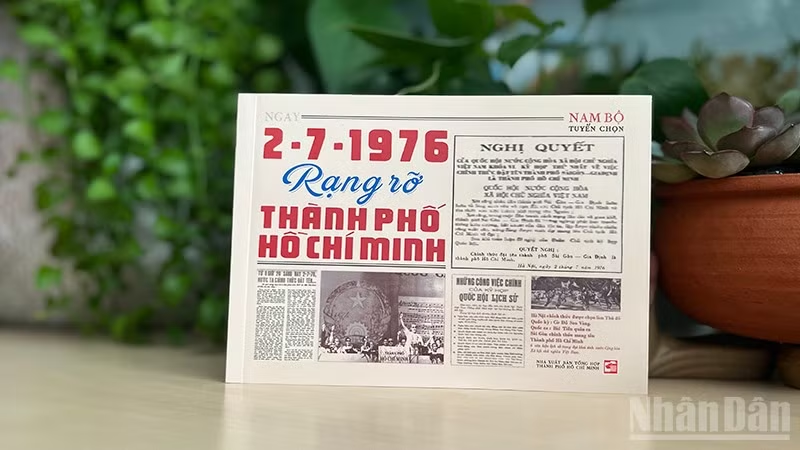



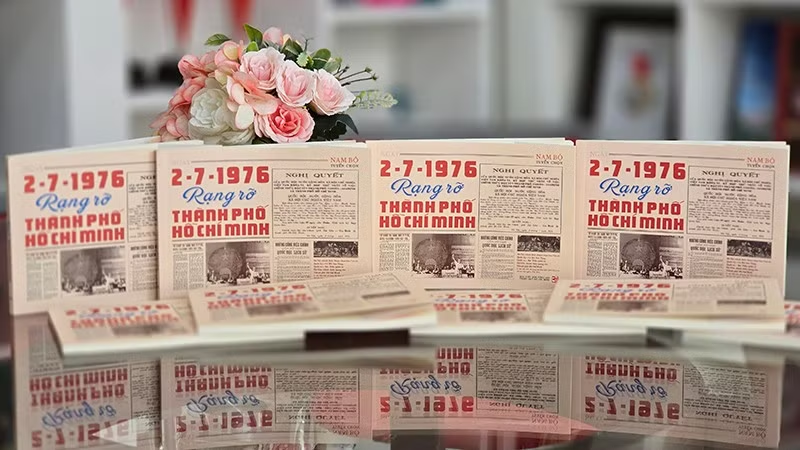
Mr. Tran Dinh Ba, Deputy Director and Deputy Editor-in-Chief of the Ho Chi Minh City General Publishing House, shared that the work was selected from articles in the city's newspapers at the time of the event in 1976, helping to provide a comprehensive overview of the city's momentous event on July 2, 1976, fully reflecting the feelings, will, aspirations, and pride of the Party Committee, government, and people of the city regarding this significant event. The historical milestones from 1946-1976-2026 related to the name Ho Chi Minh City are presented with concise and comprehensive information.
This booklet is produced in a slim, pocket-sized format for easy reading, preserving a significant memory of the city - 50 years since the city was named after President Ho Chi Minh.
Source: https://nhandan.vn/rang-ro-thanh-pho-ho-chi-minh-post972640.html
![[Image] National conference summarizing one year of operation of the overall organizational model of the political system, the three-tiered government model.](https://vphoto.vietnam.vn/thumb/1200x675/vietnam/resource/IMAGE/2026/07/01/1782882811691_ndo_br_1-jpg.webp)







![[Video] Weather forecast for tonight and tomorrow, July 2nd, 2026: Tropical depression likely to strengthen into a storm; many areas will continue to experience thunderstorms.](https://vphoto.vietnam.vn/thumb/402x226/vietnam/resource/IMAGE/2026/07/01/1782911026600_thumb-dem-png.webp)