

 |
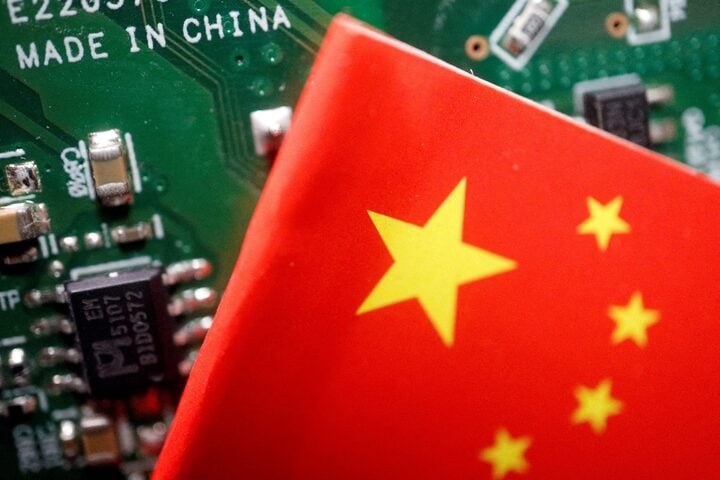
US partners that set up factories in China are about to face difficulties. Photo: Reuters/Florence Lo . |
According to the Wall Street Journal , a US official recently stated that the country is seeking to end the access granted to leading global chip manufacturers to US technology in China. If this proposal materializes, trade tensions between the two sides could escalate.
Currently, large corporations such as Samsung, SK Hynix (South Korea), and TSMC (Taiwan, China) are enjoying these "privileges." Thanks to this, they can ship US-made chip manufacturing equipment to their factories in China without needing to apply for a license for each shipment.
Tightening control over chip technology
Accordingly, Jeffrey Kessler, head of the export control division of the U.S. Department of Commerce, was the one who proposed cutting the export rights of the three companies mentioned above. According to sources close to the WSJ , Kessler believes this is part of the Trump administration's effort to tighten the transfer of critical American technology to China.
If this plan is implemented, it could cause significant disruptions in both diplomatic and economic terms. This is especially concerning given that earlier this month, the US and China reached a trade truce in London, agreeing to temporarily suspend the implementation of new export controls or any other actions that could harm each other.
However, White House officials argue that this move is not a new "escalation" of trade tensions. Instead, it is intended to make the US chip equipment licensing system more similar to how China manages the export of rare earth materials.
They also emphasized that the US and China are still making good progress in finalizing the London agreement and continuing trade negotiations.
A spokesperson for the U.S. Department of Commerce reassured: "Chip manufacturers can still operate in China. These new regulations simply make the licensing process the same as other semiconductor companies already do when exporting to China, ensuring the U.S. has a fair and bilateral process."
Serious impact
Although the U.S. views this as merely a reciprocal measure, tightening restrictions on global chip manufacturers in China could be seen as a betrayal of the London agreement. This also risks straining relations between the U.S. and partners such as South Korea and Taiwan, regions with the most affected companies and which have made significant investments in the U.S. in recent years.
Factories in China, including Samsung's memory chip plant in Xi'an, are mentioned as playing a crucial role in the global chip supply chain. While the technology in these factories may not be the most advanced, their output is widely used in automobiles, consumer electronics, and many other products.
Industry experts believe that while tighter US controls won't immediately force chip factories to shut down, efficient operation will become more difficult in the long run. This could disrupt global supply chains, especially as companies are already grappling with numerous issues stemming from the US-China trade war.
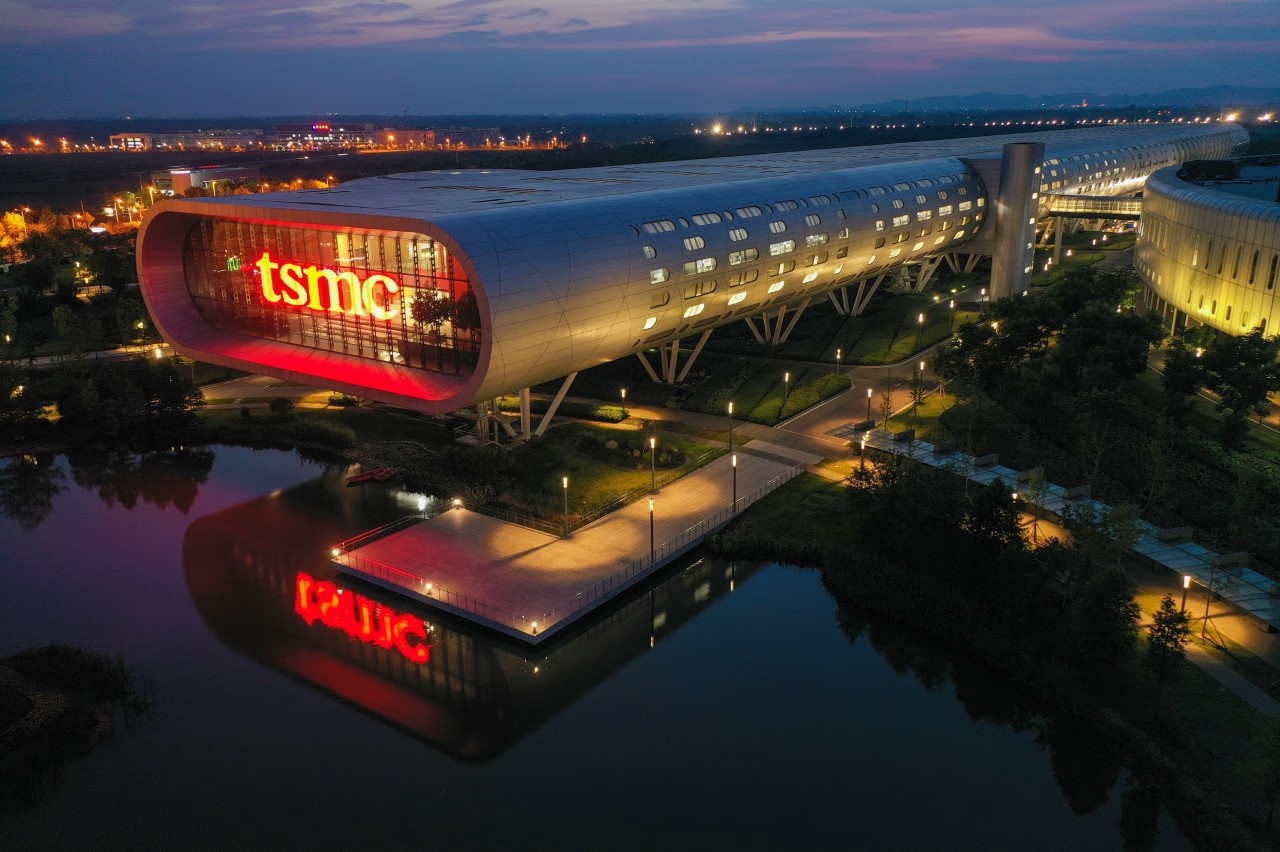 |
A TSMC factory in Nanjing, Jiangsu province, China. Photo: WSJ. |
Chip manufacturers may have to obtain individual licenses from the U.S. government to supply factories in China, while also seeking alternative equipment from Japan and Europe.
However, revoking these exemptions is not a final decision. Jeffrey Kessler's unit at the U.S. Department of Commerce has yet to gain consensus from other departments, such as the Department of Defense. Many officials in the administration fear that removing the exemptions would inadvertently help Chinese companies develop and control these factories.
Kessler and several other officials are adamant about cutting China off from American technology, arguing that strong measures are needed to curb China's progress and promote supply chains outside of China.
Recently, the US government halted sales of high-end Nvidia and AMD chips to China, resulting in billions of dollars in lost revenue for American companies.
Korean and Taiwanese companies have also notified local authorities, hoping to receive lobbying support against this move.
These companies view their factories in China as a crucial factor in competing with Chinese rivals. TSMC, Samsung, and SK Hynix have all invested billions of dollars in factories in the US.
Source: https://znews.vn/my-nham-vao-cac-doi-tac-cong-nghe-co-nha-may-tai-trung-quoc-post1562669.html



































































![[Infographic] List of 50 elected representatives to the Cao Bang Provincial People's Council, 18th term, 2026-2031](https://vphoto.vietnam.vn/thumb/402x226/vietnam/resource/IMAGE/2026/03/21/1774067842645_screenhunter_213-mar21-11-22.jpeg)















Comment (0)