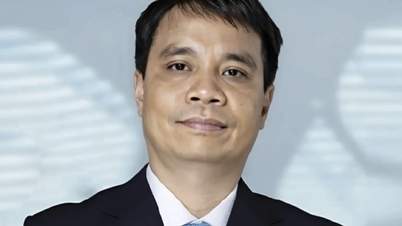
Video of Professor Mai Thanh Phong, Rector of the University of Technology, Vietnam National University Ho Chi Minh City, sharing:
Sir, in order to implement Resolution 57 of the Politburo , what is the key area of focus for the Ho Chi Minh City University of Technology, Vietnam National University?
To implement Resolution 57, we recognize that the biggest change is the awareness of the importance of science and technology from the highest levels of the Party and State. This is advantageous for scientists.
The University of Technology, Vietnam National University Ho Chi Minh City, has identified several key points. Firstly, for higher education institutions or research units, the human factor is paramount. Therefore, we have policies to train, attract, and especially retain talented individuals. Within the 10 strategic technology groups issued by the Government, we have identified six priority areas based on the strengths and conditions of Ho Chi Minh City: Artificial Intelligence (AI); Semiconductor Microchips: This is a significant strength of the University of Technology, Vietnam National University Ho Chi Minh City; Renewable Energy and New Energy; Technologies related to digital technology and urban development, digital transformation and smart cities; Automation and Smart Devices; and Biotechnology: This is the technology of the future.
To achieve this, we first had to build a team. We needed to develop a compensation policy and create a work environment that fosters the potential of scientists. This environment should be transparent, fair, creative, and offer commensurate compensation. We promptly implemented a job position scheme, which resulted in better compensation, improved facilities, and, most importantly, additional investment in research spaces and resources.
Furthermore, we have specific policies to attract outstanding scientists from abroad, primarily Vietnamese people currently residing overseas, into three main groups. First are leading scientists: those who have achieved success and have experience in the cutting-edge fields that the university has chosen to attract to work full-time at the university. Next are promising young scientists. They are well-trained and have some experience abroad. This group will be the future successor team. Finally, there is the group of visiting professors, regardless of whether they are foreign or domestic.
Specifically for leading scientists and young scientists, the Vietnam National University Ho Chi Minh City (VNU-HCM) implements the VNU350 program to attract them. Over three years of implementation, the University of Technology, VNU-HCM, has attracted 30 young scientists, averaging about 10 scientists per year. Previously, these individuals all wished to return to Vietnam to work but were not ready due to perceived unfavorable conditions. With improved policies and evidence of their potential, they have returned.



Sir, to achieve scientific and technological results, we must foster a strong relationship between the "three stakeholders" (State - University - Enterprise). So, what activities has the Ho Chi Minh City University of Technology, Vietnam National University, implemented to promote close cooperation between these three stakeholders?
The tradition of the Ho Chi Minh City University of Technology, Vietnam National University, is to cooperate very well with the industrial sector. Located in the key southern region, with a very large industrial sector and a large alumni network working in this field, this is a major strength.
We all see that the integration of a higher education institution with the industrial sector is extremely important, not only in research and development but also in training. This is especially crucial for a technical university.
Recognizing this, we have built networks and business communities from the industrial sector related to the fields our school is training and researching, and we have close cooperation through two forms:
Regarding training, we support the school in developing training programs and assisting students with internships and practical training. We develop internship and practical training programs on a semester basis. For engineering programs, students are required to work in a company for one year, while for bachelor's degree programs in engineering, it is one semester.
Regarding the coordination of scientific and technological tasks, we start from real-world problems and needs of businesses, thereby bringing research results to market sooner. To achieve this, we seamlessly coordinate two things: the Center for Entrepreneurship and Innovation to translate ideas and research results into external companies; and the establishment of a Science and Technology company to act as a central point for exporting research results externally in two forms: a joint-stock company with the participation of various parties and a science and technology enterprise owned by the university.
According to him, after more than a year of implementing Resolution 57, what obstacles are still being encountered at the grassroots level? What kind of additional support do he think is needed from relevant departments to ensure that Resolution 57 is fully implemented?
We talk about the "three parties" concept, but I've only mentioned two so far: schools and businesses. What about the government? As I shared earlier, regarding the government, we've seen resolutions issued over the past year. In terms of awareness, these policies have removed many obstacles. However, we face a common challenge: implementing the policies of the Party and the State requires concretization through laws, circulars, guiding decrees, and development programs. Recently, relevant ministries and agencies have made great efforts to promote these contents, but they haven't been thoroughly put into practice yet.
If we talk about the biggest obstacle, it remains the lack of supportive policies from the state management. This has been a persistent problem. Currently, we are awaiting the results of the concretization of these policy mechanisms.


For example, funding for scientific research is currently limited, and this is being addressed by advocating for increased funding. Furthermore, obstacles related to task assignment and accounting methods are also being reformed. The mindset is to move away from administrative control and instead focus on task assignment and output-based results.
It is understood that the Ministry of Science and Technology is developing key programs, which include new perspectives on innovation and are aligned with international best practices, making them clear and comprehensive. However, these programs are facing implementation challenges, and we hope they will be finalized soon for deployment.
Thank you very much, sir!
Source: https://baotintuc.vn/thoi-su/san-sang-nhan-luc-phung-su-dat-nuoc-phat-trien-20260628074304521.htm






















































































![[Infographic] Which types of behaviors are strictly prohibited in digital transformation from July 1, 2026?](https://vphoto.vietnam.vn/thumb/402x226/vietnam/resource/IMAGE/2026/07/02/1783004068098_thumb_5_hanh_vi_nghiem_cam_20260702184923.jpeg)