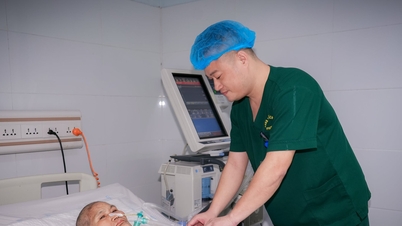
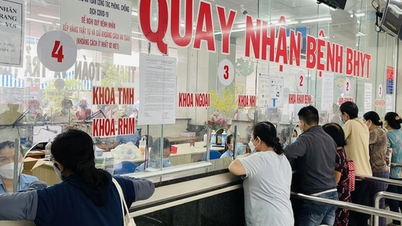
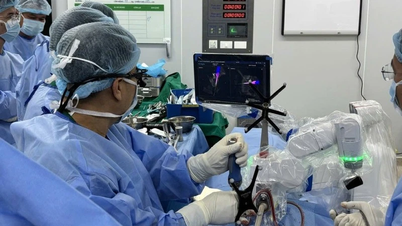
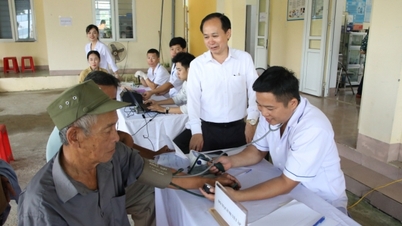
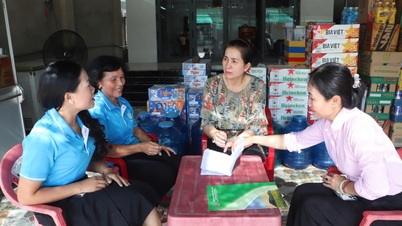
In Quang Ninh province, the universal health check-up program has been established for many years. Following the province's directives, since 2015, the Department of Health has maintained mobile medical examination and treatment services and provided free medicine to people in disadvantaged, border, and island areas. The Department of Health has assigned the Provincial General Hospital, Bai Chay Hospital, Obstetrics and Pediatrics Hospital, and Cam Pha Regional General Hospital to conduct mobile examinations in 39 remote, disadvantaged, border, and island communes.

Simultaneously, specialized hospitals such as the Lung Hospital, Traditional Medicine Hospital, Mental Health Hospital, and the Provincial Center for Disease Control organize free screenings in several specialized fields such as tuberculosis, congenital defects, ophthalmology, dermatology, mental health, and non-communicable diseases. In 2025 alone, the province achieved over 44,000 mobile medical examinations and treatments. In the first five months of 2026, Quang Ninh continued to achieve over 18,700 mobile medical examinations and treatments and nearly 578,000 screening examinations.
These activities not only bring healthcare services closer to the people, but also provide an opportunity for provincial-level medical staff to directly support grassroots healthcare workers. Dr. Cao Duc Manh, a specialist at Bai Chay Hospital, stated: "When visiting the grassroots level, in addition to conducting planned examinations, the hospital's doctors also discuss with local staff how to organize examination procedures, coordinate laboratory tests, ultrasounds, specialist examinations, and handle cases requiring referral to higher-level facilities. In the future, the hospital is ready to continue supporting grassroots healthcare with personnel, expertise, and equipment, contributing to ensuring the goal of universal health check-ups."
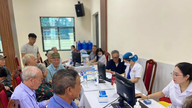

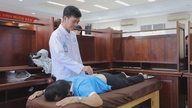
Dr. Pham Hong Thuy, Deputy Director of Quang Duc Commune Health Station, shared: "Through mobile health check-up sessions organized by the provincial level, the station's staff have been able to directly observe and practice many new professional skills. Doctors from higher levels have provided guidance from patient reception, triage, record keeping, to identifying abnormal signs for timely consultation or referral. These experiences help grassroots health workers feel more confident in preparing to participate in the nationwide health check-up program."

Besides training, the health sector is also strengthening human resources at the grassroots level. On May 21st, the Department of Health deployed 111 doctors to work at commune, ward, and special zone health stations throughout the province. This force was selected from units under the Department of Health and the Vietnam-Sweden Uong Bi Hospital. The Department also directed specialized hospitals (Provincial General Hospital, Bai Chay Hospital, Obstetrics and Pediatrics Hospital) to organize training courses in the fields of dentistry, otolaryngology, ophthalmology, and pediatrics for doctors at regional general hospitals and health stations throughout the province.
According to the province's plan, in 2026, more than 1.4 million people in Quang Ninh will receive free periodic health check-ups or screenings. In the first phase, from May 25th to June 30th, agencies and businesses will coordinate to conduct check-ups for over 328,000 workers. From July 1st, the province will begin checking the remaining groups, aiming to complete the program by September 2026. According to the Department of Health, to avoid a rush of check-ups at one time, localities will coordinate with assigned hospitals to organize check-ups by population group, neighborhood, village, or hamlet in a phased manner. For those under 18 years old, check-ups will be held at health stations, community centers, schools, or other suitable locations. Those 18 years and older will be directed to qualified hospitals or clinics; in cases of serious illness, disability, or inability to travel, check-ups will be conducted at home.
A new feature of the program is that the examination results are not limited to a single health check. After the examination, the results will be updated in the electronic health record, integrated into VNeID. If hypertension, diabetes, chronic respiratory disease, or other risk factors are detected, the health station will add the patient to a management list, provide advice on nutrition and lifestyle, schedule follow-up examinations, or refer them to other facilities if necessary.



The health sector is also advising on the implementation of a "Smart Health Station" model in the period up to 2026, with a vision to 2030, following a roadmap from standardizing professional procedures, creating digital data at the source to smart connectivity and gradually applying artificial intelligence to support decision-making. When data between health stations and hospitals is interconnected, people being referred to higher-level facilities will not have to repeat unnecessary basic tests; after treatment, hospitals can also transfer information to the health station for continued monitoring and management at the local level.
Source: https://baoquangninh.vn/san-sang-tu-tuyen-y-te-co-so-3411368.html
![[Image] National conference summarizing one year of operation of the overall organizational model of the political system, the three-tiered government model.](https://vphoto.vietnam.vn/thumb/1200x675/vietnam/resource/IMAGE/2026/07/01/1782882811691_ndo_br_1-jpg.webp)