

Assessing the evolution of SARS-CoV-2
On the morning of February 2nd, the Ministry of Health held a press conference to provide information on healthcare for the first quarter of 2024 and activities leading up to the 69th anniversary of Vietnamese Doctors' Day on February 27th.
During the meeting, Deputy Minister of Health Nguyen Thi Lien Huong stated: "Strengthening healthcare services during the Lunar New Year (Year of the Dragon) and the spring festival season of 2024 is one of the key tasks of the health sector in the first months of this year."
Regarding the developments of the Covid-19 pandemic, Dr. Nguyen Luong Tam, Deputy Director of the Department of Preventive Medicine (Ministry of Health), citing the World Health Organization (WHO), stated that new variants of SARS-CoV-2 are constantly changing. The JN.1 variant (a BA.2.86 sub-variant of Omicron) is the latest variant recorded and has rapidly increased globally.
The country has recorded cases of JN.1 infection among hospitalized Covid-19 patients. Research units continue to collect Covid-19 patient samples, isolate the virus, and sequence its genes to closely monitor the changes in SARS-CoV-2; collaborating with scientists in other countries to assess the virus's mutations.
The WHO assesses that infectious diseases worldwide remain complex, especially respiratory illnesses.
Given that the JN.1 variant is prevalent in many countries, the WHO notes that this variant has the potential to evade immunity, but there is no evidence of increased severity compared to previous variants, and the public health risk remains assessed as low globally.
The number of SARS-CoV-2 cases in particular, and other respiratory illnesses in general, is projected to increase in the coming period, especially in countries entering winter, which could lead to an increase in hospitalizations at healthcare facilities.
WHO monitoring shows that the number of Covid-19 cases requiring hospitalization in December 2023 increased by 42% compared to the previous month.
Risk of disease entry and outbreaks of infectious diseases.
The Ministry of Health notes that the northern region is currently in the winter-spring season, and the unpredictable weather changes during this transition are a cause of the emergence and spread of infectious diseases, especially respiratory diseases, posing a potential risk of outbreaks.
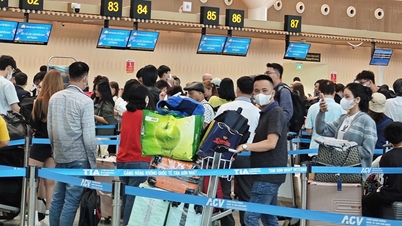
Nationwide, this is also the time when year-end trade and tourism demand increases, creating favorable conditions for disease-causing agents to spread, potentially leading to an increase in the number of infectious diseases and respiratory illnesses, especially among high-risk groups such as children with weak immune systems, the elderly, and people with underlying medical conditions.
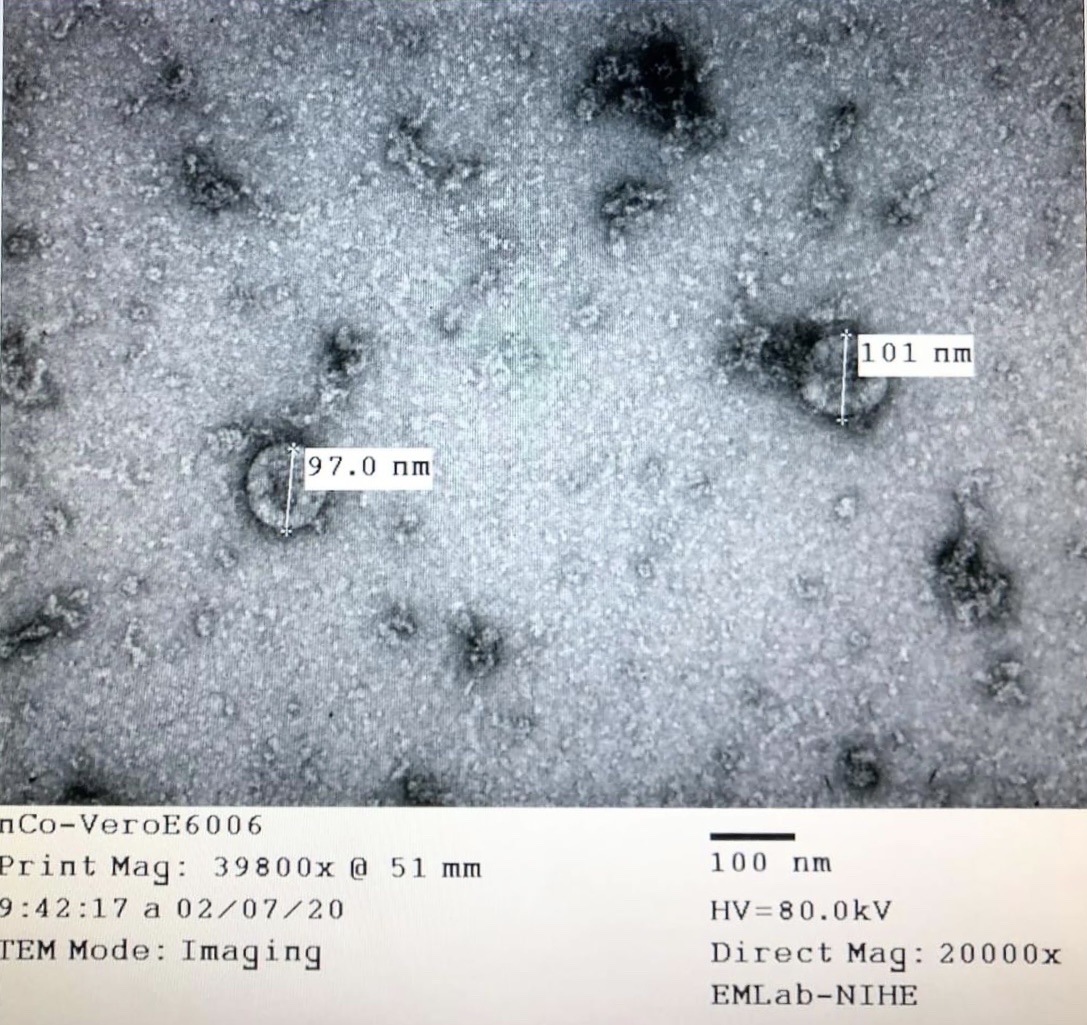
Domestic scientists are performing gene sequencing to assess the mutations of SARS-CoV-2.
CENTRAL INSTITUTE OF HYGIENE AND EPIDEMIOLOGY
The Ministry of Health requests the People's Committees of provinces and cities, and requires all units in the health sector to pay special attention to monitoring and responding to infectious disease outbreaks: tracking, monitoring, early detection, and timely and thorough handling of infectious disease outbreaks, preventing them from spreading and escalating into the community.
Strengthen disease control and surveillance at border gates to detect and isolate suspected and confirmed cases of infectious diseases early, preventing the entry and spread of diseases into Vietnam; have contingency plans ready to respond to disease outbreaks.
Hospitals under the Ministry of Health are enhancing their capacity for patient admission and treatment; reviewing facilities; developing and implementing plans to ensure sufficient personnel, medicines, blood, intravenous fluids, supplies, chemicals, medical equipment, and medical oxygen; and preparing emergency response plans for events with large gatherings of people.
Over time, SARS-CoV-2 has continuously mutated, creating new variants, the most recent being the JN.1 variant.
Based on changes in viral characteristics, transmissibility, severity, or the effectiveness of vaccines, treatments, and diagnostics, the WHO classifies SARS-CoV-2 variants into four groups: variants of concern; variants of risk; variants under surveillance; and variants with serious consequences.
In Vietnam, the Covid-19 pandemic remains under control. The number of recorded cases is low, scattered across several localities, and most patients have mild or no symptoms; the number of hospitalized cases and the number of critically ill patients in treatment facilities are also low.
According to statistics from the domestic disease surveillance system, in recent weeks, an average of 50-55 cases of Covid-19 have been recorded per week. Most cases have mild symptoms. 90 Covid-19 patients are currently being treated at medical facilities.
Current pathogen surveillance results have not revealed any new or unusual variants.
Source link


![[Photo] General Secretary and President To Lam meets with National Assembly delegates from ethnic minorities.](https://vphoto.vietnam.vn/thumb/1200x675/vietnam/resource/IMAGE/2026/04/20/1776696701056_a1-bnd-8331-3342-jpg.webp)


![[Image] National Assembly discusses the implementation of the socio-economic development plan.](https://vphoto.vietnam.vn/thumb/1200x675/vietnam/resource/IMAGE/2026/04/20/1776696707422_ndo_br_img-20260420-185419-jpg.webp)






















































































Comment (0)