

The Indian Space Research Organization (ISRO) says that if all goes well, Aditya-L1 will reach Lagrange Point 1 (L1) of the solar-Earth system, about 1.5 million kilometers from Earth.
Upon reaching L1, the spacecraft will deploy seven different instruments to monitor solar activity and its impact on space weather in real time.
Additionally, Aditya-L1 studies the solar wind, which can disrupt the Earth's magnetosphere, interrupting communication and navigation systems. According to CNBC, the Indian government allocated $46 million to Aditya-L1 in 2019 but has not released any further updates.
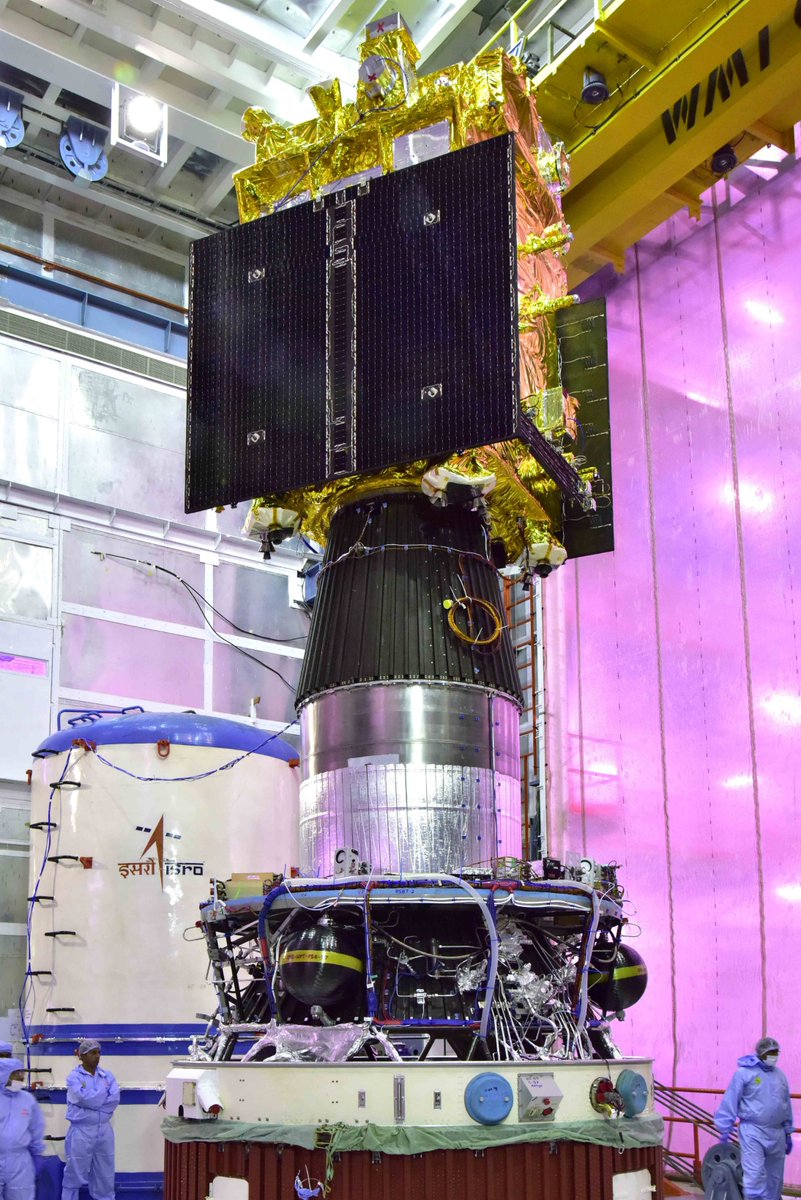
India's Aditya-L1 spacecraft. Photo: ISRO
ISRO announced this information after India became the fourth country in the world to land a spacecraft on the moon on August 23rd, as part of a program with a budget of approximately $75 million.
In the near future, the country also plans to launch the Gaganyaan spacecraft carrying three astronauts into orbit at 400 km for three days before returning to Earth.
ISRO said tests are underway at the Vikram Sarabhai Space Centre and the mission is likely to be launched in 2024. According to Indian officials, the Gaganyaan program has been allocated approximately $1.08 billion.
Another mission is the NASA-ISRO SAR (NISAR) satellite, a collaboration between ISRO and the US National Aeronautics and Space Administration (NASA), also scheduled for launch in January 2024.
According to Reuters , NISAR's mission is to map the entire planet every 12 days, providing data on changes in ecosystems, ice masses, plant biomass, sea level rise, and disasters such as earthquakes, tsunamis, and volcanic activity.
Source




![[Photo] Close-up of an Australian warship visiting Tien Sa port, Da Nang](https://vphoto.vietnam.vn/thumb/1200x675/vietnam/resource/IMAGE/2026/03/28/1774675489416_tau-5-jpg.)


























































































Comment (0)