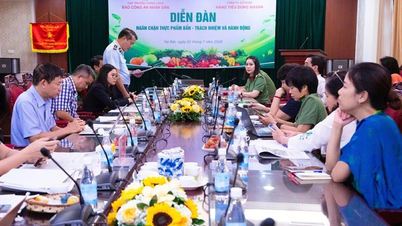
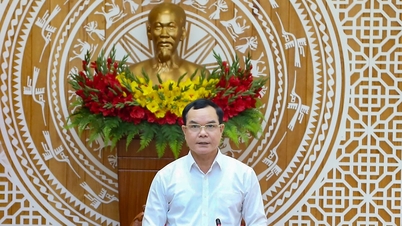
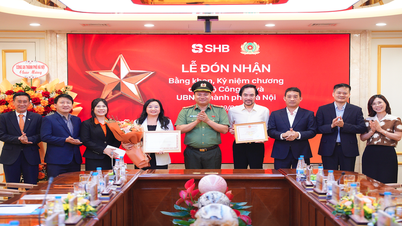
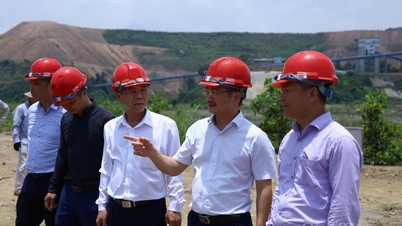
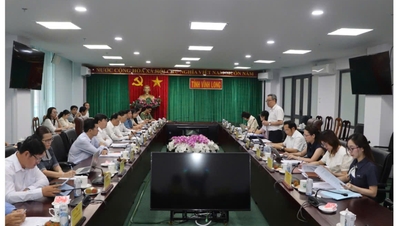
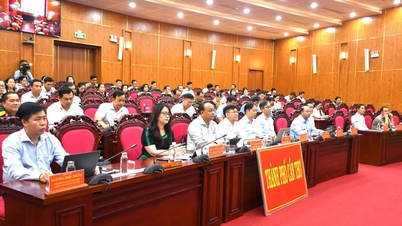
Mr. Thinh (in white shirt) speaking at the workshop - Photo: Organizing Committee
According to Mr. Thinh, the goal is to perfect the state management apparatus for food safety by unifying the coordinating body from the central to local levels. At the central level, the coordinating agency will be the Vietnam Food Safety Administration, located within the Ministry of Health . At the provincial level, Hanoi and Ho Chi Minh City will have the Department of Food Safety, while the remaining 32 provinces and cities will have the Food Safety Sub-department under the Department of Health.
At the lower administrative level (commune-level People's Committee), there will be an inter-agency task force on food safety, comprising officials from the Department of Culture and Social Affairs/Department of Food Safety and the Police, the Department of Economy , and the Health Station.



Alongside these three levels of management, there is a Central Inter-Ministerial Steering Committee on Food Safety at the central level; a Provincial Inter-Ministerial Steering Committee on Food Safety at the provincial level; and a commune/ward level also has an Inter-Ministerial Steering Committee on Food Safety.
Mr. Thinh also stated that in the draft revised Food Safety Law, along with perfecting the unified management system as mentioned above, the four biggest policies are: managing food safety based on risk control along the supply chain; reforming management methods and inspection mechanisms; digitizing and building a food safety data information system; and improving the efficiency of managing street food and collective meal provision.
According to general statistics, in the first six months of 2026, both the number of mass food poisoning incidents and the number of people suffering from food poisoning increased compared to the same period. During these six months, the police discovered and handled nearly 6,000 organizations and individuals violating food safety laws, a 102% increase compared to the same period in 2025.
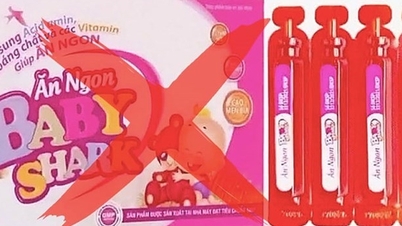
Typical cases include the use of diseased pork in food processing in Hai Phong, Hanoi , Bac Ninh, etc.; the large-scale use of 6-Benzylamynopurine in bean sprout production in Quang Ninh, Hung Yen, and Ninh Binh; the use of borax in noodle production; the use of the industrial chemical Sodium Silicate in preliminary processing of snail meat in Ho Chi Minh City; and the production of counterfeit functional foods in Thanh Hoa, Hoa Binh, and Dak Lak.
At the workshop, representatives from the Consumer Protection Association stated that there are still difficulties in identifying safe food and tracing product origins, as food circulating in the market is not yet required to have labels according to regulations.



Representatives of this association also suggested that the role of state management agencies on food safety should be "real authority" and similar to that of environmental police. They also proposed strengthening post-inspection of food production and business establishments and raising consumer awareness in product selection.
Source: https://tuoitre.vn/se-co-so-an-toan-thuc-pham-ha-noi-100260702155628905.htm