 |
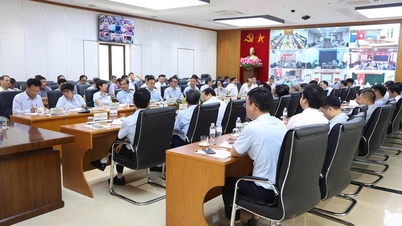
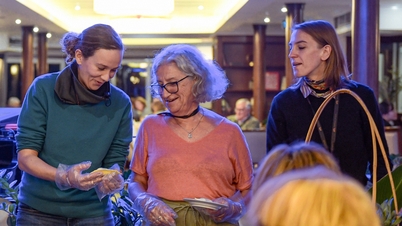
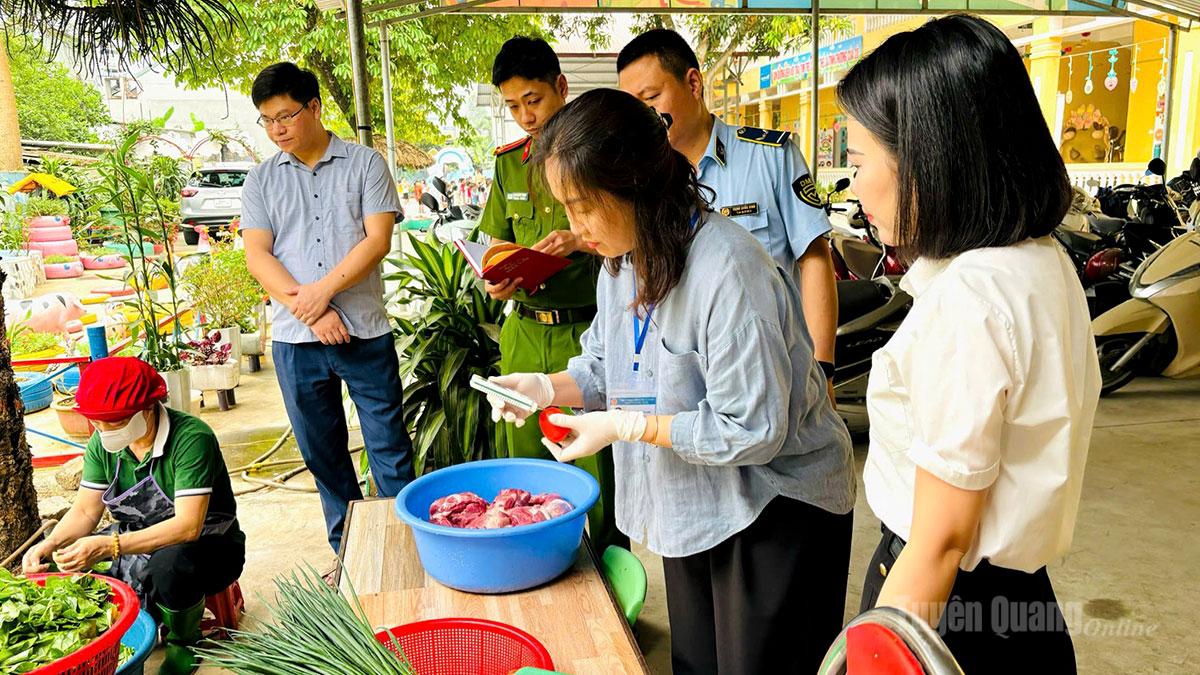
| A joint inspection team from the An Tuong Ward People's Committee inspected food safety at Hoang Khai Kindergarten. |
Concerns about the quality of school meals.
Recently, a series of food safety incidents in school lunch programs have caused public outrage. Most recently, there was the case at Binh Quoi Tay Primary School in Ho Chi Minh City, where over 200 students showed symptoms suspected of food poisoning. Tests revealed that 70% of the samples tested positive for Salmonella bacteria. Prior to that, public outrage stemmed from the case of 300 tons of diseased pork being supplied to the kitchens of many public schools and kindergartens in Hanoi. Similarly, in Thai Nguyen province, after parents at Hoa Binh Kindergarten in Van Lang commune discovered that the school lunch program was using substandard pork, they had samples tested. Following an investigation by authorities, test results showed samples positive for aerobic microorganisms, E. coli, Staphylococcus aureus, and even African Swine Fever virus. Recently in Tuyen Quang province, social media was abuzz with videos and images posted by a Facebook account showing bags of peanuts in the warehouse of Doi Can Kindergarten, Binh Thuan ward, covered in mold…
Ms. Ly Hong Nhung from Minh Xuan ward shared: “I have a child attending preschool. The school announces the children's meal portions on a weekly bulletin board, but we don't know the supplier or the daily quantity. The bulletin board mentions boxed milk or yogurt, but parents don't know which type of milk or which distributor provides it.”
Sharing this concern, Ms. Tran Hoa Ly from Nhu Khe commune said: "Parents pay for their children's meals, but they only know the menu through the notice board or sometimes the teacher posts pictures of the meals on the school's Facebook account. They are not involved in the process of selecting suppliers or checking the quality. Therefore, many parents are still worried about the quality of their children's meals."
 |
| The inspection team of the People's Council of Nhữ Khê commune inspected food safety practices at the kitchen of Đội Bình Kindergarten. |

Strengthen substantive supervision.
Concerned about the risk of substandard food entering school meals, provincial and local authorities are simultaneously intensifying inspections and tightening control over the entire food supply and processing process at boarding school kitchens. At inspection sites, inspection teams focus on legal documentation, the origin of raw materials, processing conditions, storage, transportation, and compliance with regulations on food inspection and sample retention. In particular, the Department of Education and Training is reviewing all aspects of school meal organization, from supply contracts to operational procedures. The police will also be involved to detect and strictly handle fraudulent activities regarding the origin of food, the falsification of documents, and the introduction of unsafe food into schools.
In Xuan Van commune, the local government has implemented a comprehensive set of solutions, most notably controlling the source of food for school canteens. Mr. Ha Xuan Tiep, Vice Chairman of the Xuan Van Commune People's Committee, stated: “The commune has 9 schools of all levels with 971 students participating in school lunch programs. From the beginning of the school year, the Commune People's Committee has directed schools to prioritize school meal safety, signing commitments with food suppliers to ensure clear origin and source. Recently, the commune established a food safety inspection team, conducting surprise inspections at schools providing school lunch programs; and carrying out post-inspection checks on food suppliers. Through these inspections, most schools strictly adhere to food safety regulations, with properly arranged food preparation areas, documented food purchases, and proper food sample retention.”
Notably, schools are increasingly implementing the requirement to publicly disclose food information and daily menus. They post menus and meal quantities on public notice boards and send information and images of children's meals to class Zalo groups so parents can monitor them. The three-step food inspection process, food sample retention, and daily delivery log are also strictly enforced by schools to ensure tight control from the smallest details.
Ms. Nguyen Thi Thai Hang, Principal of Hoa Hong Kindergarten in Ha Giang 2 Ward, said: “Every day, from 8:30 AM, representatives from the school's management board and parents are present at the school to inspect the entire process, from receiving raw materials to supervising the food preparation and processing. All incoming materials have documentation and are thoroughly checked by us. The school has also installed surveillance cameras in various locations, from the food receiving and preparation area to the meal distribution area. Representatives from the management board always inspect the process of food preparation, cooking, and portioning for the children.”
Currently, the entire province has 627 schools that provide lunch for students. During a recent food safety inspection of 12 school kitchens and 3 ready-made meal providers, the inspection team from the Department of Health issued an administrative violation report against Binh Minh Independent Kindergarten in An Tuong ward for failing to implement the 3-step food inspection process, imposing an administrative fine of 4 million VND on the establishment.
According to the Department of Health's leadership, inspections revealed that most schools relatively comply with food safety regulations. Schools have contracts with suppliers, maintain food samples, and waste is collected and processed daily. However, some school kitchens still exhibit unscientific food preparation areas; incomplete record-keeping of food sources; and many fresh food items lack inspection stamps, posing potential food safety risks. In the future, the Department will continue to strengthen regular and unscheduled inspections; and coordinate with the education sector and local authorities to promote awareness and training on food safety for management staff and food processing personnel in school kitchens.

Stricter inspection, supervision, and severe penalties for violations are necessary solutions to protect students' health. When each step in the process is tightly controlled and linked to specific responsibilities, school meals will be safer, more nutritious, and of higher quality.
Text and photos: Thuy Nga
Source: https://baotuyenquang.com.vn/xa-hoi/202604/siet-chat-kiem-soat-bep-an-hoc-duong-02254ce/