

The sudden surge in the volume of legal documents requiring promulgation, amendment, and supplementation has created unprecedented pressure, not only on schedule but also on quality, for both drafting agencies and supervisory bodies.
Against this backdrop, the Summary Report on the results of monitoring legal documents in 2025, presented to the Standing Committee of the National Assembly yesterday morning by the National Assembly's Ethnic Council and Committees, showed commendable efforts but also pointed out many bottlenecks that slow down the process of putting laws into practice.
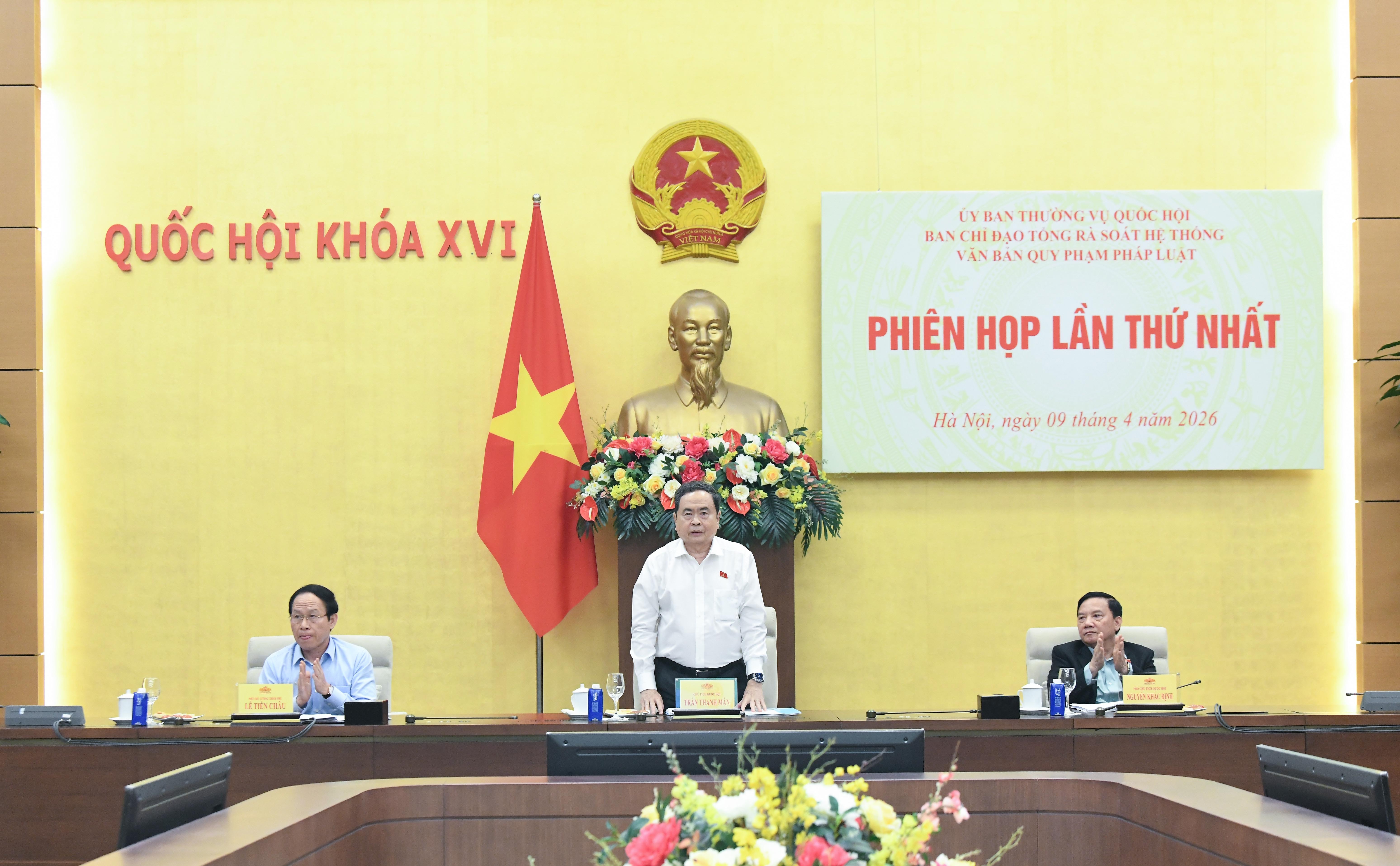
Monitoring 602 legal documents in a single year, even during the process of organizational restructuring, not only reflects the large workload but also demonstrates the adaptability and high sense of responsibility of the National Assembly 's agencies. More importantly, the monitoring of legal documents has yielded tangible results: many recommendations have been accepted and implemented, showing that monitoring is no longer limited to "detection" but is gradually impacting the process of law enforcement. This is a concrete manifestation of transforming the requirement for "good laws on paper" into "good laws in life."
However, monitoring also revealed that the implementation phase – especially the issuance of detailed regulations – remains a major bottleneck. According to the report of the National Assembly's Ethnic Council and Committees, 173 documents were issued later than their effective date; some were delayed by 6 months to 2 years; 47 articles and clauses assigned for detailed regulation of 21 laws and resolutions have yet to be issued; notably, many laws that have come into effect still lack a large number of detailed regulations. These shortcomings not only diminish the effectiveness of laws and create legal gaps in implementation, but also directly hinder the activities of citizens and businesses, preventing laws, even those considered good in content, from fully realizing their value in daily life.
In addition, 25 recommendations from previous oversight sessions have not been fully implemented by the relevant agencies. This not only reduces the effectiveness of oversight but also erodes confidence in the integrity of the legal system.
Another noteworthy point is the limited quality of policy forecasting and impact assessment in some areas. The phenomenon of "short-lived" legal documents, requiring amendments shortly after issuance, not only wastes resources but also creates an unstable legal environment – contradicting the requirements for a development-oriented, stable, and predictable institution.
In the context of a country aiming for high growth, institutions cannot be merely tools of management but must become direct drivers of development. This requires a strong shift in the oversight of legal documents from "post-audit" to "early oversight," focusing on the feasibility and practical effectiveness of policies. A document that follows the correct procedures but cannot be implemented in practice remains a bottleneck in the institutional framework.
At the same time, monitoring methods need to be innovated towards continuous, data-driven approaches with early warning capabilities. Given the large volume of documents and rapid changes, the application of digital technology to track progress, identify risks, and make timely adjustments must become a mandatory requirement. Especially for detailed regulations – a stage where delays are clearly evident – a monitoring mechanism should be established from the moment the law is passed, rather than waiting until consequences arise.
The practical implementation of legal document oversight in 2025 also necessitates a further tightening of institutional discipline coupled with individual accountability. Each delayed document, each unimplemented recommendation, should be viewed as a specific obstacle to development, with clear accountability, rather than merely general reminders. Simultaneously, the quality of policy-making must be improved from the ground up through enhanced forecasting, impact assessment, and increased consultation with practical realities.
More importantly, the role of supervision needs to be clearly defined: not just as an inspection activity, but as a tool of development governance, both identifying problems and working to resolve them, ensuring that legal regulations are implemented smoothly. Only then will each law not only be correct, but will truly "live," operate effectively, and become a driving force for socio-economic development.
Source: https://daibieunhandan.vn/siet-chat-ky-luat-the-che-10413625.html
![[Photo] General Secretary and President To Lam and his wife, along with General Secretary and President Xi Jinping and his wife, attending a tea party.](https://vphoto.vietnam.vn/thumb/1200x675/vietnam/resource/IMAGE/2026/04/15/1776245678527_vna-potal-tong-bi-thu-chu-tich-nuoc-to-lam-va-phu-nhan-cung-tong-bi-thu-chu-tich-nuoc-tap-can-binh-va-phu-nhan-du-tiec-tra-8702812-9829-jpg.webp)
![[Image] Overview of the Tam Trinh-Giai Phong connecting road section after land clearance is completed.](https://vphoto.vietnam.vn/thumb/1200x675/vietnam/resource/IMAGE/2026/04/15/1776245679644_ndo_br_dji-0195-jpg.webp)
![[Image] Current status of the land area of over 5.5 hectares that Ho Chi Minh City is considering reclaiming.](https://vphoto.vietnam.vn/thumb/1200x675/vietnam/resource/IMAGE/2026/04/15/1776245690095_1-3102-8409-jpg.webp)
![[Photo] Capturing each moment at the "People We Meet" photography exhibition.](https://vphoto.vietnam.vn/thumb/1200x675/vietnam/resource/IMAGE/2026/04/15/1776245695648_1-8944-jpg.webp)
![[Photo] General Secretary and President To Lam and General Secretary and President Xi Jinping meet with youth from both countries.](https://vphoto.vietnam.vn/thumb/1200x675/vietnam/resource/IMAGE/2026/04/15/1776245687540_vna-potal-tong-bi-thu-chu-tich-nuoc-to-lam-va-tong-bi-thu-chu-tich-nuoc-tap-can-binh-gap-go-thanh-nien-hai-nuoc-8702371-jpg.webp)
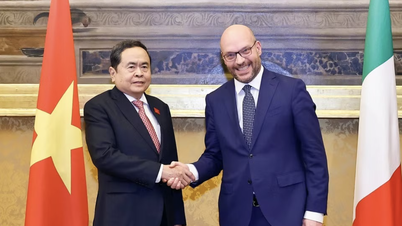
![[Photo] National Assembly Chairman Tran Thanh Man concludes official visit to Italy, departs for IPU-152](https://vphoto.vietnam.vn/thumb/1200x675/vietnam/resource/IMAGE/2026/04/15/1776253436109_vna-potal-chu-tich-quoc-hoi-ket-thuc-tham-chinh-thuc-italy-len-duong-du-ipu-152-tai-tho-nhi-ky-8702876-7969-jpg.webp)







































































Comment (0)