

TP - Government Decision 452 on the planning of the network of universities and teacher training colleges sets a target of training 3 million students in Vietnam by 2030. However, public opinion wonders whether the domestic market can absorb this entire number?
TP - Government Decision 452 on the planning of the network of universities and teacher training colleges sets a target of training 3 million students in Vietnam by 2030. However, public opinion wonders whether the domestic market can absorb this entire number?
Low compared to the rest of the world.
Decision 452 sets a target of over 3 million learners nationwide, reaching 260 undergraduates and 23 postgraduate students per 10,000 people; the university enrollment rate among those aged 18-22 is 33%, with no province having a rate lower than 15%. Compared to the 2007 plan, this target is still lower. In Decision 121 (issued in 2007), the Government set a target of 200 undergraduates per 10,000 people by 2010; 300 undergraduates per 10,000 people by 2015 and 450 undergraduates per 10,000 people by 2020.
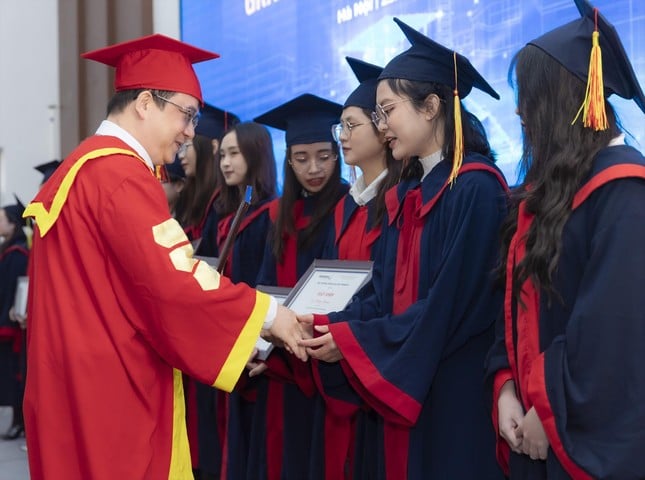 |
University graduates in 2024. Photo: Nghiem Hue |
According to the Ministry of Education and Training, the scale of higher education has increased again since 2019, after a period of decline or stagnation since 2014 (the year with the highest training scale in the previous period). However, the Ministry believes that the current ratio of 215 students per 10,000 inhabitants is still low compared to the region and lower than the average of OECD countries (Organization for Economic Cooperation and Development, currently with 38 member countries). Achieving the target of 260 students per 10,000 inhabitants set for 2030 is a huge challenge for Vietnamese higher education.
While the scale of undergraduate training tends to increase, the scale of postgraduate training remains low and has not grown for many years. Particularly concerning is the significantly lower proportion of postgraduate training in STEM (Science, Technology, Engineering, and Mathematics) fields. The number, qualifications, and capabilities of faculty members at higher education institutions nationwide have grown rapidly. The student-to-faculty ratio and the percentage of faculty with doctoral degrees have increased significantly in the last five years. However, these ratios are still low compared to global standards and represent a major bottleneck in efforts to improve the quality of training and research.
Similarly, the number of lecturers holding professor and associate professor titles has increased compared to 2008, but is still considered low compared to both domestic needs and regional comparisons. Regarding scientific research capacity, although the number of international publications from higher education institutions has increased rapidly in recent years, the national average remains low compared to the general standards of universities in the region and around the world. Therefore, the challenge for the sector is to develop the number, qualifications, and capabilities of the teaching staff to be on par with regional and global standards.
Concerns about AI replacement.
Although Vietnam's current student-to-population ratio (STU) and the targets set in the planning are not high, concerns about employment after graduation pose a significant challenge for educators and policymakers. Predictions that artificial intelligence (AI) will replace humans have become increasingly prominent recently, causing anxiety among many students and universities. In reality, the Information Technology sector is being most strongly impacted by AI.
Nguyen Van Son, a team leader at a Japanese software design company in Vietnam, shared that the number of employees is dwindling. From a team of over 30 members, he now only has 5-6 employees. Son asserted that software design will be the first to be replaced by AI, and his team now consists mainly of security personnel. “I predicted that AI would replace humans, but I didn’t expect it to happen sooner and at such a rapid pace,” Son said. According to statistics, nearly 70% of employers plan to integrate AI into their recruitment processes, and this is expected to happen as early as 2025.
Changes in employment within state administrative agencies in the coming years will impact the recruitment market. The target of 3 million university graduates by 2030 is achievable for higher education institutions, but the absorption rate by the labor market is beyond the predictions of policymakers. This is because, until now, Vietnam has lacked a human resource forecasting center. The opening of new training programs and the allocation of training quotas are determined independently by universities based on practical relationships. Even in the teacher training sector, despite surveys and statistics by localities on specific shortages and surpluses, recruitment after graduation depends on allocated quotas, resulting in persistent shortages and surpluses.
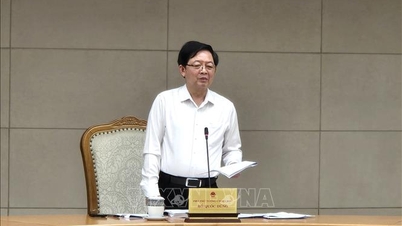
Deputy Minister of Education and Training Hoang Minh Son stated that as the economy develops, the proportion of university graduates will inevitably increase. He argued that the target of 260 undergraduates and 23 postgraduate students per 10,000 people was calculated reasonably and realistically by the Ministry of Education and Training during the planning process. Currently, approximately 27% of the working-age population holds a degree, a relatively low figure, thus requiring an improvement in the skill level of the workforce, including those with intermediate, college, and university degrees. Therefore, planning for development and training to enhance skills and qualifications is crucial to create more job opportunities for workers and increase the productivity of the economy.
Given the economic development requirements in the coming period, Mr. Son affirmed that the figure of 260 students is still insufficient. Mr. Son stated that the workforce structure in this network does not specify each industry, because the demand for human resources at various levels and fields will fluctuate significantly in the future. In the planning decision, the Ministry of Education and Training focuses on key STEM fields, teacher training, and health-related fields. In addition to these key fields, the plan also selects key higher education institutions.
Decision 452 aims to develop a network of higher education institutions training teachers to a scale of 180,000 to 200,000 students; and to develop a network of higher education institutions training in health-related fields, increasing the training scale to 180,000 to 200,000 university students.
Source: https://tienphong.vn/sinh-vien-tang-viec-lam-giam-post1723852.tpo




![[Photo] General Secretary and President To Lam meets with National Assembly delegates from ethnic minorities.](https://vphoto.vietnam.vn/thumb/1200x675/vietnam/resource/IMAGE/2026/04/20/1776696701056_a1-bnd-8331-3342-jpg.webp)
![[Image] National Assembly discusses the implementation of the socio-economic development plan.](https://vphoto.vietnam.vn/thumb/1200x675/vietnam/resource/IMAGE/2026/04/20/1776696707422_ndo_br_img-20260420-185419-jpg.webp)
























































































Comment (0)