

Revealing the "grey area"
Representatives from the Ministry of Education and Training stated that the proposed amendments to Circular 29 do not prohibit legitimate tutoring or supplementary classes; nor do they restrict the legitimate learning needs of students or the teaching rights of teachers as stipulated by law. The focus of the draft is to strengthen management measures and limit disguised tutoring practices, coercion of students to attend extra classes, and profiteering from tutoring activities that negatively impact a healthy educational environment.
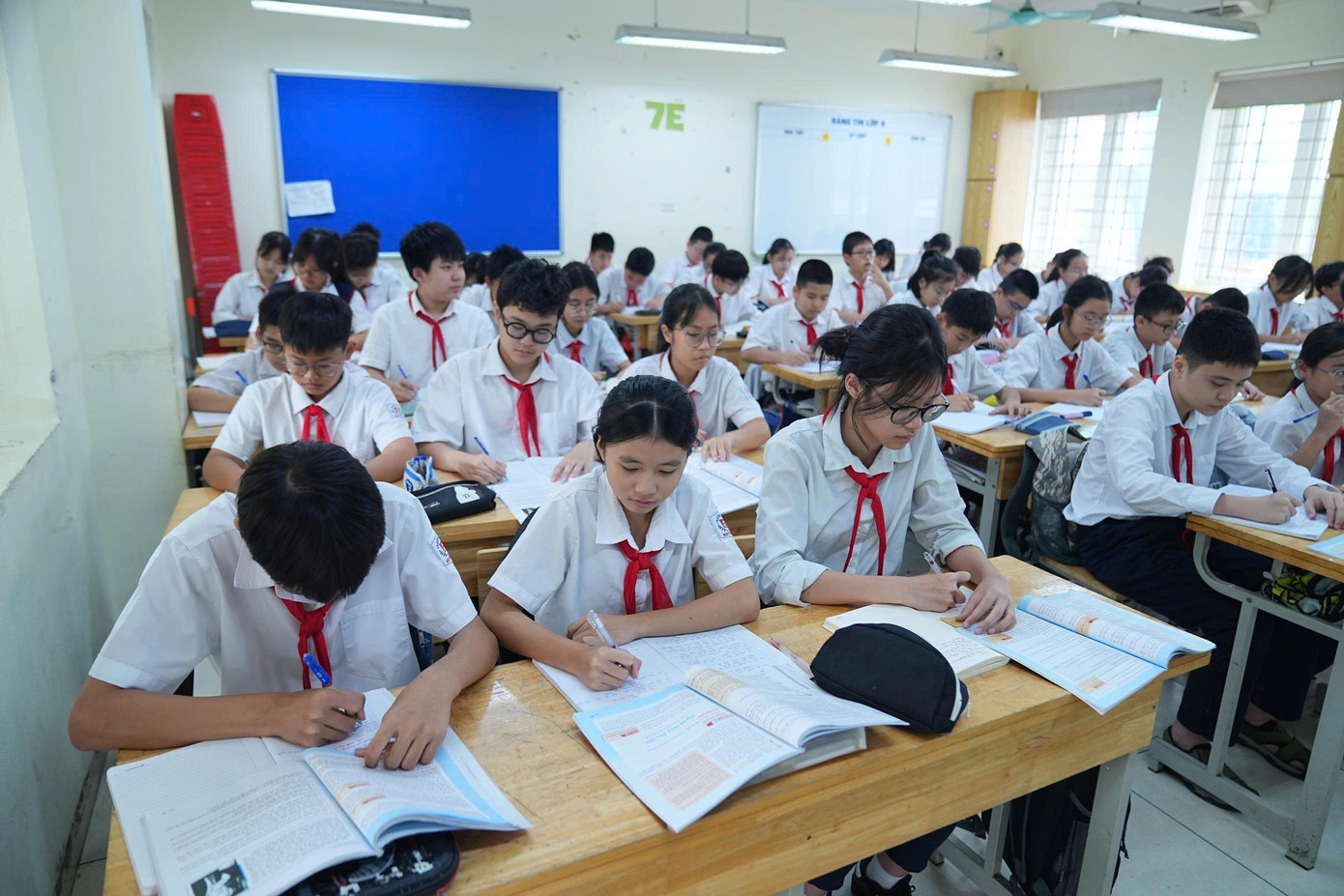
Another noteworthy point is that the draft clarifies the scope of regulation. Enhanced educational activities and educational activities based on the legitimate needs and interests of learners, aimed at the holistic development of students, organized according to the regulations of the Ministry of Education and Training , will not fall within the scope of supplementary tutoring. This clear distinction aims to avoid inconsistent interpretations and ensure a separation between supplementary tutoring and other legitimate and necessary educational activities within schools. A representative from the Ministry of Education and Training stated that the agency is continuing to research and incorporate feedback to finalize and issue the Circular as soon as possible, with adjustments that are more in line with practical management.
From the above analysis, it can be seen that amending Circular 29 is necessary but insufficient without fundamental solutions. First, it is necessary to improve the quality of regular teaching, reduce class sizes, innovate teaching methods, and enhance individualized learning. Assessment methods need to be adjusted to reduce exam pressure and limit unbalanced learning and rote memorization. At the same time, a transparent management mechanism for extracurricular tutoring must be established, avoiding extreme prohibitions but strictly controlling them to ensure voluntariness, transparency, and prevent negative consequences.
Circular 29, effective from February 14, 2025, is considered a step forward in increasing transparency in tutoring activities, ensuring the rights of students and teachers, and reducing the financial burden on parents. However, its implementation has revealed numerous shortcomings. Many parents and teachers are concerned that the new regulations may affect the quality of exam preparation, especially for students in their final year preparing for entrance exams or graduation exams. Meanwhile, some "disguised" forms of tutoring fee collection still persist.
In reality, while the need for extracurricular tutoring persists, the lack of clear organizational and financial mechanisms easily leads to opaque revenue and expenditure practices, causing disagreements among parents. From the teachers' perspective, the pressure is also significant as they must ensure the quality of teaching and review while being unable to charge fees. Some localities also face difficulties in supervision, especially with extracurricular tutoring centers, which operate in a dispersed manner and are difficult to control.
The problem doesn't just lie in the circular.
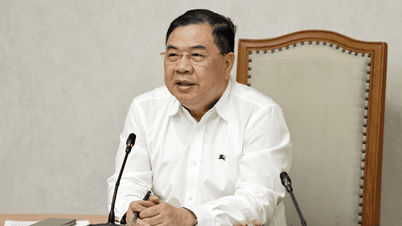
Speaking with reporters, Mr. Dinh Duc Hien, Executive Directorof FPT Bac Giang Primary, Secondary & High School (Bac Ninh), argued that the issue of extra tutoring should be viewed as a structural problem in general education and cannot be solved solely by a circular. The Ministry of Education and Training's revision of Circular 29 after a short period of implementation shows that the policy of rectification is correct, but there are still many "bottlenecks" in practice.
"When implementing Circular 29, the reaction from parents and teachers is understandable, because tutoring and extra classes have existed for too long as an almost normalized part of general education," Mr. Hien said.
Teacher Hien believes that instead of approaching it with either absolute prohibition or complete deregulation, it's necessary to manage it according to its true nature. Accordingly, tutoring should only be for genuinely legitimate needs such as remedial classes for students with knowledge gaps, enrichment programs for gifted students, and support during transitional periods between grades. If schools are entrusted with organizing these activities, there must be a transparent mechanism outlining the objectives, target audience, duration, resources, and accountability, because the more ambiguity there is, the more likely negative consequences will arise.
The principle of preventing conflicts of interest and ensuring that teachers do not turn regular class time into a place where students are pressured to attend extra classes must be upheld. In the long term, the pressure of exams must be reduced, and the quality of regular teaching must be improved. If the methods of testing, evaluation, and admissions remain heavily focused on grades, the need for extra classes will continue to exist in other forms.
A study published in an international scientific journal in 2021 by a group of domestic and foreign authors showed that tutoring is not only a learning need but also linked to the livelihood of a segment of teachers.
Regarding the question of whether it's possible to build an education system free from extra tutoring, Mr. Dinh Duc Hien believes this is highly unlikely. He argues that while it's possible to move towards a system where extra tutoring is no longer a widespread need, completely eliminating it is almost impossible, because any education system will always have a need for supplementary, advanced, and individualized learning. The core issue isn't about eliminating extra tutoring, but rather preventing it from becoming a mandatory requirement for students to keep up with the main curriculum. Therefore, the goal should be to reposition extra tutoring to its proper place: a limited, supplementary option, rather than becoming a dependence of the entire system.
Self-directed tutoring isn't necessarily a negative thing. In many cases, it's a legitimate need to reinforce knowledge, improve skills, or compensate for gaps in classroom learning. However, problems arise when tutoring becomes the "pillar" of learning instead of a "supplement." When students are forced to attend tutoring sessions to understand lessons, complete assignments, or achieve good results, it reflects the limitations of regular classroom teaching. Large class sizes, limited time, and inflexible teaching methods can cause students to fall behind, thus creating a compulsive need for tutoring.
Another consequence is increased academic pressure and the risk of inequality. Not all families can afford to send their children to extra classes, which are becoming increasingly expensive, leading to a gap in educational opportunities between different groups of students. If not properly controlled, widespread private tutoring can also lead to negative consequences such as cheating, creating pressure to force students to attend extra classes, and eroding society's trust in education.
Source: https://tienphong.vn/sua-thong-tu-29-de-go-nut-that-day-them-post1830831.tpo





















































































Comment (0)