

- Enhancing the operational capacity of cooperatives
- Developing OCOP products: A breakthrough for cooperatives.
- Promoting digital transformation linked to value chain integration in cooperatives.
Digitizing cooperative operations
The digitalization process in cooperatives in Ca Mau is progressing rapidly. Currently, about 30% of cooperatives use electronic accounting software, member management software, or production management software; 100% of fisheries, agriculture , and trade cooperatives have switched to using electronic invoices; 30% of cooperatives use digital signatures and digital record keeping; and 25% of cooperatives conduct payments with members via bank transfer.
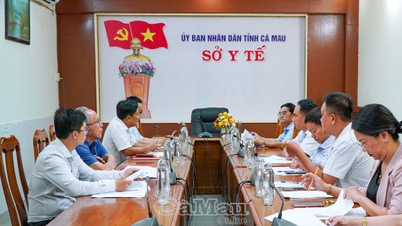
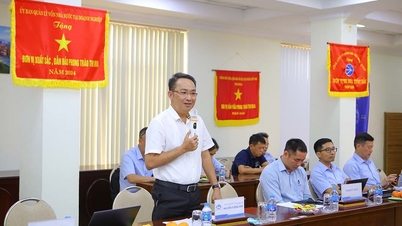
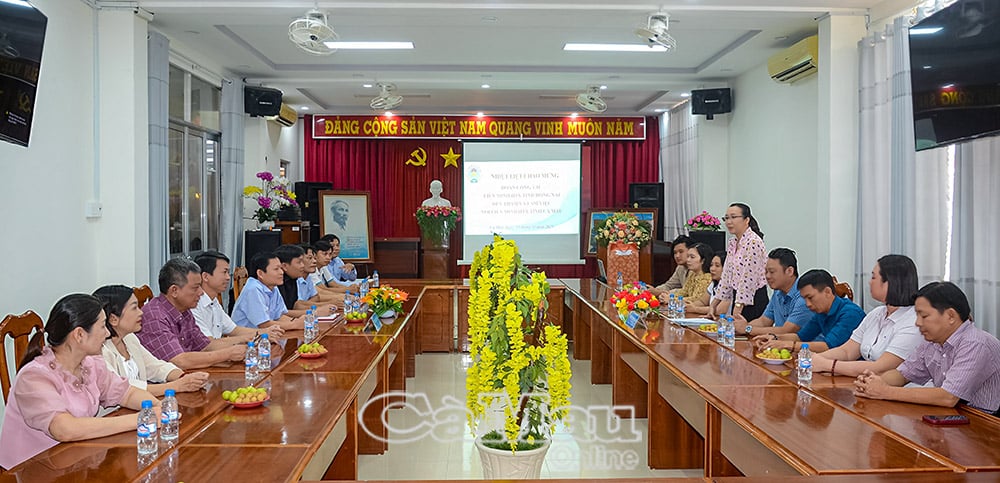 The Dong Nai Provincial Cooperative Union exchanged experiences on developing the cooperative economy with the Ca Mau Provincial Cooperative Union.
Many cooperatives proactively register QR codes for their products and actively use social media to promote their products and seek partners, such as the Ca Mau Salt Cooperative and the Dam Doi Crab Cooperative. Along with the formation and development of e-commerce, the key products of these cooperatives, especially OCOP products, are widely introduced and sold on platforms like Postmart.vn, Voso.vn, Shopee, and Lazada, in addition to the cooperatives' own websites and Fanpages.
In agricultural production, Ca Mau is gradually building model "digital transformation" cooperatives linked to green agriculture. Typical examples include the Ba Dinh General Agricultural Cooperative (Vinh Loc commune), the Vinh Cuong Agricultural Cooperative (Vinh My commune), and the Truc Thuong Cooperative (Dam Doi commune), which are pioneers in applying electronic logs, traceability systems, and online sales contracts. These models affirm the practical effectiveness of digital transformation in agricultural cooperatives.
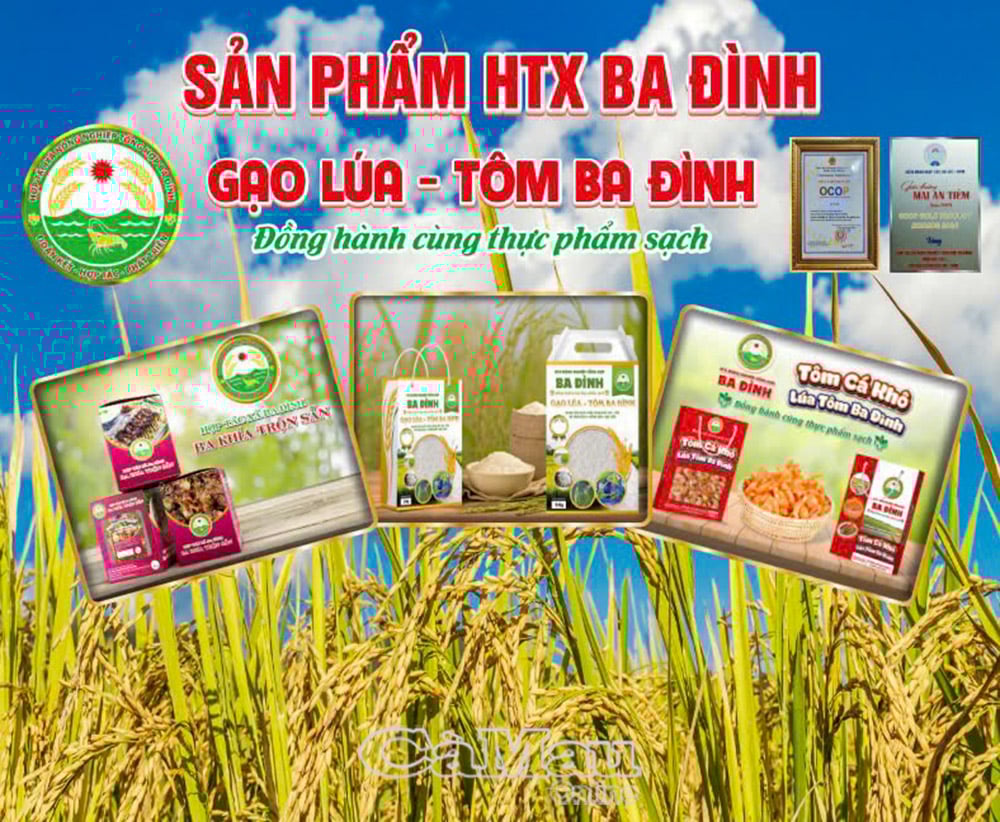 Ba Dinh rice-shrimp products received the Mai An Tiem Award for outstanding cooperative products nationwide in 2024, as recognized by the Vietnam Cooperative Alliance.
A prime example is the Ba Dinh General Agricultural Cooperative. With 284 members and 724.6 hectares of rice-shrimp farming, the cooperative continuously strives to meet the needs of its members, stabilize production, reduce costs, improve living standards, and build a sustainable collective economic community.
Mr. Nong Van Thach, Chairman of the Board of Directors and Director of Ba Dinh General Agricultural Cooperative, shared: “In the digital age, the cooperative is improving product quality and packaging, registering for prestigious certifications; Ba Dinh rice-shrimp products have achieved OCOP standards and the Mai An Tiem award in 2024. The cooperative has also built a 400-hectare clean tiger shrimp farming area according to ASC standards for export and is cooperating with the Mekong Delta Rice Institute to test a model of organic rice-shrimp production.”
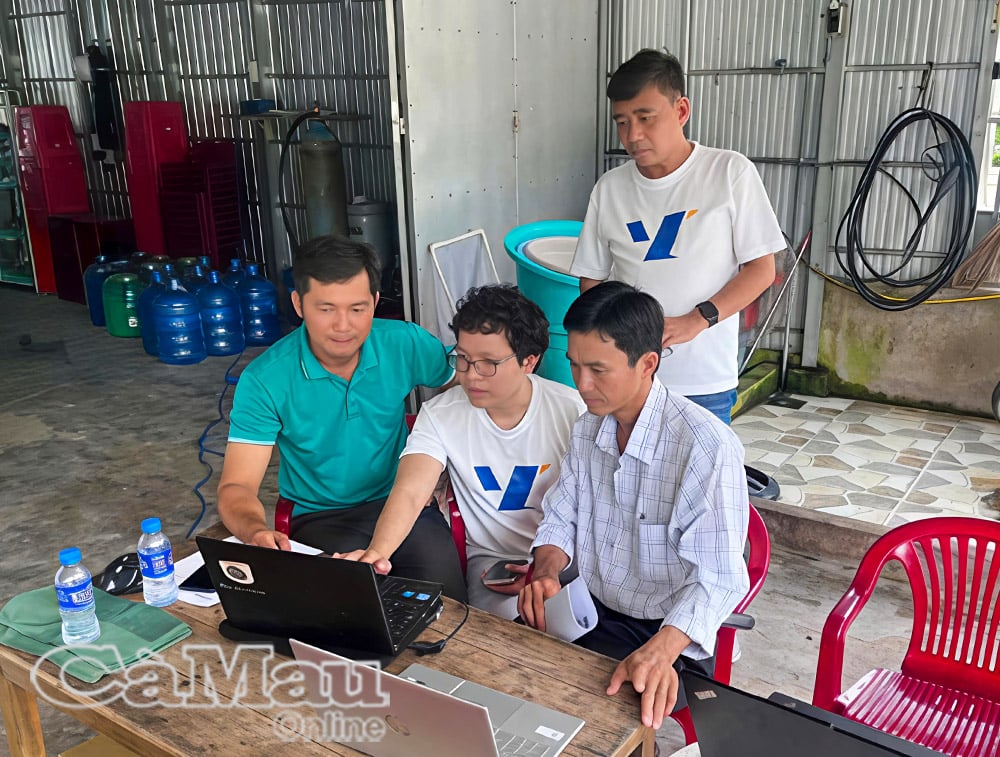 Staff from Sorimachi Company (Japan) provided training on the use of WACA accounting software to members of the Ba Dinh General Agricultural Cooperative.
Progress in value chain integration
The cooperative sector in the province is undergoing a significant transformation, gradually asserting its pivotal role in socio-economic development. This development is evident in the steady increase in the number of cooperatives over the years, with many new models being formed and operating effectively. Currently, the province has nearly 500 cooperatives and nearly 1,500 cooperative groups, mainly in the agricultural and fisheries sectors. Many units have expanded their production scale, creating stable jobs for over 12,000 workers, with an average income of 50 million VND per person per year, contributing to sustainable poverty reduction and the construction of new rural areas.
Value chain linkages are a highlight of the cooperative economic zone. Thanks to support from cooperative unions and the provincial Cooperative Union's networking program, internal linkages among cooperatives are increasingly strengthened, with over 100 cooperatives actively supporting each other in input supply, transportation, and market information sharing, creating community strength. More importantly, production and consumption linkages have expanded significantly: 260 cooperatives have signed contracts to supply over 100 types of input materials for agricultural production; another 215 cooperatives have signed contracts to guarantee the purchase of output products (rice, shrimp, vegetables, eels, etc.) with partners inside and outside the province.
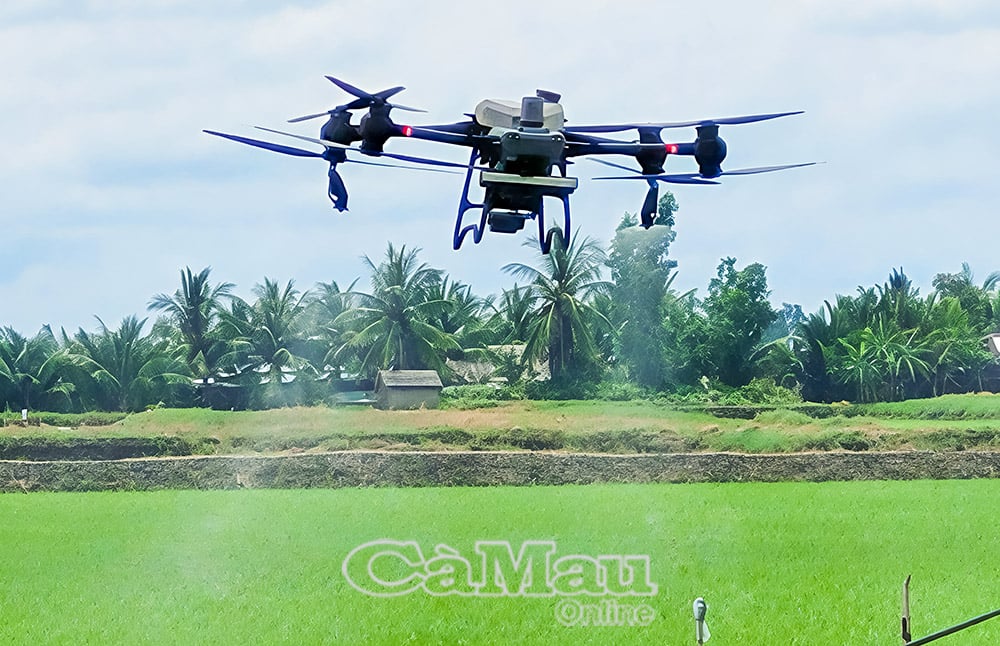 Mechanization in high-quality rice production at Vinh Cuong Cooperative.
In the agricultural sector, the three-party linkage model: enterprises - cooperatives - farmers is becoming increasingly common. Simultaneously, the role of cooperatives in brand building and participation in the OCOP program is being strengthened, evidenced by the fact that 129 products from 53 cooperatives have been recognized as achieving OCOP 3-4 star standards. The province also has over 50 other potential products that have been recognized for quality standards, have QR codes for traceability, clear packaging and labeling, and are ready to apply for OCOP recognition in the near future.
In particular, the formation of regional raw material linkage models brings long-term stability: 20 fisheries cooperatives have successfully built ecological shrimp farming areas and shrimp-rice farming areas that meet export standards; 50 rice, fruit, and vegetable cooperatives have formed raw material areas linked to processing and consumption. Currently, 35 cooperatives have signed long-term contracts with 12 large enterprises inside and outside the province, ensuring stable outlets for Ca Mau's agricultural products.
Leveraging the development of the market economy.
Promoting digital transformation in conjunction with value chain linkages is a crucial solution to optimize product value, expand markets, and become an important lever to drive the strong and sustainable development of the province's value chain economy in the new era.
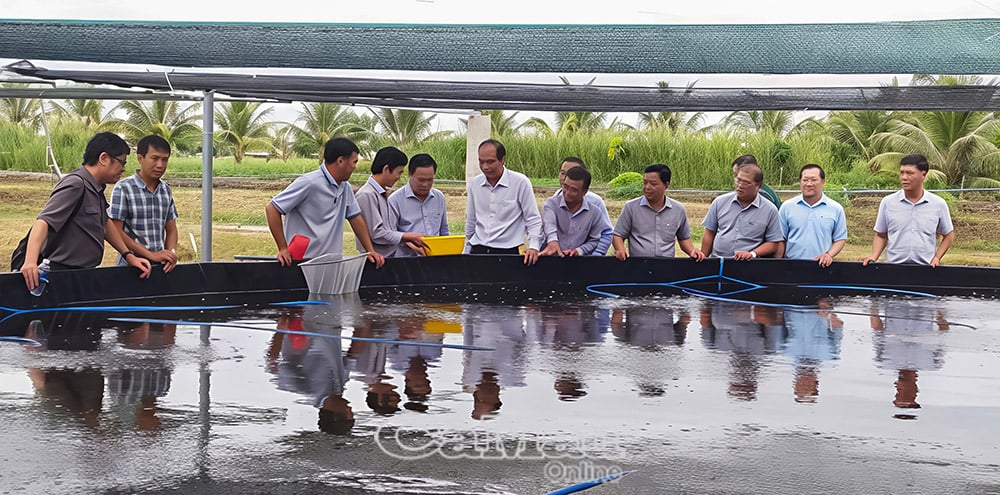 The National Assembly delegation, along with representatives from several departments, agencies, and the Provincial Cooperative Union, visited the two-stage freshwater prawn farming model of the Ba Dinh General Agricultural Cooperative.
With this spirit, Mr. Nguyen Van Vu, Chairman of the Provincial Cooperative Union, stated: “The Cooperative Union will further strengthen its role as a bridge, supporting cooperatives in promoting digital transformation, expanding value chain linkages, and improving operational efficiency and competitiveness. This orientation is concretized through various contents such as: strengthening policy consultation and advice; promoting propaganda and raising awareness about digital transformation and value chain linkages; developing digital infrastructure and providing comprehensive digital transformation support for cooperatives; mobilizing and connecting resources; training and developing human resources; and enhancing the capacity of the Provincial Cooperative Union system.”
Regarding support for model building, according to Mr. Nguyen Van Vu, the Cooperative Alliance will select a number of exemplary cooperatives in the province's key sectors to build model cooperatives applying digital transformation, and then replicate them throughout the province. At the same time, it will support cooperatives in developing raw material areas, signing linkage contracts with processing and product consumption businesses; guiding the construction of a closed value chain from production - processing - distribution - consumption, linked to the development of OCOP products. Furthermore, it will closely coordinate with technology companies, banks, and telecommunications units to implement common technology solutions for cooperatives, including: production and business management software, electronic handbooks, traceability platforms, and promoting cashless payments.
Thanh Hai
Source: https://baocamau.vn/suc-bat-cho-hop-tac-xa-a124170.html














































































Comment (0)