

 |
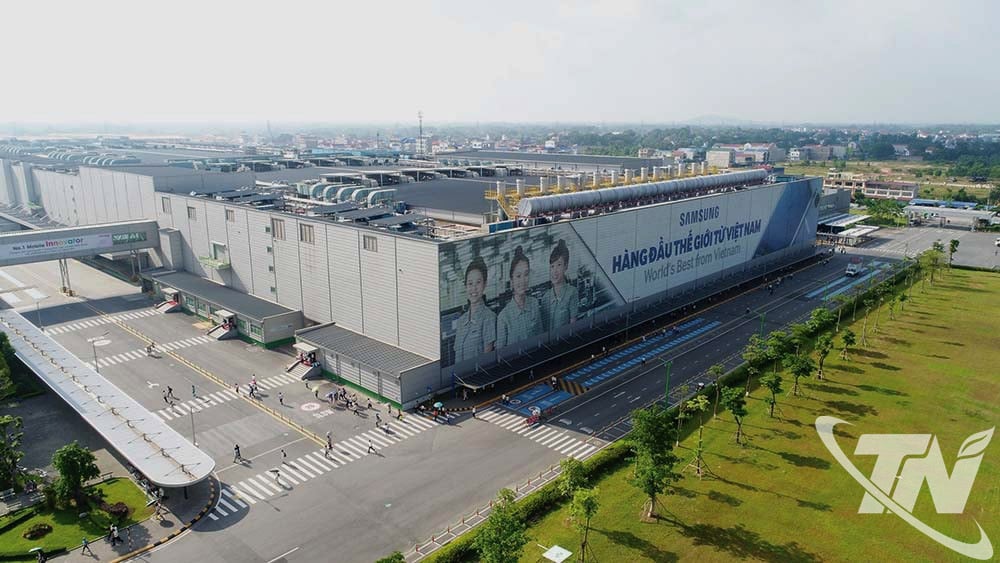
| Samsung Group's factory (South Korea) in Yen Binh Industrial Park, a hub for high-tech industrial development. |
Convergence of two economic platforms
From July 1st, 2025, with an area of over 8,300 km² and a population of over 1.68 million people, Thai Nguyen will be a large province in the Northern Midlands and Mountains region. The merger is not simply an adjustment of administrative boundaries, but more importantly, it opens up conditions for restructuring the growth model based on leveraging and connecting the distinct advantages of each development space.
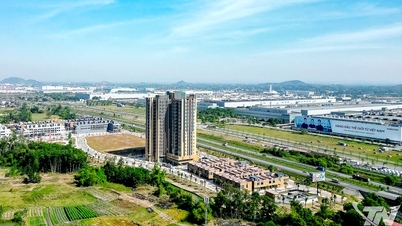
Prior to the merger, Thai Nguyen had been established as a regional industrial hub with key sectors such as processing and manufacturing, metallurgy, electrical and electronics, and mining. The system of industrial zones and clusters, along with inter-regional transportation infrastructure connecting to Hanoi , Noi Bai Airport, and major seaports, created a favorable foundation for attracting large-scale, high-tech investment projects.
In terms of supporting factors, Bac Kan (formerly) possesses outstanding ecological advantages with a forest cover rate of over 73%, the highest in the country. The vast forest space has formed the foundation for sustainable forestry, sub-forest economy, biodiversity conservation, and ecotourism.
According to Mr. Nguyen Hai My, Deputy Director of the Department of Agriculture and Environment, after the merger, the entire province has more than 578,000 hectares of forest land, with the northern area identified as a key area for forest economic development. The province focuses on developing large timber forests, forming stable raw material areas, thereby increasing the economic value from forests, while ensuring their long-term ecological role.
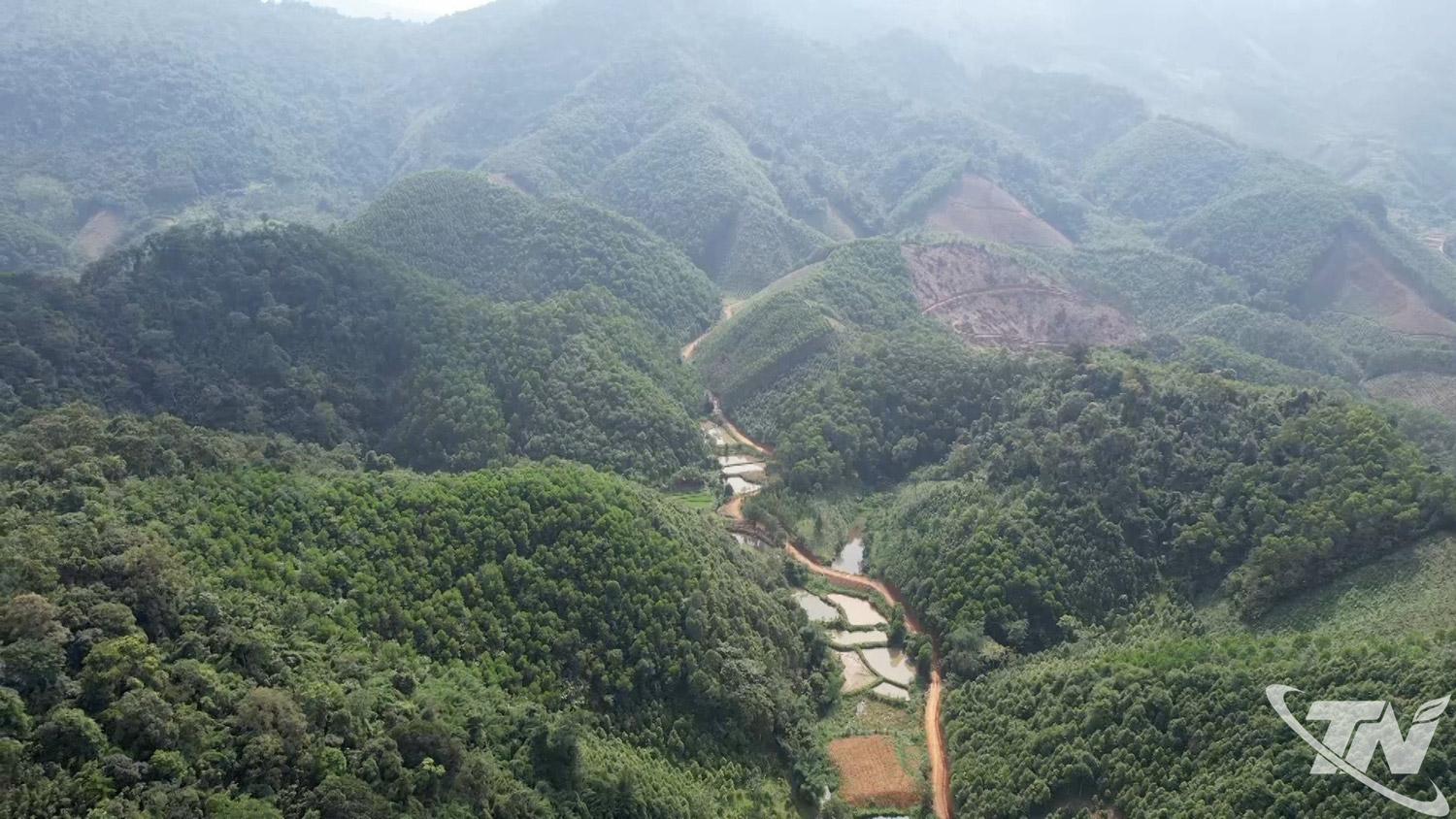 |
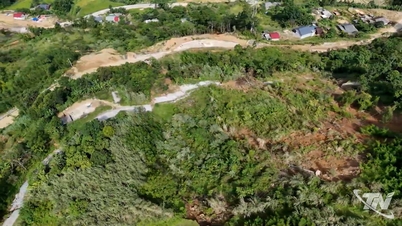
| The area of planted forests in the northern part of the province is expanding, creating an important foundation for the development of forestry economics and ensuring sustainable livelihoods for the people. |
By the end of 2025, the total area of large timber forests in the province will exceed 31,400 hectares, creating a stable supply for timber processing. Based on this resource, the timber processing chain continues to expand with more than 860 production and business establishments, creating jobs for thousands of local workers with an average income of 6-9 million VND per month. Many wood products are gradually expanding their export markets to the US, EU, Japan, and South Korea.
This practice shows that, in the new development structure, industry no longer operates in isolation but becomes the driving force for the entire agricultural and forestry value chain; while the forest economy is gradually moving away from its role of supplying raw materials and participating more deeply in the modern production chain.
Restructuring the space creates new growth drivers.
Based on its expanded geographical boundaries and restructured resources, Thai Nguyen is reorganizing its development space towards clearly defined functional zoning. The southern area continues to play the role of a growth pole with industry, a central urban area, and high-quality services.
The northern region is designated as a strategic area for green economy, sustainable forestry, and ecotourism. The central region plays a connecting role, developing high-tech agriculture and processing industries.
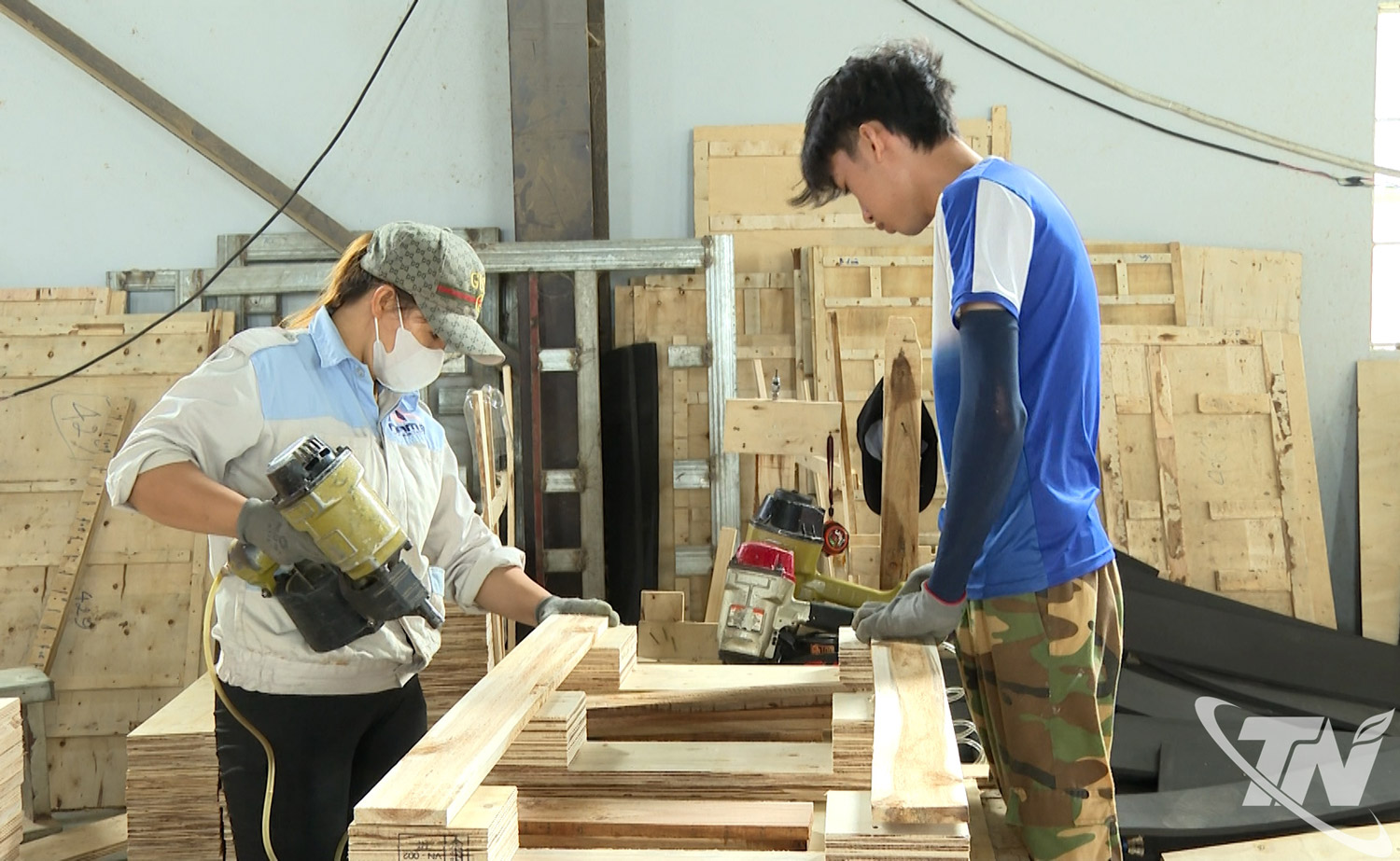 |
| The wood processing industry is one of Thai Nguyen's strengths. |
According to Mr. Pham Van Tho, Director of the Department of Industry and Trade, adjusting industrial planning is a key step in reorganizing production space. The province is shifting from dispersed to concentrated, targeted development; the number of industrial zones has increased from 19 to 37 with a total area of nearly 14,000 hectares, prioritizing new zones in the South connected to Ring Road 5 and the Thai Nguyen - Lang Son expressway.
Simultaneously, industrial clusters are being restructured to improve land use efficiency, synchronize technical infrastructure, and meet environmental protection requirements. The North-South and East-West economic corridors are gradually taking shape, expanding development space in both breadth and depth.
In 2025, the province's industrial production value is estimated to exceed 1,050 trillion VND, and export turnover will reach nearly 30 billion USD. Based on this foundation, the target for GRDP growth in 2026 is 10.5%, with the industrial and construction sector accounting for over 54%, set upon comprehensive preparation of infrastructure, land resources, human resources, and development space.
Thai Nguyen is gradually repositioning its growth trajectory based on a complementary economic structure: industry as the driving force, agriculture and forestry as the foundation, and ecology playing a limiting and guaranteeing role. This structure is creating new spatial impetus, aiming to form a deep and sustainable growth pole for the Northern Midlands and mountainous region.
Source: https://baothainguyen.vn/kinh-te/202602/tai-cau-truc-khong-gian-moi-c46512d/







































































Comment (0)