The number of measles cases in Hanoi continues to rise and shows no signs of slowing down. At Hanoi Children's Hospital, approximately 30% of children admitted with measles are in serious condition, requiring oxygen therapy or mechanical ventilation.
The number of measles cases in Hanoi continues to rise and shows no signs of slowing down. At Hanoi Children's Hospital, approximately 30% of children admitted with measles are in serious condition, requiring oxygen therapy or mechanical ventilation.
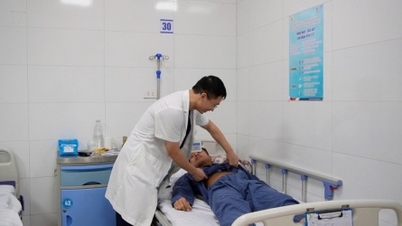
With a worried expression, Ms. VTP (mother of 7-month-old VAK, residing in Hoang Mai, Hanoi) gently cupped her hand, following the nurse's instructions to pat her child's back to help him feel more comfortable. Baby K. was admitted to the hospital with a diagnosis of severe pneumonia complications due to measles.
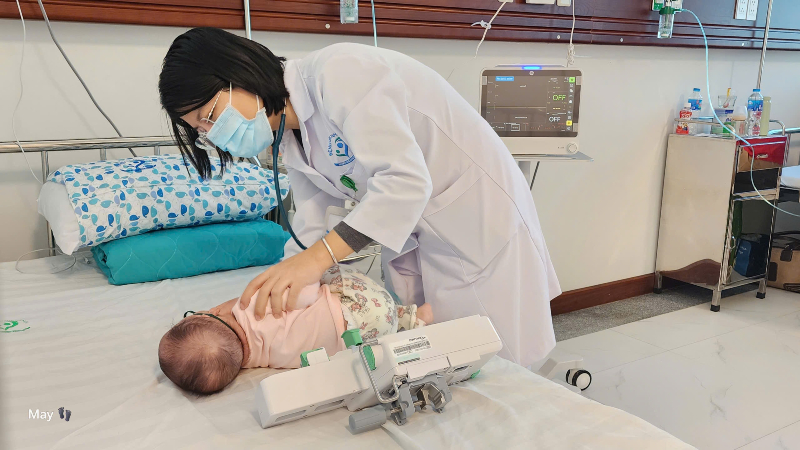 |
| The doctor is treating the child patient. |
Ms. P. shared that a week ago, her child was treated for pneumonia at Bach Mai Hospital. After returning home a few days later, the child developed a high fever, cough, and difficulty breathing. When she took the child for a check-up, the doctor concluded that the child had recurrent pneumonia due to complications from measles.
In the same room, 3-month-old VLHT (Thanh Tri, Hanoi) was also coughing incessantly, causing her mother great worry. Ms. LTH, the mother of baby T, said that her child had previously been treated at the National Children's Hospital for a swollen lymph node in her armpit. Unexpectedly, the child contracted measles from the community. Because the child was not old enough to receive the measles vaccine, she was very susceptible to the disease. When she saw the rash and fever, she immediately took the child to the hospital. Just a few days later, the child developed pneumonia.
Two-year-old NHA (from Phuong Mai, Hanoi) was hospitalized five days ago after developing a high fever and a full-body rash. Her mother, HTH, shared that the family had been complacent, not vaccinating their child because they thought she had already had measles. However, they didn't expect this illness to be more serious and complicated. Fortunately, after treatment, the child's condition has stabilized and she is expected to be discharged soon.
Over the past three months, the number of measles cases has increased significantly nationwide. In Hanoi, more than 200 cases of measles have been recorded, with Hanoi Children's Hospital receiving over 40 cases since officially opening in early October.
According to Dr. Do Thi Thuy Nga, Deputy Director of Hanoi Children's Hospital, approximately 30% of hospitalized children are in serious condition, requiring oxygen or mechanical ventilation. Notably, children under 1 year old account for over 40% of cases, with many not yet old enough to receive vaccinations.
According to experts, the 2024 measles outbreak was a consequence of a natural disease cycle combined with low vaccination rates. More than 90% of hospitalized children were unvaccinated or inadequately vaccinated.


The social distancing period during the Covid-19 pandemic caused many children to miss important vaccinations, and parents were less vigilant about booster shots. This led to an increase in cases, especially among children under 9 months old – a group not yet old enough to receive vaccines.
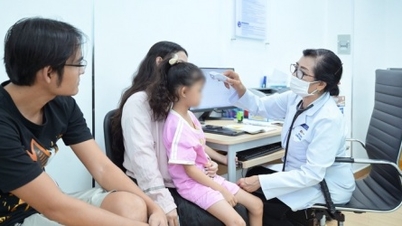
To control the epidemic, Dr. Nga emphasized the importance of adhering to the measles vaccination schedule. Children should receive their first dose at 9 months of age, a booster dose at 15-18 months, and a third dose when they are 4-6 years old.
For children at high risk or living in areas with outbreaks, doctors may consider early vaccination starting at 6 months of age. Complete vaccination not only protects the child's individual health but also helps reduce the risk of spreading the disease in the community.
In addition, preventive measures such as boosting immunity, maintaining personal hygiene, and closely monitoring children's health play an equally important role.
Parents need to ensure their children eat a nutritious diet, stay warm during the cold season, wash their hands frequently, and limit contact with large crowds.
The transitional period between seasons not only leads to an increase in measles cases but also reflects the risk of outbreaks of many other infectious diseases.
Health experts recommend that people proactively take preventive measures. When unusual symptoms such as prolonged high fever, rash, or difficulty breathing are detected, families should take their children to the nearest medical facility for timely examination and treatment to avoid the risk of dangerous complications.
According to the Department of Preventive Medicine, measles is a Group B infectious disease caused by the measles virus. It commonly affects children under 5 years old, but can also occur in adults who have not been vaccinated against measles or have not received the full course of vaccination.
There is no specific treatment for measles, and it is easily spread through the respiratory tract via droplets from infected individuals, or through direct contact, such as through hands contaminated with the secretions of infected people.
Places where large crowds gather, such as public areas and schools, have a very high risk of measles outbreaks. Measles outbreaks typically occur in cycles of 3-5 years.
According to Dr. Nguyen Tuan Hai from the Safpo/Potec vaccination system, vaccination is an effective measure to prevent disease. Disease transmission can only be stopped when the immunity rate in the community reaches over 95%.



Therefore, to prevent measles, the Department of Preventive Medicine, Ministry of Health, recommends that people proactively take children aged 9 months to 2 years who have not been vaccinated or have not received both doses of the measles vaccine to get vaccinated fully and on schedule.
Keep children away from and avoid contact with children suspected of having measles; wash hands frequently with soap when caring for children.
Maintain daily hygiene for your child's body, nose, throat, eyes, and teeth. Ensure your home and bathroom are well-ventilated and clean. Provide your child with adequate nutrition.
Nurseries, kindergartens, and schools where large numbers of children gather need to maintain cleanliness and good ventilation; toys, learning materials, and classrooms should be regularly disinfected with common disinfectants.
Upon detecting symptoms such as fever, cough, runny nose, and rash, children should be isolated immediately and taken to the nearest medical facility for examination and timely treatment. Avoid taking children to higher-level facilities for treatment unnecessarily to prevent overloading hospitals and cross-infection within the hospital.
Source: https://baodautu.vn/tang-so-tre-mac-soi-va-nhap-vien-do-bien-chung-d233401.html