

Training linked to the market.
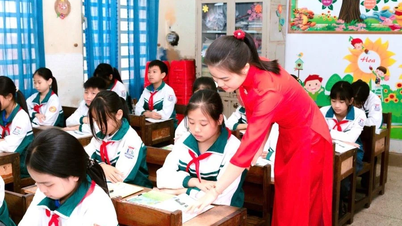
Recognizing education and training as a top national priority and a key driving force for development, Ha Tinh province has persistently built a solid foundation for a comprehensive education system over the years. As a result, a new image is gradually emerging: over 96% of classrooms have been modernized, 87.66% of schools meet national standards, and the teaching staff is standardized and regularly receives training to meet the requirements of the 2018 General Education Program reform.
At the secondary education level, Ha Tinh continues to affirm its position as a shining example nationwide, with both general and advanced education maintaining top rankings. In the 2025 high school graduation exam, the province achieved a pass rate of 99.83%, with 37 out of 44 schools having 100% of their students pass, and the average scores in all subjects ranking second nationwide.
Not only strong in general education, Ha Tinh has recently made significant strides in vocational and higher education, linking training with labor market needs and the province's development strategy.
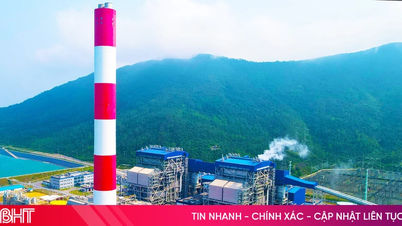
As Ha Tinh enters a new phase of development with many large projects in the Vung Ang Economic Zone, the demand for highly skilled technical personnel is increasing. Recognizing this, the province has identified vocational education as one of the important pillars of its human resource development strategy.
Currently, Ha Tinh has 22 vocational education institutions, offering a diverse range of professions and focusing on training according to the needs of businesses and the labor market. Statistics show that approximately 85% of trainees find employment after graduation, with many sectors achieving even higher rates, reflecting the effectiveness of the training model linked to practical production.
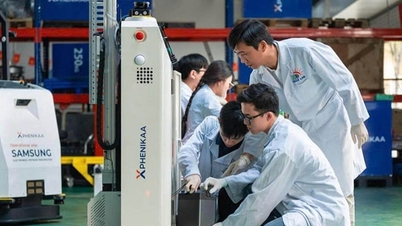
At Ha Tinh College of Technology, the model of collaborative training with many businesses such as Formosa Ha Tinh Hung Nghiep Steel Company Limited, VinFast automobile manufacturing company, etc., has become the main direction. Students not only learn theory but are also immersed in a real production environment, developing industrial work habits, improving professional skills, securing employment immediately after training, and adapting to practical work at businesses.
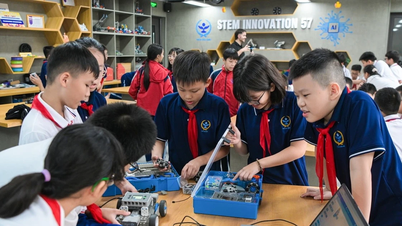
According to Mr. Nguyen Trong Tan, the school's principal, the goal of vocational education today is not just to obtain a diploma, but to enable immediate employment. "We are building a sustainable training-practice-employment linkage chain so that learners don't fall behind the labor market. Students are not only equipped with skills and professional expertise, but also participate in many activities and science and technology innovation competitions to access, enhance their knowledge, and develop new technological trends," Mr. Tan shared.
At the university level, Ha Tinh University is gradually asserting its role as a multi-disciplinary training center in the province. The university is strengthening cooperation with Hanoi National University and other major universities in Vietnam and abroad; while developing applied research directions serving renewable energy, marine economy, logistics, and digital technology – areas the province is prioritizing for investment attraction.
No longer purely academic "ivory towers," universities in Ha Tinh are being oriented towards becoming centers of knowledge, applied research, and innovation, closely linked to the socio-economic development needs of the locality.
Foundation for sustainable development
From major resolutions to concrete actions, Ha Tinh is steadfastly building a modern, integrated education system, serving as a springboard for high-quality human resources.
The Resolution of the 20th Congress of the Ha Tinh Provincial Party Committee sets out the overarching viewpoint for the period 2025–2030: “Education and training are key driving forces; focus on training, attracting, and effectively utilizing high-quality human resources.”
This spirit is also in line with Resolution 71-NQ/TW of the Politburo and the orientations in the Party's 14th Congress documents, emphasizing the requirement to build a modern, integrated education system, with the quality of training and the utilization of talent as the central focus.
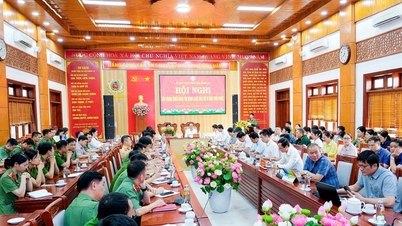
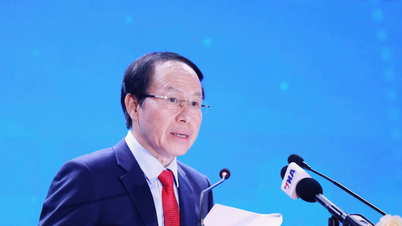
During a meeting with Ha Tinh University in early January 2026, Provincial Party Secretary Nguyen Duy Lam emphasized the need for training to closely follow the demands of the labor market and the province's development trends; to innovate programs towards modernization, increase practical training, expand business linkages, and prioritize industries with competitive advantages.
To realize these orientations, Ha Tinh is focusing on implementing a comprehensive set of solutions: improving the quality of teaching and learning at all levels, continuing to invest in modern infrastructure, promoting digital transformation, and developing a team of teachers and education administrators with sufficient dedication, vision, and competence.
The "mass education is strong – elite education is sharp" model is consistently implemented, ensuring equitable access to knowledge while creating conditions for students' holistic development: knowledge, skills, digital literacy, critical thinking, and lifelong learning abilities.
From classrooms in disadvantaged areas to modern laboratories, from high schools to universities and vocational training, an educational ecosystem is gradually forming where knowledge does not stand still, but transforms into a resource for development.
Firmly committed to a strategy of improving the overall quality of education, Ha Tinh is preparing its most important "key" to the future: its people. And when the foundation of human resources is solid, the aspiration for breakthrough of this land rich in a tradition of learning is no longer a story for tomorrow, but is beginning today.
Mr. Bui Nham Sam, Director of the Department of Education and Training of Ha Tinh province, said: "The education sector in Ha Tinh will continue to innovate teaching methods, promote digital transformation, expand the creative learning environment, and aim to train a generation of well-rounded students with digital skills, creative thinking, and high adaptability."
Source: https://giaoducthoidai.vn/tao-nen-mong-nhan-luc-chat-luong-cao-post766447.html






















![[Photo] “Red Journey” 2026: Vietnamese Youth Continue Building the Bridge of Friendship Between Vietnam and China](https://vphoto.vietnam.vn/thumb/1200x675/vietnam/resource/IMAGE/2026/04/20/1776629730866_4055880775670638308-9618-4200-jpg.webp)



















































Comment (0)