

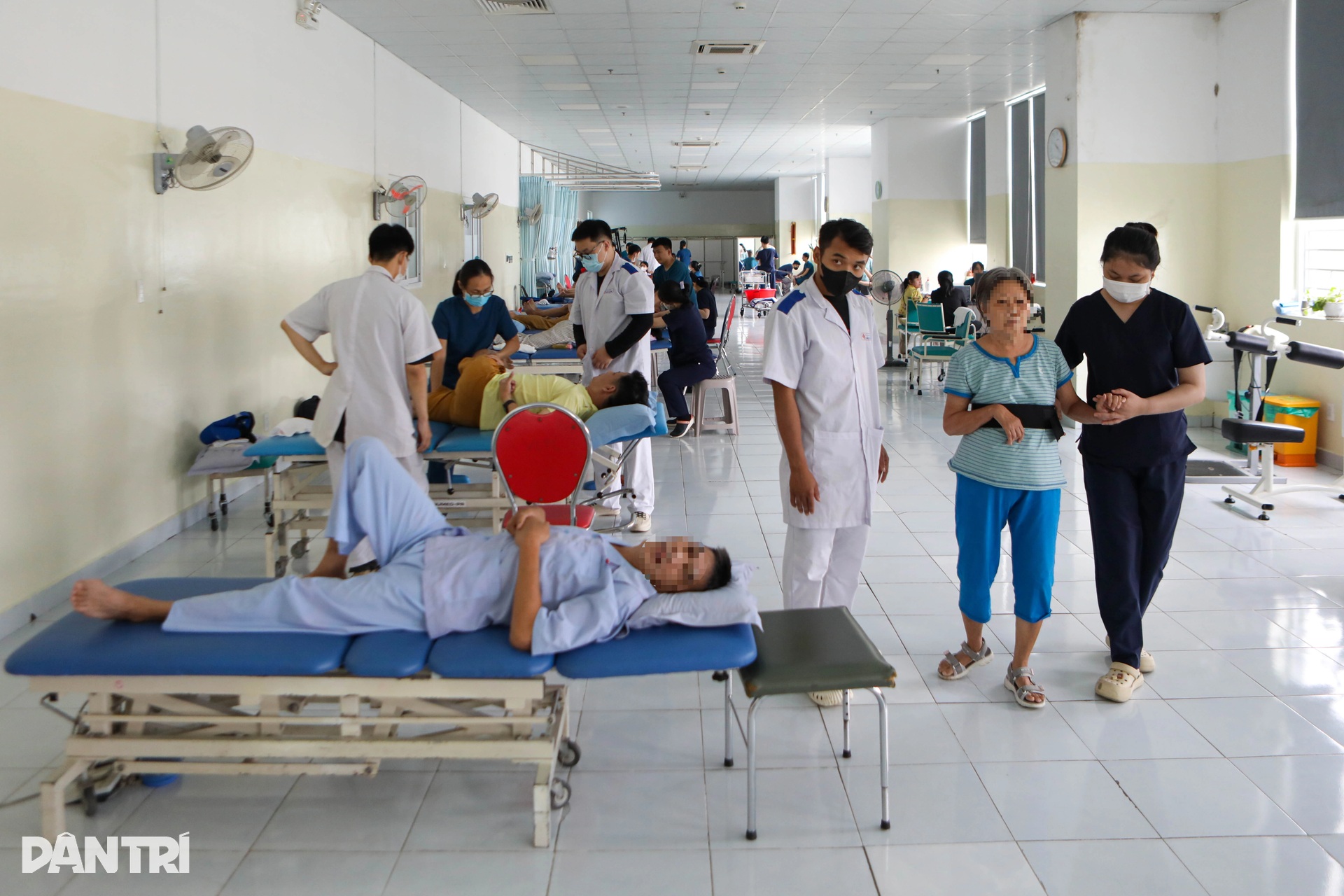
Early in the morning, the physiotherapy room of the Rehabilitation Department at Hospital 1A was packed with elderly patients seeking treatment. Many had suffered strokes, lost their mobility, and now had to persistently practice walking, standing, and grasping objects in their twilight years.

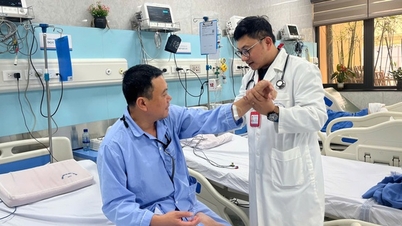
One morning, a week before his hospitalization, Mr. Pham Trong Tan (58 years old, from Khanh Hoa ) suddenly experienced dizziness and hemiplegia, unable to move his limbs immediately upon waking. At the local hospital, doctors discovered a blood clot in his cerebral aorta, diagnosed him with ischemic stroke, and quickly transferred him to Ho Chi Minh City for treatment.
After the intervention, Mr. Tan regained consciousness, but the stroke left him with hemiplegia. At nearly 60 years old, the man began learning to grasp even the smallest objects again, slowly rediscovering his former life.

An elderly patient hobbles along after a stroke, guided by technicians and nurses.
According to Dr. Trinh Minh Tu, Deputy Head of the Rehabilitation Department, in the elderly, motor impairments after stroke can prevent many from performing basic activities independently. Rehabilitation can help patients achieve maximum independence, reducing the burden of care on their families.

After simple exercises, depending on the doctor's instructions, patients need to strengthen their muscles with assistive devices. Thanks to advanced equipment, the patient's recovery process can be faster, but strong willpower and dedicated care from family are the greatest strengths, helping patients overcome difficulties and regain their normal lives.

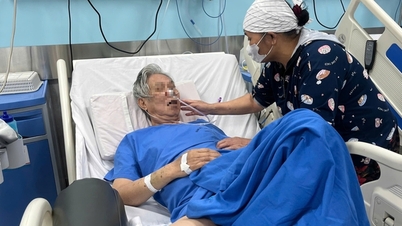
In a corner of the room, Andy Tran (60 years old, a Vietnamese-American) and his wife were waiting for their turn for physical therapy. A month ago, the man unexpectedly suffered a stroke while at work. Fortunately, he was taken to the emergency room early and received timely intervention, but he has almost completely lost the ability to move and speak.
"Fifteen days after the surgery, my husband's health was assessed as stable, and he was able to fly. I immediately decided to send our five children to relatives in the US for care, while my husband and I flew back to Vietnam for rehabilitation."
"After researching from various sources, I learned that Vietnamese healthcare is highly regarded and much more affordable. Furthermore, I would have family support in caring for my husband instead of being alone if I were in the US," Ms. Tram (43 years old) shared with Dan Tri newspaper about her reasons for returning to Vietnam for medical treatment.


Three times a week, Andy receives rehabilitation exercises with a walking robot. In addition to walking with the robot, Andy also receives daily acupuncture, acupressure, and electrotherapy as prescribed by his doctor.
Initially, the man was unable to move and required four people to help him sit in his wheelchair. Now, after five weeks, he can stand on his own and has begun practicing walking with the help of machines and guidance from technicians.

Patients undergoing rehabilitation after a stroke, especially the older age group, often need to be committed to physical therapy for extended periods in order to regain normal mobility.
Rehabilitation programs need to be individualized based on the severity of the injury, age, underlying conditions, and comorbidities. The entire team—doctors, technicians, nurses, and family—must work closely together to help patients transition from being bedridden to standing and achieving maximum independence.

Following a stroke at the end of 2023, Mr. Phan Hai (53 years old, Ho Chi Minh City) suffered paralysis of the right side of his body and completely lost the ability to speak, although he understood everything those around him communicated. Since then, he has only communicated with those around him through nods or unintelligible sounds. Even basic speech and expression have become a tremendous effort for him.
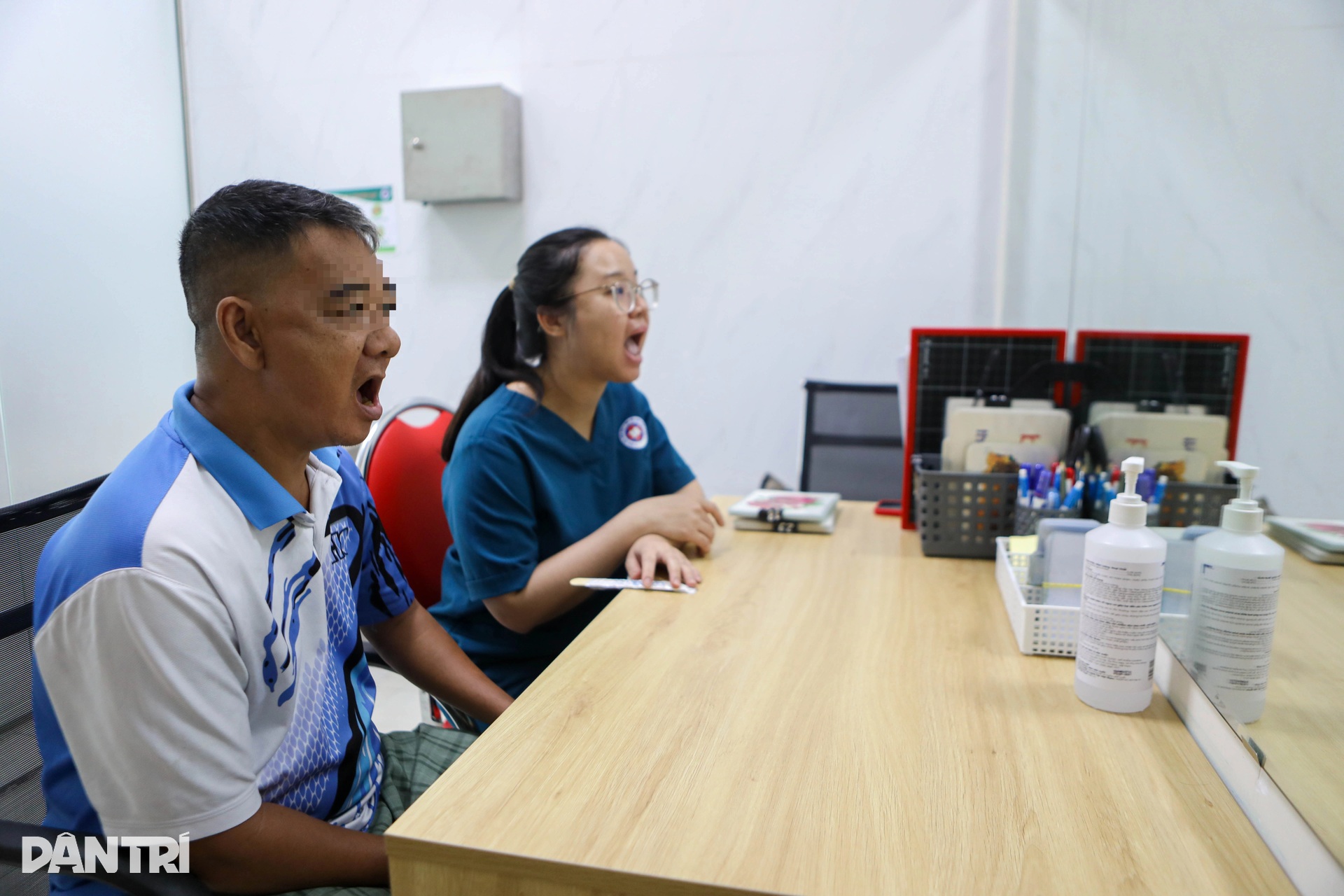
After more than a year of initial motor rehabilitation, Mr. Hai switched to speech rehabilitation at Hospital 1A. Looking at himself in the large mirror, the man in his 50s struggled to open his mouth, beginning to learn to pronounce the simplest words. Over the past two years, Mr. Hai has made significant progress in his recovery from stroke, and that journey is still very long before he can return to his previous life.

Following a stroke, rehabilitation is crucial for minimizing complications and improving the patient's quality of life. This should begin as early as possible, once the patient's condition has stabilized.
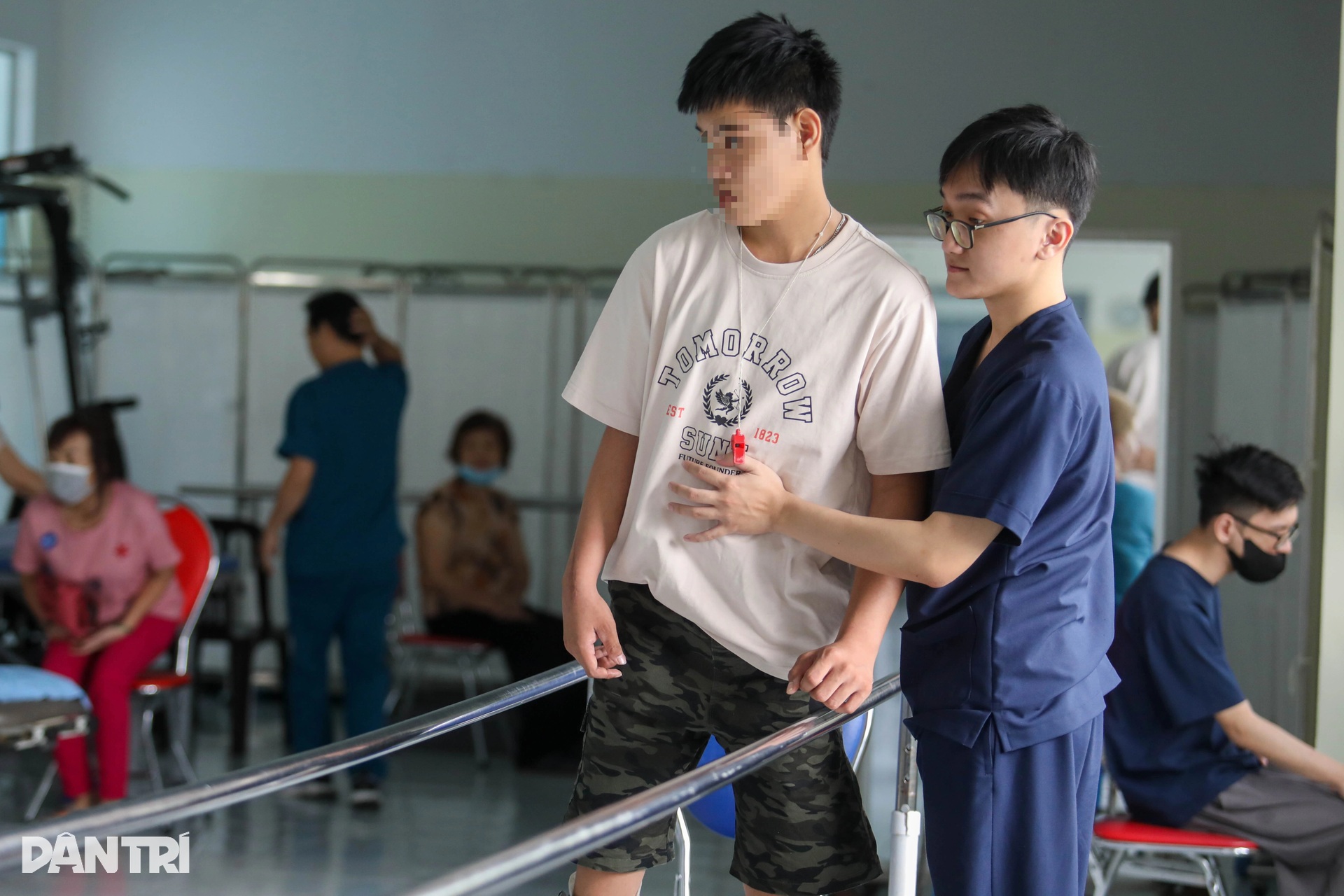

Besides providing rehabilitation services for elderly stroke patients, the hospital also has a significant number of cases among very young people. According to Dr. Tu, the number of young stroke patients is not large, but there has been an increasing trend recently.

Having overcome the life-or-death line of stroke, patients face a challenging journey to regain a normal life. Simple tasks like talking, eating, dressing, or walking become an overwhelming desire.
Thanks to their unwavering determination, along with modern equipment and advanced techniques, their path to recovery has become less arduous.
Source: https://dantri.com.vn/suc-khoe/tap-di-tap-noi-o-tuoi-xe-chieu-20250921235141494.htm




![[Image] National Assembly discusses the implementation of the socio-economic development plan.](https://vphoto.vietnam.vn/thumb/1200x675/vietnam/resource/IMAGE/2026/04/20/1776696707422_ndo_br_img-20260420-185419-jpg.webp)
![[Photo] General Secretary and President To Lam meets with National Assembly delegates from ethnic minorities.](https://vphoto.vietnam.vn/thumb/1200x675/vietnam/resource/IMAGE/2026/04/20/1776696701056_a1-bnd-8331-3342-jpg.webp)


















































































Comment (0)