The rhythm of Tet in the old days - slow, profound, and full of anticipation.
In the memories of many generations, Tet (Vietnamese New Year) in the past didn't arrive suddenly. It was "nurtured" by time. From the 15th day of the 12th lunar month, the Tet atmosphere quietly seeped into every home, every alley, every way of life. People awaited Tet by sweeping their yards, mending their kitchen roofs, and carefully saving every penny. The Tet market opened early, but there was no rush. Each trip to the market was a time for observation, consideration, and selection. The pot of sticky rice cakes simmered over the fire all night, not just for eating, but so the whole family could sit together, recount stories of the past year, and remember their ancestors. The rhythm of Tet in the past was the rhythm of waiting and accumulating emotions. It was this slow pace that made the moment of New Year's Eve sacred and the three days of Tet the most cherished time of the year.
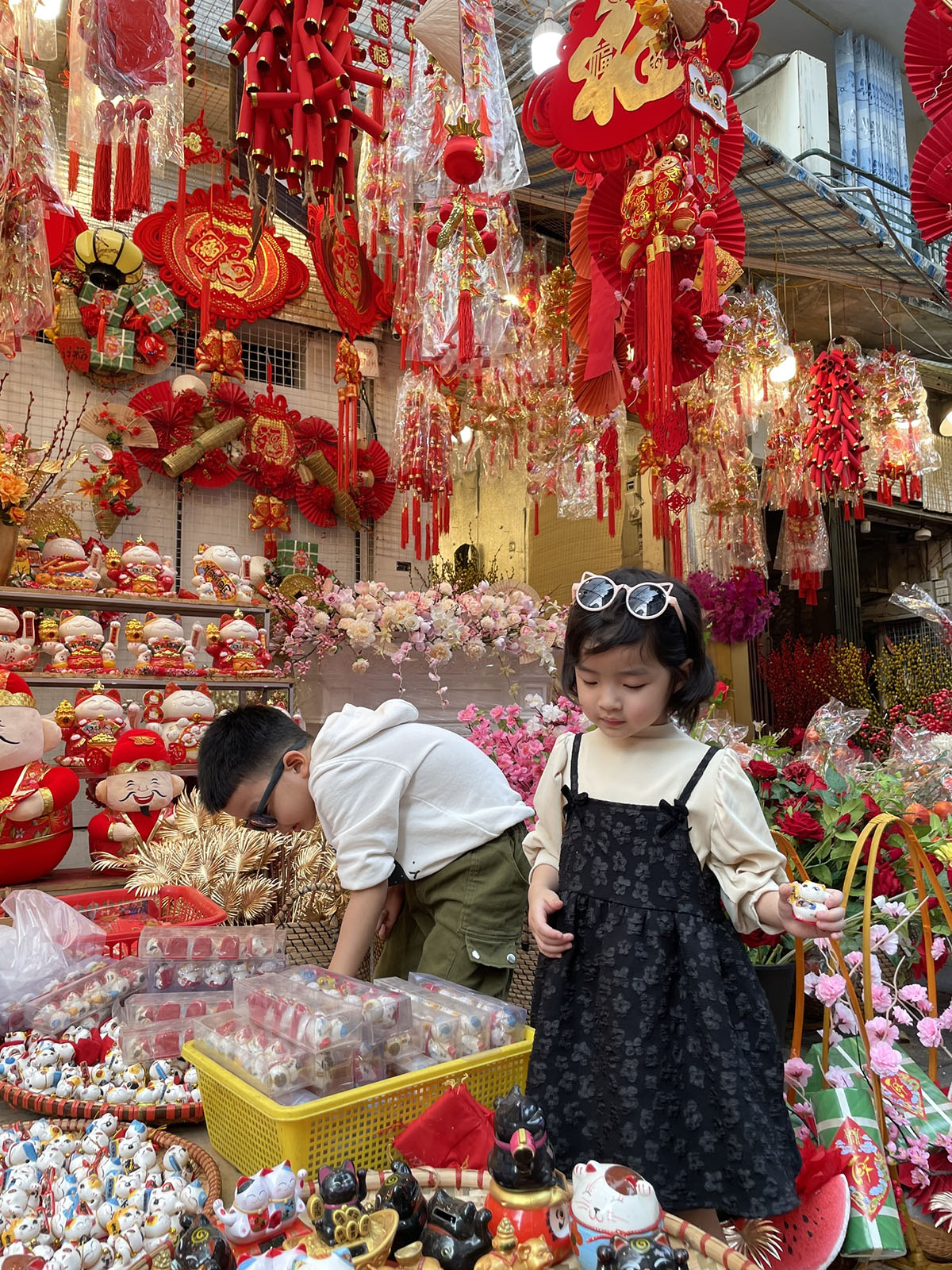 |
| Tet markets are one of the beautiful traditional cultural features of the Vietnamese people. Photo: Thanh Huong |
The pace of Tet this year is faster, more convenient, but also more fleeting.
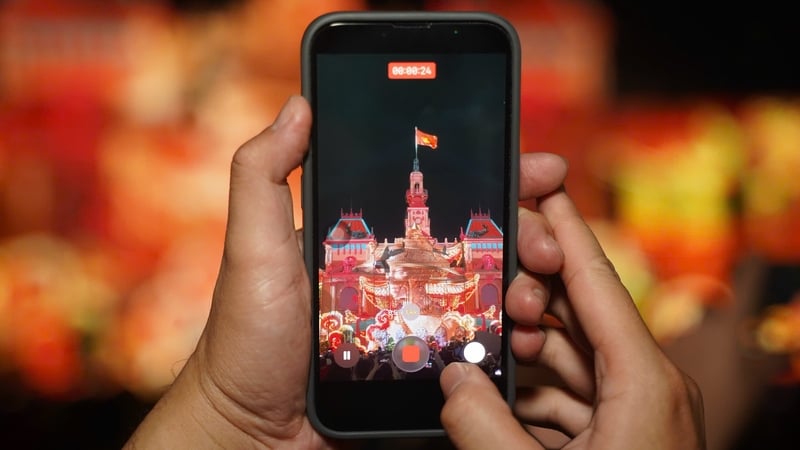
Today's Tet (Lunar New Year) arrives much faster. With just a few taps on the screen, everything from Tet gifts, sweets, and train/bus tickets can be arranged. Traditional Tet markets are gradually giving way to supermarkets and e-commerce platforms. Sticky rice cakes are bought in advance, feasts are pre-ordered, and Tet greetings are sent in bulk via text messages. The modern pace of life makes Tet shorter, both in time and emotion. Some people don't even have time to feel the spring atmosphere before Tet is over. Others return to their hometowns, but their minds remain focused on work, their phones, and social media.
There's no denying the conveniences that modern life brings. But it is precisely this convenience that threatens to turn Tet into a purely holiday, where people rest their bodies but not their minds.
The values of Tet are fading away.



Comparing Tet (Vietnamese Lunar New Year) of the past and present is not meant to lament the past, but to clearly identify the values that are fading. These include a disruption in family life, where family members share a space but no longer truly converse with each other. There is also the formalization of rituals, where lighting incense, exchanging New Year greetings, and visiting become mere formalities. In some places, Tet has become excessively commercialized, transforming into a race for gifts, superficiality, and ostentation. At that point, Tet is no longer a time for introspection, but a social pressure, leaving many exhausted even during what should be the most peaceful days. These manifestations won't make Tet disappear immediately, but they gradually erode its cultural depth, making it easy to misunderstand, live incorrectly, and perceive incorrectly.
 |
| Photo: Thanh Huong |
Things that cannot be lost - the core essence of Vietnamese Tet.
No matter how much the form changes, there are values that, if lost, will mean Tet is no longer Vietnamese Tet. First and foremost is family – the central space of Tet. Tet may be simplified with elaborate feasts, but it cannot be without reunion. Nothing can replace the moment when the whole family sits together, even for a simple meal. Then there is the ancestral altar – the spiritual axis connecting the past with the present. No matter how modern society becomes, lighting incense on Tet is still a way for Vietnamese people to affirm that they are not without roots. It embodies a spirit of goodness and tolerance. Tet is a time to close the chapter on unpleasant things and open the door to understanding and forgiveness. A Tet lacking this spirit will only have the shell of rituals without its essence.
A common mistake in today's approach to Tet (Vietnamese Lunar New Year) is the juxtaposition of two extremes: either extreme nostalgia or complete abandonment. Extreme nostalgia turns Tet into a burdensome formality, forcing people to repeat all the old rituals in a changed society. Complete abandonment, on the other hand, causes Tet to slip away from cultural life, becoming merely a consumer holiday.
The right attitude is one of proactive selection. Retain what constitutes our identity, simplify what is no longer relevant, and most importantly, preserve the spirit, not the rigid form.
 |
| Generations gathering to make banh chung (traditional Vietnamese rice cakes) every Tet holiday is a beautiful tradition in Vietnamese culture. Photo: Khanh Hoa |
Culturally appropriate behavior towards Tet today.



Tet (Vietnamese Lunar New Year) is not just a product of tradition, but the result of how people today choose to live it. No one else but each individual is deciding where Tet will go. Culturally appropriate behavior during Tet means knowing how to spend time with family, knowing how to put down the phone to listen to each other. It means knowing how to offer sincere New Year greetings instead of formulaic ones. It means knowing how to view Tet as an opportunity to slow down, to live more kindly, not for showing off or consuming. When each person preserves a part of the spirit of Tet, the community will preserve Tet. And as long as the community preserves Tet, the nation will have a solid cultural foundation amidst all changes.
The traditional Tet (Vietnamese New Year) cannot be restored in its entirety, nor does it need to be. However, the Vietnamese Tet can only survive if it changes consciously, based on understanding and cherishing core values. Change to adapt to the times, but to ensure that Vietnamese people do not lose their humane rhythm of life, their cultural memories, or their own identity. In the hurried flow of modern life, Tet can still be a necessary moment of tranquility if people know when to pause. And then, even if its form differs from the past, Tet remains Tet – the season of reunion, remembrance, and hope.
Source: https://www.qdnd.vn/van-hoa/doi-song/tet-xua-tet-nay-doi-thay-de-con-mai-1024617




































































![[Infographic] Which types of behaviors are strictly prohibited in digital transformation from July 1, 2026?](https://vphoto.vietnam.vn/thumb/402x226/vietnam/resource/IMAGE/2026/07/02/1783004068098_thumb_5_hanh_vi_nghiem_cam_20260702184923.jpeg)