

For example, with the current electricity market model, Vietnam Electricity Group (EVN) is the sole electricity buyer, but Power Purchase Agreements (PPAs) lack clear "take-or-pay" clauses, which could prevent EVN from purchasing the entire output of power plants due to objective factors. These include heavy rainfall leading to a preference for cheaper hydropower, limited transmission capacity, and even reduced electricity demand resulting in a corresponding decrease in supply.
Furthermore, there are times when the announced electricity purchase price framework uses Vietnamese Dong (VND) as the payment currency and does not take into account fluctuations in foreign exchange rates, which can easily create risks in foreign currency loans from international credit institutions.
Therefore, some international credit institutions have been unable to rate renewable energy projects in Vietnam at an acceptable level for disbursement.
In a report related to this sector, the World Bank noted that 82% of international energy investors rated Vietnam as a market with "potential, but high risk," mainly due to the lack of bankability (ability to borrow capital) in PPAs.
A 2024 report by the Asian Development Bank (ADB) also points out that only about 15% of renewable energy projects in Vietnam can access long-term foreign currency loans from international financial institutions, mainly thanks to guarantees from development funds. The majority of other projects have to borrow in local currency at interest rates 3-5 percentage points higher. Regarding the legal bottleneck for green finance, the issue is believed not to be a lack of projects, but rather the lack of a specific legal framework for Direct Power Purchase Agreements (DPPAs) between investors and large electricity consumers.
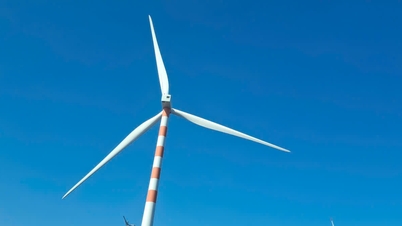
Previously, information about the DPPA was anticipated by many investors as a factor in unlocking private capital flows in the coming years. Vietnam was even expected to attract the largest "green" capital flow in the region thanks to its significant offshore wind and solar power potential (approximately 475 GW and 205 GW respectively). However, BloombergNEF statistics (2024) show that the total value of green bonds and green loans for Vietnam's energy sector only reached US$1.9 billion in 2023, much lower than Thailand (US$4.6 billion) and Indonesia (US$3.2 billion).
Statistics also show that by the end of 2024, only about 20 projects nationwide had been granted international carbon credits (CER/VER), while Thailand had nearly 200 projects and Indonesia had more than 300 projects participating in the voluntary and mandatory carbon market.
This reality makes the target of mobilizing $135 billion in investment in the power sector, as set out in the Power Development Plan VIII and its revised version for the period 2021-2030, contributing to the realization of Vietnam's energy transition goals, in which approximately 75% needs to come from the private sector, very challenging.
Another challenge is that new energy projects such as offshore wind power, hydrogen power, energy storage, and hybrid (PV+Battery) systems, which are high-tech, have long payback periods, and carry significant investment risks, currently lack standardized investment norms for each type of new energy system based on region, topography, infrastructure, and oceanography. Meanwhile, the International Energy Agency also suggests that, in the offshore wind power sector alone, with a stable Public-Private Partnership (PPA) mechanism, Vietnam could attract $25-30 billion in private investment between 2025 and 2040.
This reality necessitates the early establishment of clearer mechanisms and policies for energy investment and development. Only then can we attract tens of billions of USD in private and international investment to support Vietnam's energy transition, thereby achieving the goals of the National Green Growth Strategy, the National Power Development Plan VIII, and the revised National Power Development Plan VIII. Inevitably, this is also a crucial factor contributing to the successful achievement of the net emission reduction target that Vietnam committed to at the 26th Conference of Parties to the United Nations Framework Convention on Climate Change (COP26).
Source: https://baodautu.vn/thach-thuc-trong-chuyen-dich-nang-luong-d345658.html

![[Photo] General Secretary and President To Lam meets with National Assembly delegates from ethnic minorities.](https://vphoto.vietnam.vn/thumb/1200x675/vietnam/resource/IMAGE/2026/04/20/1776696701056_a1-bnd-8331-3342-jpg.webp)



![[Image] National Assembly discusses the implementation of the socio-economic development plan.](https://vphoto.vietnam.vn/thumb/1200x675/vietnam/resource/IMAGE/2026/04/20/1776696707422_ndo_br_img-20260420-185419-jpg.webp)














































































Comment (0)