

In line with the province's policy of developing sustainable rural tourism , Mr. Lai The Canh established the Gia Dat Viet Tea Craft Experience Tourist Area in Bao Lam. The Lai The family, with a history of 80 years (1943-2023) specializing in tea cultivation, processing, and export, is now in its third generation developing a new project, adding another tourist destination to the district following Lam Dong's OCOP model.
 |
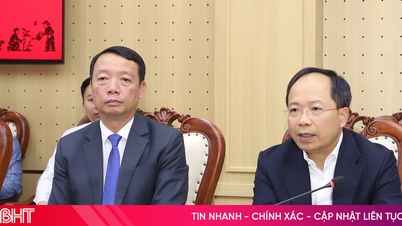
| Company presentation. ( Photo provided by the interviewee ) |
A few days ago, I was having coffee in a garden at the foot of the B'Lao tea hills with Mr. Yoshitaya, a 60-year-old Japanese tea tourism expert. After enjoying the premium Gaba Oolong tea recently produced by Kim Dien Company in Bao Lam, my foreign friend shared: “In Japan, when an agricultural product achieves widespread success, we often build new destinations for tourists to experience, both promoting the new local brand and helping them relieve stress. B'Lao is a famous tea-producing region in the country, but updating e-commerce information about the Japanese tea-making model is only half the battle won.”
 |
| Gia Dat Viet Company. ( Photo provided by the subject ) |
Visiting to check on the health of my friend Lai The Can, the second generation of the Lai The family, I invited Mr. Yoshitaya to visit the OCOP-model tea plantation of Gia Dat Viet Co., Ltd. in Loc Ngai commune, Bao Lam district. The road to this Oolong tea plantation, which was full of potholes a few years ago, is now paved, wide, and breezy, with the faint scent of tea wafting through the air. After inquiring about his health, Mr. Can invited us to visit Gia Dat Viet Company, owned by his eldest son. Welcoming us at the company's souvenir shop, in a luxurious room filled with images of the B'Lao tea industry, was Mr. Lai The Canh, the farm owner and director of the company. Throughout the conversation, Mr. Canh shared stories about his family's tourism model in a sincere and gentle tone, subtly inviting travelers to visit his locality. Mr. Lai The Canh was born in 1981 in Bao Loc, the eldest grandson of Mr. Lai The Liem, a plantation overseer during the French colonial period who specialized in tea production in B'Lao since 1943. Mr. Cai Liem was one of the pioneers who officially established the tea-making tradition of the Vietnamese people in this mountainous region.
 |
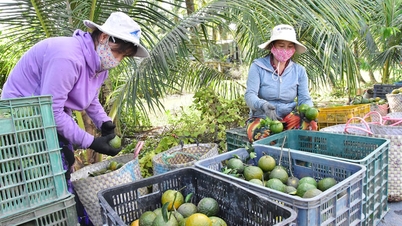
| Tea harvesting. Photo: Khanh Phuc |
Mr. Canh led us on a tour of the OCOP tourism model of the Gia Dat Viet tea family, starting from the parking lot, souvenir shop showcasing the essence of B'Lao tea region, to the outdoor recreation area, cooking area, medical station... offering visitors a high-class farmstay experience amidst the tea growing region.
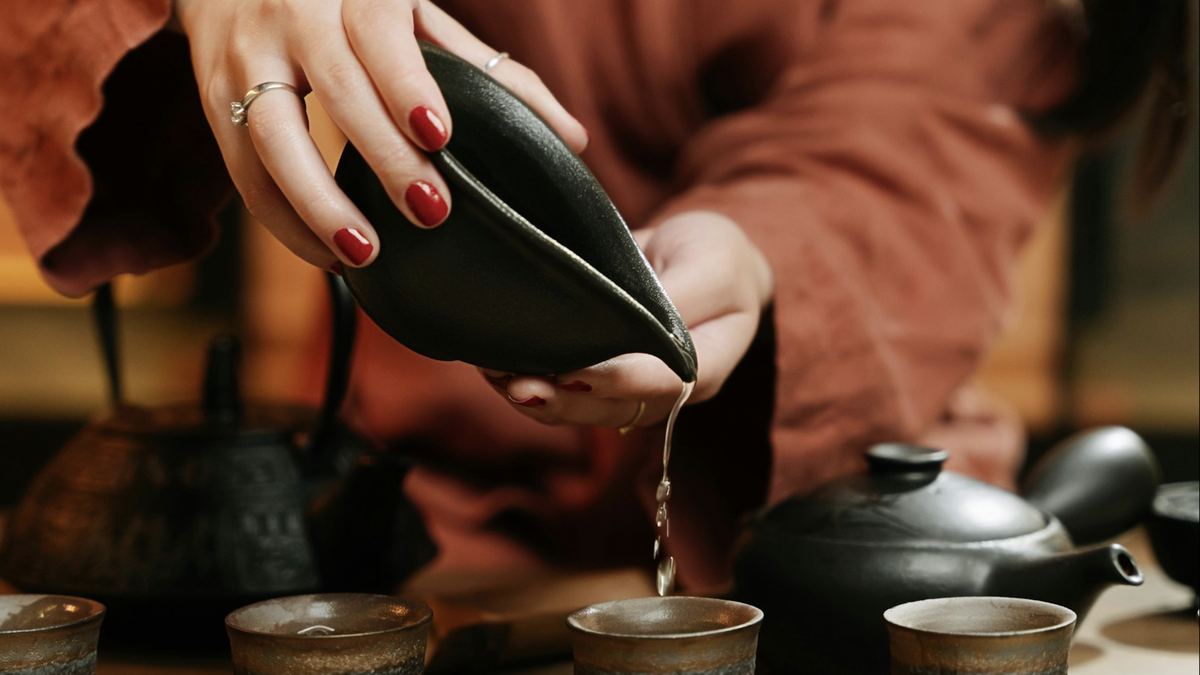
When asked why Tam Duong Oolong Tea Company now carries the Gia Dat Viet brand, Mr. Lai The Canh explained: “Gia Dat Viet means a Vietnamese family that has successfully pursued this profession. My Lai The family has been involved in the tea business in B'Lao for three generations. My grandfather, Lai The Liem, specialized in plain tea; my father, Lai The Can, switched to Oolong tea; and we, inheriting 80 years of experience in the tea industry, continue the profession but add Kim Huyen, Thuy Ngoc, Tu Quy, and milk tea products with a capacity of 150 tons of finished products per year, mainly exported to Taiwan, China, Japan, and Russia...” Mr. Canh invited us for tea and then continued: “In early 2023, Lam Dong province developed rural tourism products with the characteristics of each ward and commune. Given the province's reasonable policy on tea production, and with my family having been involved in the tea industry for three generations, my father's Tam Duong tea already having a brand name, inheriting a 100-hectare raw material area and a processing facility with machinery and a stable customer base in Hamlet 7, Loc Quang, which boasts many scenic hills, mountains, rivers, lakes, and convenient transportation, my brothers and I created a new project called Gia Dat Viet, focusing on experiential tourism based on rural criteria and the OCOP model (One Commune One Product, meaning each commune or ward has its own product, or more broadly, community tourism services for the locality). After that, with encouragement and permission from the local government, the project has progressed from there. Recently, I attended training on organizing and implementing experiential tourism to build safe and friendly destinations.” The criteria for a new land should also provide many lessons to be learned and applied.
Thanks to the province's electronic tourism information channels and direct, live images from the local areas, the number of visitors has been steadily increasing since the beginning of 2023, mainly consisting of universities, state organizations, and individuals coming to visit and experience the area. Through our visits and explanations about the land and people of B'Lao, most of them were very happy to directly visit the tea-growing region with its green mountains and hills, breathe in the cool, fresh air, and directly observe the workers at work from planting and weeding to harvesting, drying, fermentation, and then vacuum packaging... coupled with the friendliness of the hosts, it made the guests proud of the beautiful landscape of their country.” Mr. Canh showed us hundreds of photos and video clips that his family had saved from visiting groups from near and far. Most of the tourists were city dwellers, whose cities were often concretized, hot, polluted, and bustling with traffic, so they really enjoyed the cool, fresh nature. During their visits, they were surprised by the various stages of the tea-making process, which they had only known about the B'Lao tea region through television or newspaper information.” Concluding his story, Mr. Canh calmly said, "Experiential tourism is a completely new field for my brothers and me, so we're learning as we go. Everything is just the beginning for a family business specializing in tea from 1943 to 2023, so there's still a long way to go. Our company is fortunate to have my younger sister, Lai Thi Quynh Dao, who studied abroad in Taiwan and the US. She will handle communication, translation, and explanations for foreign guests, because the tourism business isn't something one person can do alone. Besides our determination to write another chapter in our family's history, we also need the encouragement and support of many people, especially the backing of departments and agencies from the commune, district, to the province."
***
We said goodbye to Gia Dat Viet, a company with an 80-year family business. Standing on a windy hilltop amidst the endless green of the tea plantations, watching my friend Yoshitaya silently gazing at the tea fields, I suddenly remembered Soichiro Honda, the Japanese man who designed and founded the Honda motorcycle corporation in 1943. Now, 80 years later, the third generation has achieved widespread success, bringing billions of dollars annually to Japan. The similarity between the Lai The and Soichiro families is that they used their meager initial capital to strategically invest in their children's education both domestically and internationally, so that they could continue to inherit the family business and develop high-quality products to expand internationally. In my mind, I suddenly recalled the advice of our ancestors: "In a family, parents are proud of the achievements of their children, and children are proud of the family's prestige."
Source
![[Photo] Memorable moments at the 10th Vietnam-China Border Defense Friendship Exchange](https://vphoto.vietnam.vn/thumb/1200x675/vietnam/resource/IMAGE/2026/03/20/1773986226876_giao-luu-bien-gioi-vntq-lan-10-ben-tq-9737-4225-jpg.webp)


























































Comment (0)